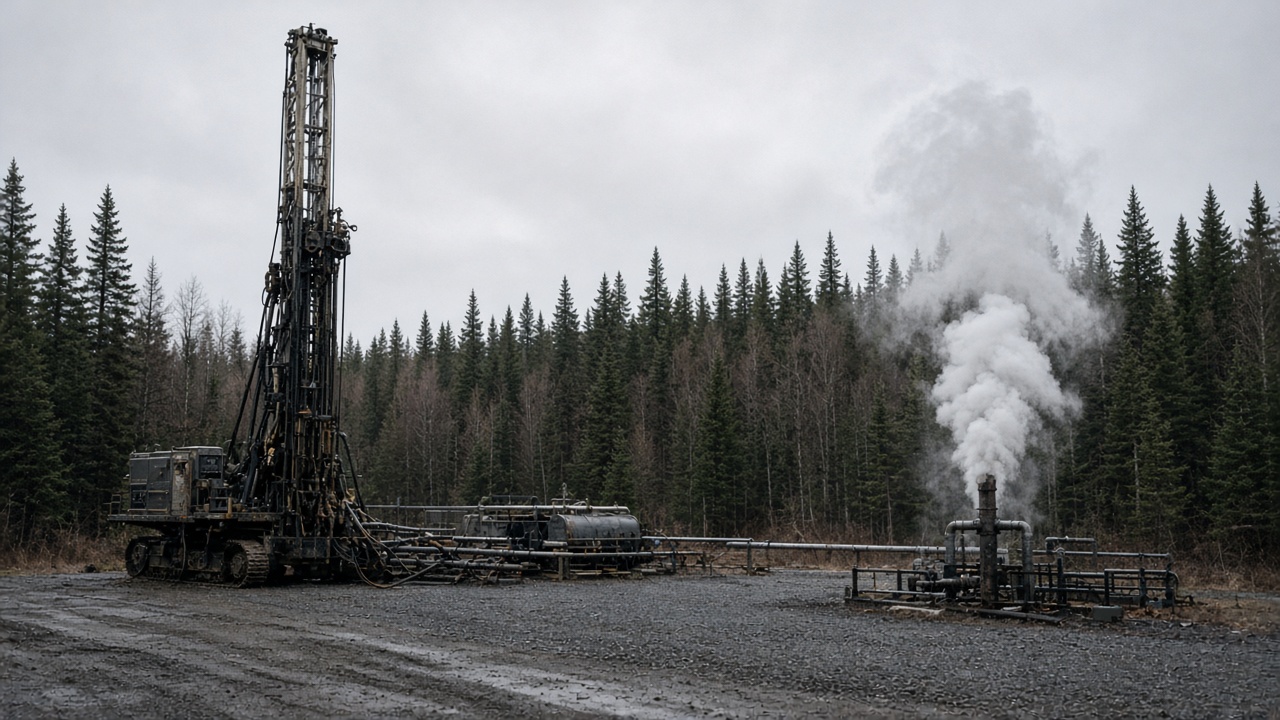
Obayashi Corp secured a Hokkaido geothermal drilling contract linked to Sumitomo Metal Mining Co.’s Musadake exploration push, moving contractor crews toward eastern Musadake targets that Japan Oil, Gas and Metals National Corp. airborne geophysics highlighted after earlier wells with JAPEX and Mitsubishi group partners proved high-temperature flows. Kenji Watanabe’s business desk reads the award as infrastructure spend catching up to resource science—not a final investment decision on a power plant—while Tokyo keeps hunting domestic geothermal capacity that can run around the clock without weather risk.
What the package covers
Company disclosures describe directional drilling and wellhead preparation on national-forest terrain in Shibetsu, Hokkaido, where the Musadake SMMG program has tested steam and hot-water rates since exploratory wells spudded in 2013. Obayashi’s green-energy unit already operates overseas geothermal assets, including the 49-megawatt TOPP2 plant in New Zealand that began commercial runs in March 2026, and management has said overseas operating experience should feed back into domestic development.
Sumitomo Metal Mining’s exploration arm has stayed in the Musadake-Teshikaga block through JOGMEC-supported geophysical campaigns. A 2022 HeliFalcon gravity-gradiometry and Helitem electromagnetic survey—published with JOGMEC and contractor authors—argued that low-resistivity zones concentrate in eastern Musadake, steering the next round of boreholes away from earlier western attempts.
Why eastern Musadake matters
Earlier Musadake SMMG-2D testing reported roughly 26 tonnes per hour of steam and 16 tonnes per hour of hot water during a short flow test, with downhole temperatures around 333 degrees Celsius. Those numbers justified continued spending but not, by themselves, a financed power station. The new Obayashi work is meant to confirm whether the eastern anomalies extend laterally enough to support a commercial reservoir model.
Local politics remain sensitive: developers must balance forestry permits, hot-spring operators, and wildlife surveys. Obayashi’s contract language, as described to investors, stresses eco-conscious rig moves and community briefings—standard boilerplate that still gates calendar time in Hokkaido.
JOGMEC’s role
JOGMEC’s grant ledger shows multi-year support for Kyogoku and Rusutsu campaigns led by Obayashi with Hokkaido Electric Power Co., separate from Musadake but part of the same island-wide push to de-risk subsurface data. Grants do not eliminate merchant risk: if reservoir permeability disappoints, contractors still invoice for meters drilled even when operators shelve generation plans.
For traders, the signal is backlog visibility for heavy civil firms with geothermal toolchains, not near-term yen earnings from a single well. Obayashi’s consolidated orders already mix conventional construction with renewable pilots; Hokkaido rigs compete for crews with offshore wind foundation work along the same coastlines.
Competing developers
Other Hokkaido plays—including INPEX-led exploration in Shibetsu and Obayashi-HEPCO Rusutsu testing near Mount Shiribetsu—keep rig calendars tight. Sumitomo Metal Mining is not the only metals-linked name in geothermal; the Musadake partnership history includes Mitsubishi Materials and Mitsubishi Gas Chemical stakes alongside JAPEX operations.
If eastern Musadake cores validate, the next debate is plant sizing. Earlier project materials floated a roughly 15-megawatt concept after three exploratory wells; scaling would require fresh environmental assessments and grid interconnection studies with Hokkaido utilities.
What would falsify the bull case
A dry hole or subcommercial flow in the eastern target would push Sumitomo Metal Mining back to desktop modeling, wasting sunk drilling costs but preserving option value on land positions. Regulatory delays on forest access could stretch Obayashi’s margin on fixed-price sections. A sharp rise in yen-funded borrowing costs would hurt independent developers more than conglomerates with balance-sheet flexibility.
Watanabe will watch whether Obayashi books the contract as a one-off civil job or as a strategic step toward operator ownership—TOPP2 suggests appetite for equity, but Musadake remains exploration-stage.
Bottom line
The Hokkaido drilling package ties Obayashi’s rig fleet to Sumitomo Metal Mining’s eastern Musadake thesis under JOGMEC-backed science. Until flow tests repeat 2015’s temperatures at commercial rates, the story stays subsurface engineering—not a financed geothermal plant order.