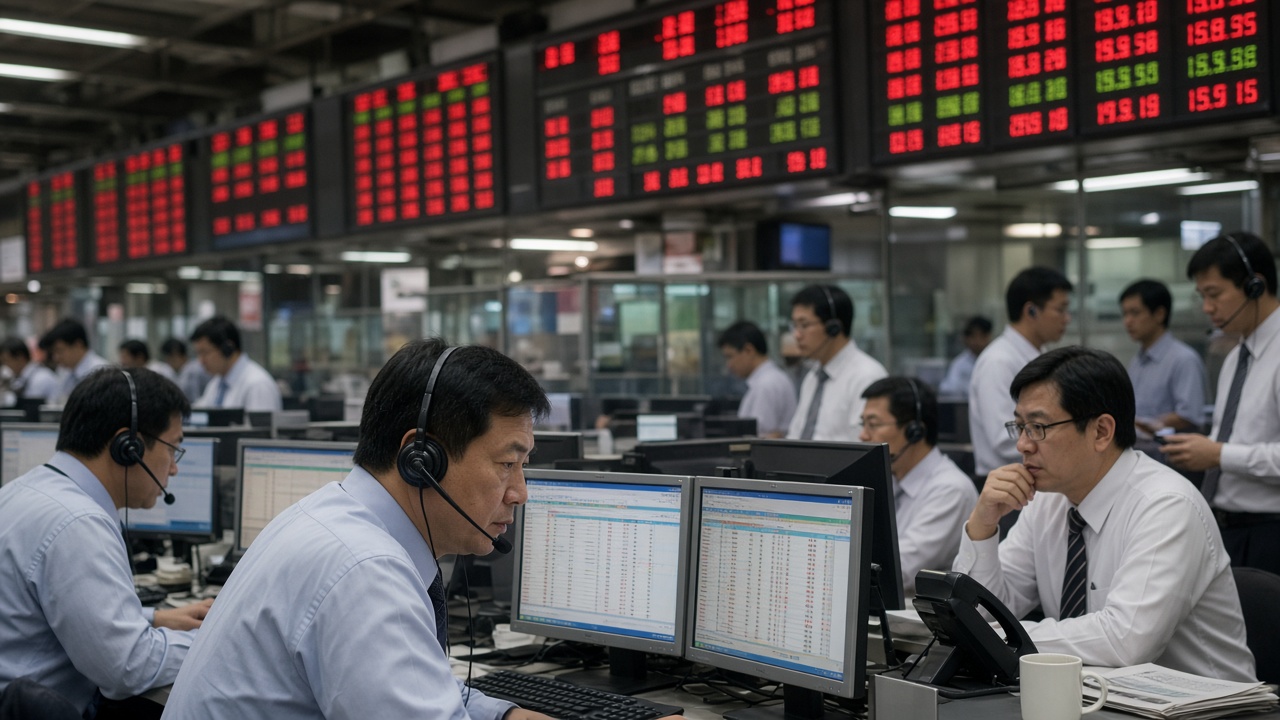
Taiwan’s benchmark stock index closed down 1,655.96 points on Thursday, a 3.41 percent rout that ranked among the steepest single-session point losses in TAIEX history, as sticky U.S. inflation revived rate-hike fears and hammered semiconductor names across Asia. The weighted index finished at 46,969.87 after trading more than 1,800 points lower at the session low, while the New Taiwan dollar weakened past 32.4 per U.S. dollar in late trading as foreign investors sold equities and hedged currency exposure.
What moved the tape
Traders pointed to two linked shocks from Wall Street: the Labor Department’s report that U.S. consumer prices rose 3.7 percent year on year in September, hotter than economists expected, and a 4.3 percent drop in the Philadelphia semiconductor index overnight as investors questioned the durability of the artificial-intelligence hardware boom. Taiwan’s market is among the most chip-concentrated in the world, so a Philadelphia selloff typically flows straight into TSMC, ASE Technology, MediaTek and other large-cap weights.
CNA reported that high-priced AI-related shares led the decline, with foreign institutional investors net sellers through the session. Dealers said exporters initially stepped in to sell dollars as the currency weakened, while the central bank was widely assumed to be smoothing disorderly moves without announcing formal intervention.
Currency and cross-border flows
The Taiwan dollar opened near 32.11 and slid to an intraday low of 32.442, according to CNA, as the equity slump accelerated foreign portfolio outflows. A weaker currency can help exporters on paper, but fund managers said the speed of the move raised hedging costs for technology supply chains that invoice heavily in U.S. dollars.
Regional markets moved in sympathy. South Korea’s KOSPI also triggered circuit breakers earlier in the day, and Japan’s Nikkei logged sharp losses, underscoring how a single U.S. inflation print can reset risk appetite for export-oriented economies at once.
What investors watch next
Attention now shifts to Federal Reserve speakers and any signal on whether the September CPI print delays expected rate cuts into 2027. For Taipei, the next catalyst is third-quarter earnings from Taiwan Semiconductor Manufacturing Co. and memory makers, which will test whether AI capital spending plans remain intact or whether customers are pushing out orders.
Retail participation in Taiwan’s rally has been heavy this year, and Thursday’s drop may test margin balances if volatility persists. Regulators have not announced special trading halts beyond routine index rules, but market veterans cautioned that another U.S. hot inflation report could extend the semiconductor correction into next week.