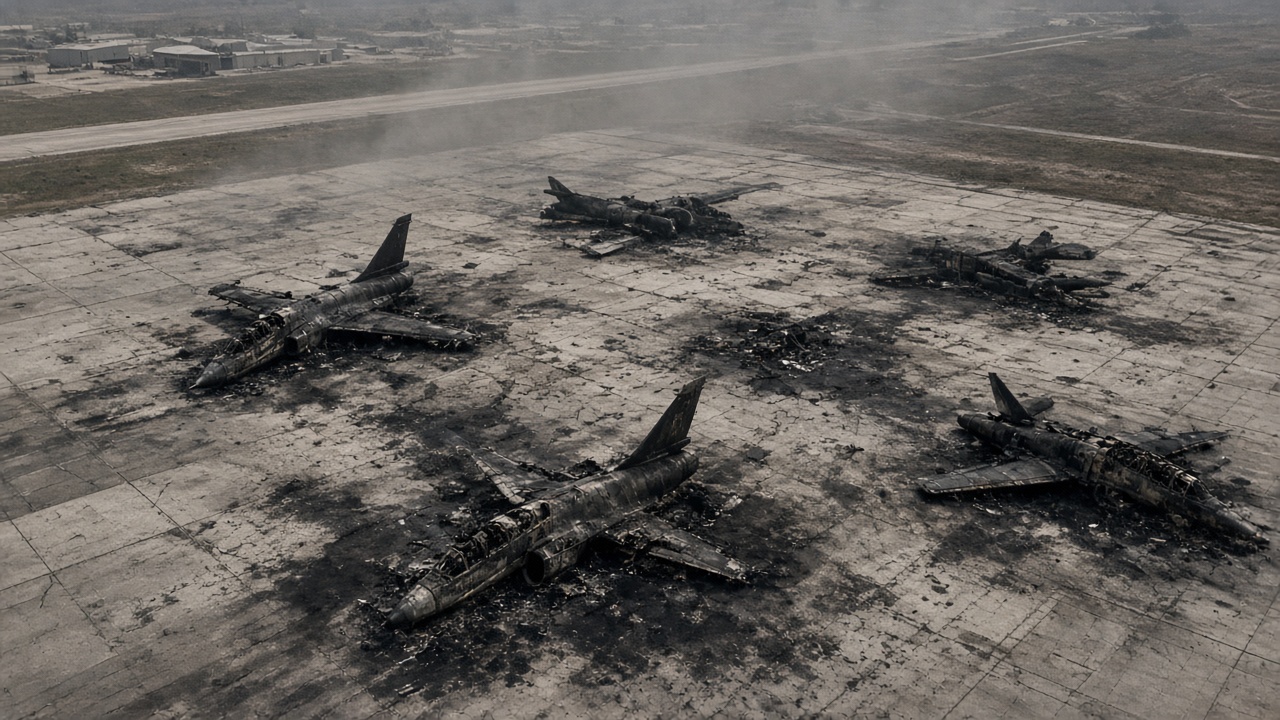
Ukraine’s military said an overnight missile strike damaged six Russian Su-34M fighter-bombers at the Borisoglebsk airfield in Voronezh Oblast, one of the deepest confirmed hits on a rear-area base since Moscow widened glide-bomb attacks on Ukrainian cities. Independent satellite imagery reviewed by news agencies shows scorched aircraft and blast marks on the flight line, though analysts differ on how many airframes were destroyed outright versus crippled on the ground.
What Kyiv reported
In a Telegram statement on Thursday, Ukraine’s General Staff said it had confirmed damage “of varying degrees” to all six Su-34M aircraft at Borisoglebsk. The Ukrainian Navy said the strike was carried out with the Neptune coastal missile system, a weapon originally developed for anti-ship roles that Kyiv has adapted for land-attack missions.
Local residents posted video of explosions and a large fire at the base, and Voronezh Governor Alexander Gusev issued repeated warnings about a drone and missile threat overnight. The airfield sits about 370 kilometers (230 miles) from the active front, placing it within reach of Ukraine’s growing portfolio of domestically produced long-range weapons.
Imagery and Russian silence
Reuters said satellite pictures taken Thursday showed evidence of destruction at the airfield. Open-source analysts and Ukrainian media cited commercial imagery indicating at least three to four Su-34-family jets burned on the apron, with additional ground equipment damaged. Russian defense officials did not immediately publish a detailed tally of losses at Borisoglebsk, and state media focused instead on Ukrainian strikes on energy infrastructure elsewhere.
The Su-34M is a modernized variant of Russia’s primary tactical bomber, frequently used to launch standoff glide bombs against Ukrainian positions and population centers near the line of contact. Each airframe costs tens of millions of dollars and requires specialized maintenance; losses on the ground force the air force to redistribute sorties across fewer squadrons.
Timing amid ceasefire politics
The strike landed as U.S. President Donald Trump’s declared energy ceasefire collided with continued combat. The Kremlin on Thursday said Ukrainian strikes on Russian oil refineries run counter to American peace efforts, while Kyiv has resumed energy-sector strikes after saying it learned of the ceasefire from media reports rather than allied coordination.
Ukrainian commanders have framed airfield attacks as a way to shrink Russia’s bomber fleet without fighting through dense front-line air defenses. Whether Thursday’s damage keeps those jets out of service for weeks or months will depend on Moscow’s ability to repair airframes at Voronezh-region facilities and on follow-on Ukrainian targeting of repair nodes.
Western officials have not independently verified Ukraine’s count of six damaged bombers, but the visible wreckage at Borisoglebsk adds to a pattern of deep strikes that Russia’s layered air-defense network has struggled to stop.