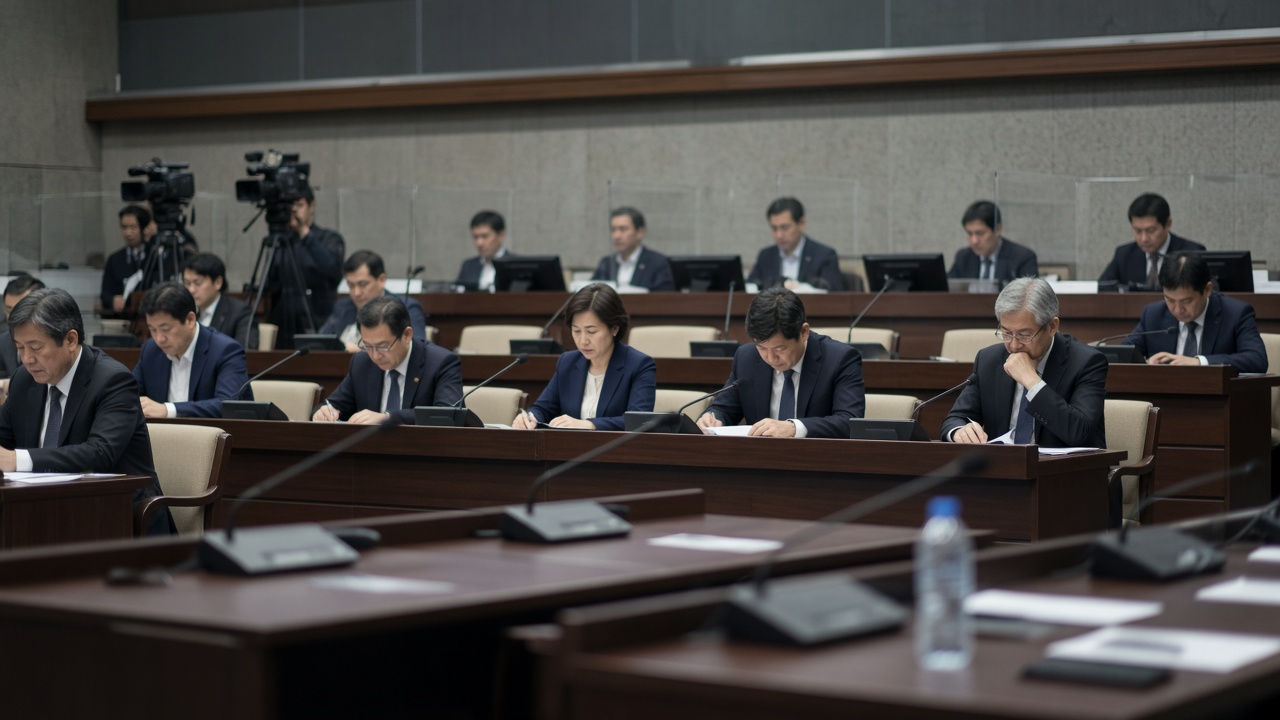
South Korea's political fight over Supreme Court appointments moves into a fresh parliamentary audit on Friday, when the Legislation and Judiciary Committee questions court administrators about Chief Justice Cho Hee-dae's refusal to file a new justice recommendation at the Blue House's request.
Background of the standoff
Cho declined to resubmit a candidate after President Lee Jae-myung asked for a new recommendation following the initial nomination's collapse. Democratic Party lawmakers call the refusal a constitutional duty; the People Power Party argues the president cannot force repeated submissions until he likes the name.
Minister of Government Legislation Cho Won-cheol told an earlier hearing that if vacancies paralyze the Supreme Court, the chief justice would fail his constitutional obligations. Opposition lawmakers counter that appointment power is shared equally among the president, the National Assembly, and the recommending authority.
Friday's focus
Yonhap reported that audits on October 16 will span eleven committees, but the judiciary panel's review of Seoul High Court operations is where the re-recommendation dispute will draw the sharpest questions. Judges tied to the earlier nominee pool, including Kim Min-ki at the Seoul High Court, are likely to face scrutiny.
The fight intersects with debates over whether criminal trials against Lee should remain paused under presidential immunity rules. Opposition members say stalled courts prove the bench is politicized; the ruling party says immunity provisions require the pause.
None of the constitutional questions will be resolved in a single audit day, but the hearing will set talking points for weekend news cycles and for any impeachment or discipline motions lawmakers file next week.
Other committees on the same day
Eleven standing committees meet Friday, covering agriculture cooperatives, defense budgets, and public broadcasters. The science and ICT panel will hear from MBC in a closed session before auditing KBS and advertising agencies, a lineup that could reignite fights over ruling-party attempts to recuse certain opposition lawmakers.
International audience
Foreign investors rarely trade Korean equities on court dramas, but rule-of-law headlines can widen sovereign risk premia when they coincide with market stress. Thursday's equity rout plus Friday's judiciary fireworks create a volatile news mix for funds benchmarking Korea.
Legal scholars note that the re-recommendation dispute may ultimately require a Constitutional Court ruling, a process measured in months, not audit sound bites.