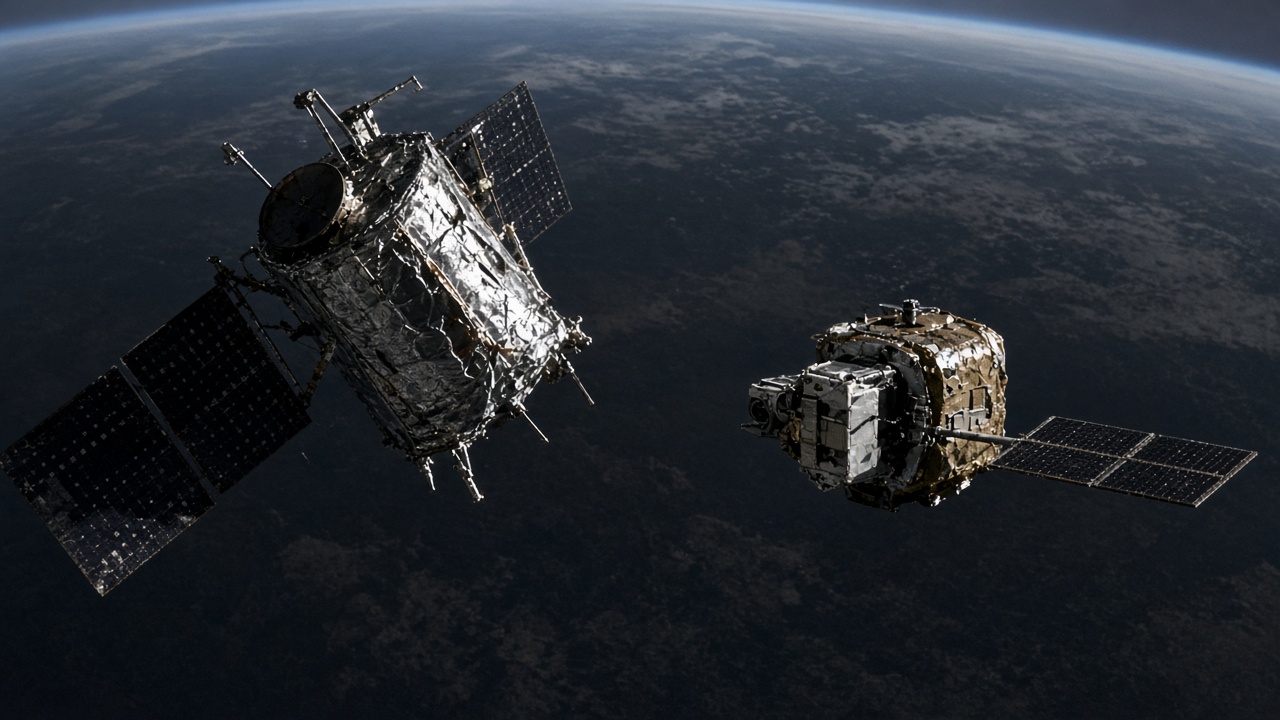
The UK Space Agency named ClearSpace UK as its industry partner on a £60 million-plus active debris removal mission that will capture two defunct satellites and lower them into the atmosphere, the Department for Science, Innovation and Technology said on Wednesday.
Why Whitehall is paying for a tow truck in orbit
Ministers framed the contract as both an environmental duty and an industrial bet. Congested low Earth orbit now carries thousands of dead spacecraft that can collide with working constellations, threatening navigation signals, weather forecasts and military communications that British infrastructure assumes will always be there. The Active Debris Removal programme, branded UK ADR, is meant to prove that a single servicer can dispose of more than one target in one campaign—a step beyond one-off demonstrations that have littered the sector with press releases but few operational revenues.
ClearSpace, already known for European Space Agency debris-removal work, will build domestic capture robotics and re-entry expertise. Officials said the flight would launch from Saxavord Spaceport in Scotland, which received £30 million of government support earlier in the year to preserve sovereign launch capacity. For supply chains from Southampton to Newcastle, the award is less about a single contract than about anchoring a servicing industry ministers want to count in the billions by the mid-2030s.
Timeline and technical stakes
Under the published schedule, the servicer would lift off in 2029 and complete both captures before 2032. The approach mirrors commercial in-orbit servicing concepts—grapple arms, rendezvous sensors, controlled de-orbit burns—but wraps them in a national mission with public underwriting. That matters for insurers and export credit agencies still wary of first-of-kind liability if a capture goes wrong and creates fresh debris.
The government tied the announcement to its refreshed Space Strategy, which elevates repair, refuel and removal alongside Earth observation and telecoms. Britain’s space economy was valued at £18.6 billion with more than 55,000 jobs in the latest official estimate; ministers argue that figure stalls if operators cannot insure new constellations against cascade risk.
What competitors and allies are watching
Other agencies, including ESA and Japan’s JAXA, have funded removal demos, but few have committed to a multi-target national mission with a named launch site. Washington and Brussels will read the ClearSpace award as a signal that post-Brexit Britain intends to stay in the servicing race rather than buy capacity solely from US primes. For listed UK suppliers—satellite builders, ground segments, propulsion shops—the question is how much subcontracting flows before integration contracts harden.
Parliamentary scrutiny is likely to focus on opportunity cost: £60 million buys a lot of hospital scanners or classroom laptops. Civil servants will answer that a single major collision could knock out services worth far more than the mission price. The political test is whether the 2029 launch date survives spending reviews if the October budget tightens.
What happens next
UKSA and ClearSpace must freeze interface requirements with Saxavord, publish safety cases for controlled re-entry over uninhabited corridors, and line up tracking support from the National Space Operations Centre. Export-minded officials will also pitch the mission at next month’s space industry conferences as proof that Britain can host end-to-end removal, not just manufacture components for someone else’s headline flight.
Insurance and liability
Space insurers are drafting policies for multi-target removal missions, where a failed capture could create debris fields worse than leaving zombies alone. UKSA’s public backing shifts some liability to taxpayers, but commercial operators still want clarity on salvage rights if a client satellite is damaged during approach.
Export potential
If ClearSpace proves repeatable capture, the Foreign Office will pitch the capability to allies worried about Chinese and Russian debris in sun-synchronous orbits used for Earth observation. Export licences for robotics developed on the mission could follow the same path as Britain’s SAR satellite sales.
Regulatory licences
The Civil Aviation Authority and Ofcom licences for Saxavord launches must align with debris-removal mission timelines. Any slip in spaceport certification pushes the 2029 launch date and invites parliamentary questions about sunk costs if satellites remain unbuilt.