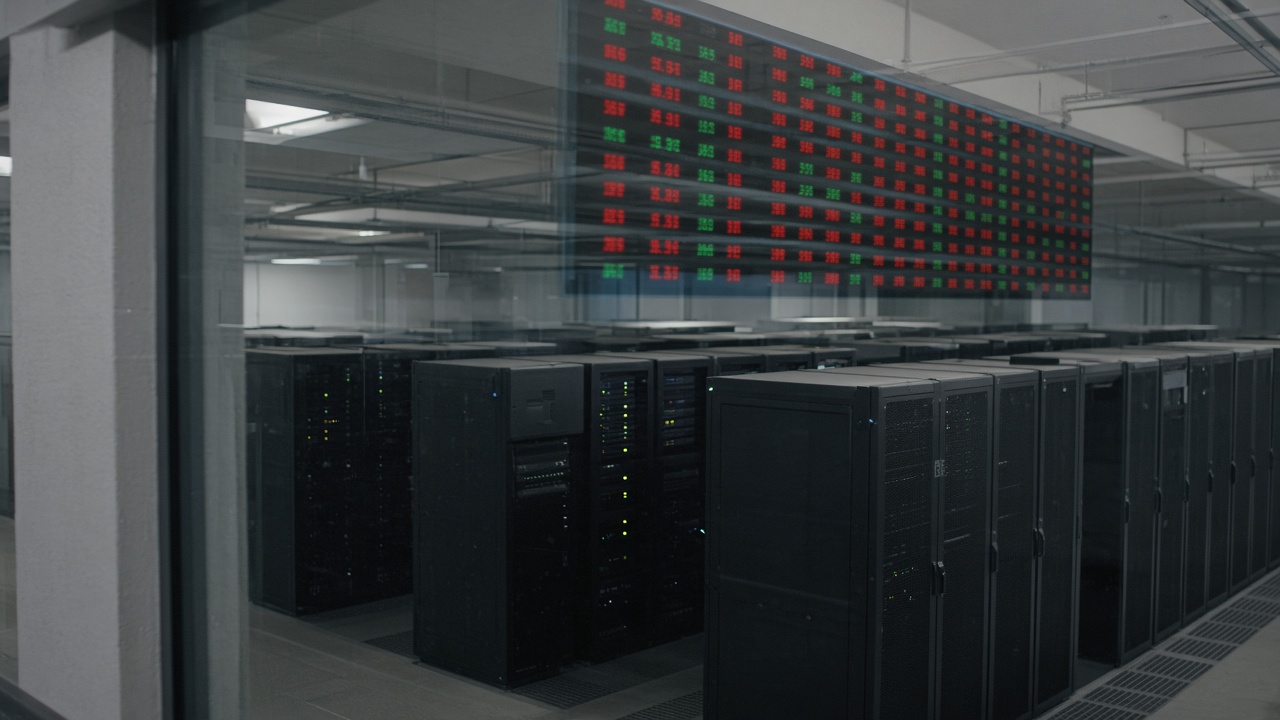
CoreWeave shares fell about 4% in early trading Friday, extending a volatile week for AI infrastructure stocks as investors weighed whether GPU-heavy data-center operators can service rising debt if borrowing costs stay elevated and hyperscaler demand shifts.
The slide in CoreWeave, which rents Nvidia-powered capacity to cloud and enterprise customers, came even as the broader Dow Jones Industrial Average remained on track for a weekly gain. Money rotated again out of semiconductor and AI-adjacent names and into healthcare and other defensive sectors after hotter inflation data earlier in the week revived debate over how long the Federal Reserve can hold rates steady.
Why debt suddenly matters to AI trades
For two years, many investors treated AI build-outs as a land-grab: capex first, profits later. This week’s selling targeted companies with visible debt loads. CoreWeave went public in 2025 with rapid revenue growth but heavy spending on GPUs and facilities financed partly through debt. When the 10-year Treasury yield pushed above 5.1% after September’s consumer-price report, traders repriced anything that looked like a highly levered bet on future compute demand.
Nvidia itself remained a bellwether, but the ecosystem stocks—equipment renters, niche cloud providers, and power-hungry colocation names—absorbed most of the pain. That pattern mirrored Thursday’s session, when the Dow rose more than 500 points while the Nasdaq slipped, a classic defensive rotation rather than a wholesale abandonment of U.S. equities.
Index picture heading into Friday
Entering Friday, the Nasdaq Composite and S&P 500 were down about 2.4% and 0.9%, respectively, for the week, while the Dow was up roughly 1%, according to index data cited in market wrap reports. Futures pointed to a mixed open: Dow and S&P contracts modestly higher, Nasdaq 100 futures slightly lower, as traders squared positions ahead of the weekend.
Federal Reserve Chair Kevin Warsh, speaking at international meetings in Bangkok, described the U.S. economy as resilient and highlighted AI-driven investment, but also noted that the spending boom is contributing to inflation pressure. Markets increasingly expect the Fed to leave rates unchanged at its late-October meeting, which keeps funding costs for debt-heavy tech firms elevated relative to the zero-rate era that fueled the first wave of AI multiples.
Bank earnings versus AI debt
Money-center banks reported earlier in the week that consumer credit quality remained stable and trading revenue held up, a contrast with single-theme AI renters whose bonds trade at wider spreads. That divergence is why the Dow can rise on the same day Nvidia-linked suppliers fall: index composition matters as much as the macro narrative.
What holders of broad index funds should watch
Most 401(k) investors own the S&P 500 or a total-market fund, not CoreWeave directly. The practical impact is sector composition: information technology still dominates the Nasdaq, so a tech-led drawdown drags the composite even when the Dow’s old-economy names hold up. If you rebalance quarterly, this week is a reminder that AI narratives can reverse quickly without a recession headline.
Active traders watching AI infrastructure should separate balance-sheet risk from demand risk. Hyperscalers are still signing multi-year capacity deals, but the market is punishing issuers that need continuous debt issuance to replace depreciating hardware. Earnings from large banks earlier in the week showed healthy card spending and investment-banking pipelines, suggesting consumer and corporate America are not in free fall—only the most debt-heavy AI balance sheets are.
Oil and rates as secondary drivers
West Texas Intermediate crude traded near $98 a barrel Friday morning, with Brent above $100, keeping input costs on the radar for airlines and industrials even as oil eased slightly from earlier peaks. The 10-year yield hovered near 5.11%, up a few basis points from Thursday but below the post-CPI spike toward 5.33%, when the bond selloff briefly accelerated before tech weakness sent some flows back into Treasuries.
None of those cross-currents resolve the CoreWeave question: can specialized GPU landlords earn enough margin before their debt rolls? Until that proof arrives in quarterly filings, expect the stock—and peers with similar financing—to trade with the Nasdaq’s risk appetite day to day, even when the Dow sets fresh highs.