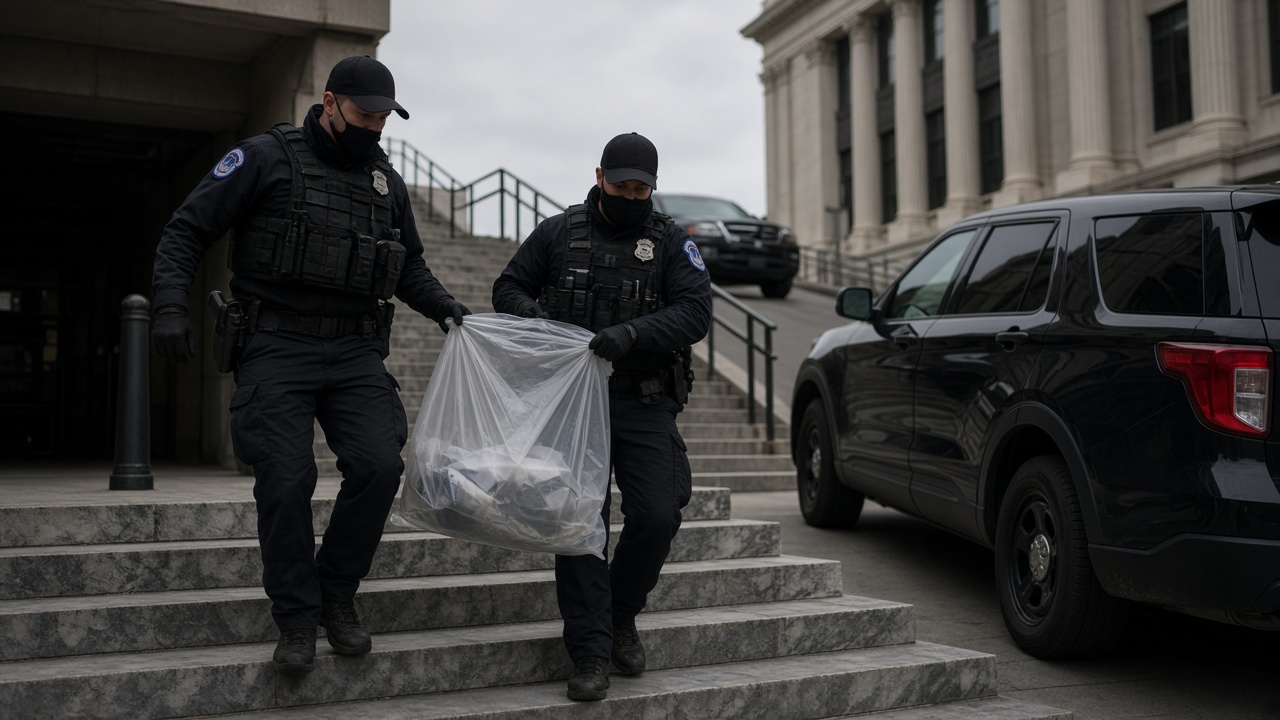
Federal investigators are treating a wave of suspicious mailings as one sprawling case after Republican senators began reporting letters containing unknown white powder, widening a probe that already touched more than two dozen state election offices and roughly two dozen Democratic congressional offices.
Sens. Susan Collins of Maine, Pete Ricketts of Nebraska, Ted Cruz of Texas and Mike Rounds of South Dakota confirmed on Friday that their offices were among the latest targets, according to statements and social media posts reviewed by NBC News. Rep. Kevin Kiley of California, an independent who caucuses with Republicans, said his district office also received a letter. The FBI and the U.S. Postal Inspection Service are leading the inquiry, and people familiar with it said authorities have not yet identified who is sending the packages or where they originate.
Intercepted before delivery
Most of the letters sent to senators were stopped before they reached staff, according to investigators and lawmakers' offices. Collins' chief of staff, Katie Brown, said two letters were addressed to the senator's Portland, Maine, office and her Washington office; neither injured anyone. Ricketts wrote on X that his Omaha office received a letter matching descriptions of others in the case and that Omaha police, the FBI and Capitol Police determined the substance was not harmful.
Cruz said a similar package arrived at his Houston office, calling the incident "deeply concerning." Rounds said his Sioux Falls team alerted local police after guidance from the U.S. Capitol Police about other intercepted mail. The pattern fits what one source described to NBC News as "dozens and dozens" of letters nationwide sharing the same basic description — powder inside envelopes mailed to public offices, often at state locations rather than Washington.
Election offices already on alert
By Friday afternoon, officials in at least 26 states had reported receiving suspicious packages at election offices, spanning Alabama, Arizona, Connecticut, Delaware, Georgia, Idaho, Illinois, Kansas, Louisiana, Maryland, Massachusetts, Minnesota, Mississippi, Nebraska, New Hampshire, North Dakota, Ohio, Oklahoma, Oregon, Pennsylvania, South Carolina, South Dakota, Tennessee, Washington, Wisconsin and Wyoming. Senate and House staff received warnings Thursday as investigators began linking the incidents.
Democratic lawmakers had disclosed similar mailings earlier in the week. Senate Majority Leader Chuck Schumer of New York was among seven Democratic senators who reported suspicious letters, and numerous House Democrats from California, Florida, Illinois, New Jersey, New York and other states said state-district offices received packages. Sens. Chris Murphy, Alex Padilla, Lisa Blunt Rochester, Chris Coons, Kirsten Gillibrand and Amy Klobuchar also reported letters.
Testing and timing
Preliminary field tests on the powder continued through Thursday night, one source said, and so far every sample examined has been deemed non-hazardous. Further laboratory analysis is planned. The mailings land less than three weeks before the November midterm elections, at a moment when threats against election workers have drawn repeated warnings from federal and state officials.
Similar suspicious-substance mailings were reported to election offices in 2023 and again shortly before the 2024 presidential election, creating a grim sense of déjà vu for administrators who must keep polling sites staffed. Investigators cautioned that even benign powder can force costly evacuations and trauma for staff who open the mail.
What investigators still do not know
Two sources familiar with the investigation told NBC News that law enforcement has not traced the letters to a single sender or network. "Everyone is at a loss at the scope of this, and no one knows where this is coming from," one source said. Most envelopes were addressed to state offices, though some targeted Washington locations.
Capitol Police, the FBI and postal inspectors have urged offices to follow established protocols for suspicious packages and to report any matching mail immediately. For now, the case remains open: a coast-to-coast mailing campaign that has crossed party lines, reached election administrators in more than half the states, and — according to investigators — may still be growing.