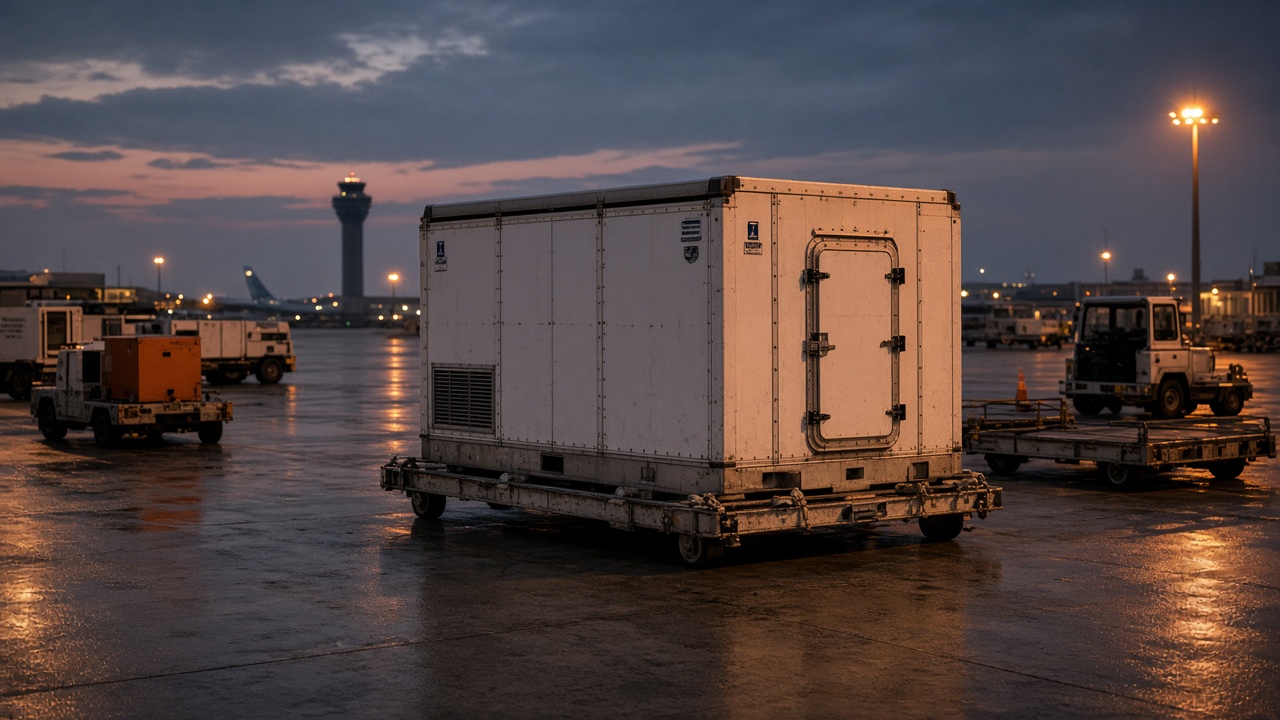
Fujitsu Ltd. opened a Haneda air-cargo pilot this month that exposes refrigerated unit load device sensor data through a logistics API, letting ground handlers and forwarders pull temperature histories without emailing CSV attachments. The test narrows the gap between pharmaceutical-grade cold chain on trucks and the airport leg where seafood and vaccine shipments often change custody twice before wheels-up.
What the API shares
The pilot rides on work Fujitsu announced with Logistics Knight Japan and Isuzu Motors to visualize transport temperatures across Japan’s Good Distribution Practice rules for pharmaceuticals. That November platform focuses on factory-to-hospital lanes; Haneda extends the same telemetry model to export perishables sitting in JAL Cargo–style refrigerator vaults and active-container plug rows.
Authorized users receive JSON feeds with logger IDs, probe readings at five-minute intervals, and exception flags when a ULD drifts outside the band declared on the air waybill. Fujitsu hosts the API on its Uvance cloud stack and maps identifiers to the Ministry of Land, Infrastructure, Transport and Tourism logistics standard guideline fields so a forwarder’s warehouse system does not need a custom parser per airline.
Why Haneda first
Tokyo International Airport concentrates Japan’s highest-value cold exports—tuna auctions bound for Hong Kong, biologics in pharma ULDs, and precision electronics that cannot cook on the apron. JAL Cargo’s published facility sheet lists multiple refrigerator footprints and dedicated pharma plug locations; the pain point is custody handoffs among airline, ground handler, and customs broker, each with a different terminal portal.
Fujitsu chose Haneda because MLIT’s Logistics Innovation Implementation Support Project already funds cross-company data sharing, and because the airport’s domestic and international cargo zones sit close enough to test same-day reefer transfers. A successful API read does not replace airline acceptance cutoffs—it gives the handler proof that a box stayed within spec while queued for X-ray.
Security and access rules
Shippers grant read access per airway bill number; the API returns only probes tied to that shipment. Fujitsu’s Unified Logistics blockchain layer logs which enterprise queried a record, mirroring the access controls the company ships for pallet-sharing marketplaces launched in January 2025. No passenger data transits the feed.
Airlines retain authority to reject cargo if the API shows a gap, but legal liability for spoiled goods still follows the contract of carriage. Fujitsu positions the pilot as decision support, not a certificate of release.
What success would look like
If the Haneda trial finishes without customs delays attributable to missing temperature PDFs, Fujitsu plans to offer the API to other MLIT-backed pharma logistics participants and to ANA Cargo-style partners experimenting with digital booking pipes. The near-term metric is fewer rejected seafood lots during summer heat, not a new consumer app.
MLIT’s broader Logistics Innovation program is funding multiple cold-chain experiments this fiscal year; Haneda is the airport-specific slice. Failure would push shippers back to emailed PDF logger exports—the workflow Fujitsu’s pharma partners say costs hours per disputed seafood lot.
Who joins the pilot
Fujitsu declined to name every handler in the first week, but people briefed on the rollout said a domestic forwarder with pharma export lanes and a ground handler operating refrigerator vaults in the international cargo zone are participating. Airlines remain data owners; the API is a read-only mirror of logger streams they already collect for IATA perishable audits.
Customs brokers testing the feed said they still need a human sign-off on the air waybill before releasing chilled seafood, but the API cut the time spent chasing logger files from two handlers. Fujitsu plans to publish OpenAPI documentation for qualified partners after the six-week trial. Temperature alerts still route to airline operations phones when probes breach limits. Haneda’s domestic cargo zone is the first site in the trial.
For technology buyers, the story is narrower: Japan’s cold chain is only as strong as its weakest handoff, and the weakest handoff is still the tarmac.