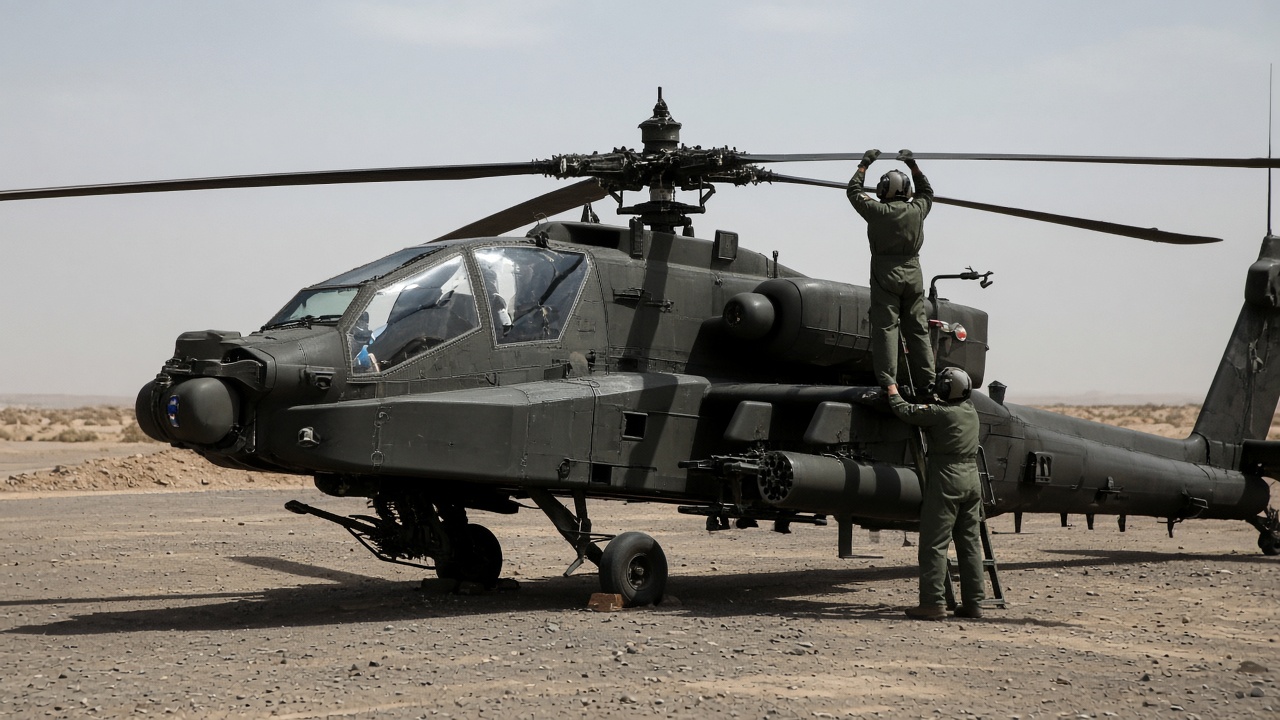
Israel’s Defense Ministry signed a Pentagon agreement on Wednesday to buy 12 Boeing AH-64E Apache attack helicopters, ending months of budget deadlock that had pushed the sale to the edge of cancellation and forced Washington to grant repeated extensions.
Ministry Director General Maj. Gen. (Res.) Amir Baram instructed Israel’s mission in Washington to sign after the cabinet approved funding in an urgent telephone vote the same day. Defense Minister Israel Katz called the purchase a “critical step” in rebuilding air-assault capacity that Israeli Air Force planners have tied directly to lessons from Hamas’s October 7, 2023 assault and the fighting in Gaza.
How the deal was rescued
The agreement covers the newest Apache variant, which Boeing markets as the AH-64E. Israeli officials said the helicopters will be tailored through a joint U.S.-Israeli process and are scheduled to arrive at the start of the next decade, replacing an aging fleet that the ministry has warned cannot sustain the tempo of recent operations.
Defense News reported that Israel missed an Oct. 7 signing deadline despite several U.S. extensions, raising fears that Boeing would reallocate production slots to other customers and raise prices. Israeli officials then asked for what they described as a final window; the cabinet vote redirected close to one billion new Israeli shekels toward the purchase, with Israeli media reporting that most of that sum came from a five-year economic development plan for Arab communities, supplemented by the 2026 state budget.
The Finance Ministry confirmed to The Jerusalem Post that the Apache line item was treated as urgent defense procurement, even as Israel heads into national elections in two weeks — a period when major spending decisions are normally constrained.
What Washington and Boeing committed
The Israeli ministry’s English-language release said the agreement was “formulated through a joint Israeli-American effort” led by its Washington delegation and budget department. Katz thanked the Pentagon and the Trump administration for “cooperation and flexibility” that allowed the contract to close.
Aviation Week noted that the AH-64E had been politically contested inside Israel’s coalition because of its price tag, but that air-force leaders argued the twin-engine gunships are essential for close air support, deep strike, and coordination with ground units operating along multiple fronts.
What comes next
Boeing will now enter the long-lead production and integration phase; Israeli officials did not publish a unit cost, but the shekel allocation disclosed this week signals a multiyear payment schedule rather than immediate delivery. Opposition lawmakers are already questioning the diversion of social-program funds, while security hawks frame the helicopters as insurance against simultaneous threats from Gaza, Lebanon, and Iran-backed militias.
For the Pentagon, the sale reinforces a steady stream of foreign military sales to Israel even as congressional Democrats debate conditioning other weapons transfers. U.S. officials have not commented separately on the cabinet’s funding maneuver, but the signed agreement removes the immediate risk that Israel would lose its place in Boeing’s Apache queue.