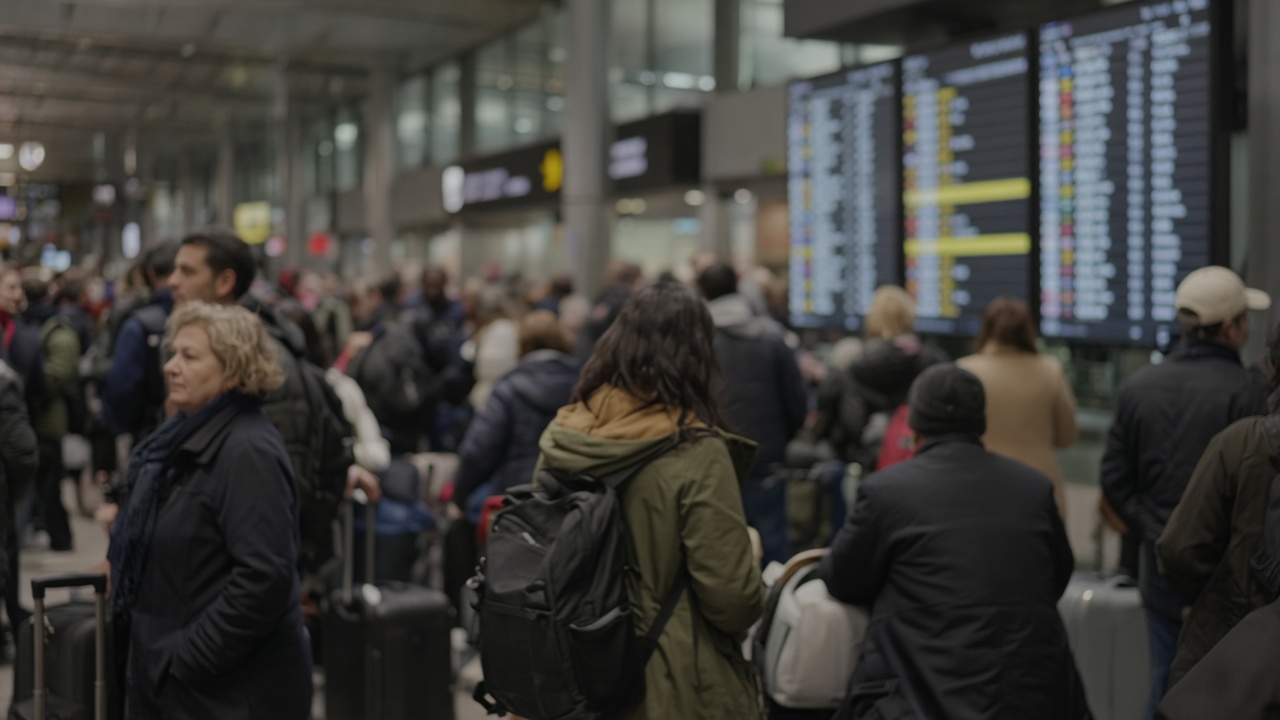
Italy’s air-navigation provider cut the country’s air-traffic capacity on Friday after overnight anomalies on the nationwide data network that feeds control towers, triggering cancellations and multi-hour delays at major airports from Rome and Milan to Turin and Catania.
ENAV said it detected problems on the transmission network supporting air-traffic services across Italy and ruled out malicious activity as the cause. Contingency systems kept operations stable until 6:00 a.m. local time, the company said, but as morning departures built up it began flow-management measures that temporarily reduced how many aircraft could be handled in Italian airspace.
Capacity fell, then climbed back
By mid-morning ENAV reported it was accommodating more than half of scheduled traffic through a backup satellite link, up from an earlier 50 percent cap that had forced airlines to shed flights. AP reported capacity had rebounded to about 75 percent as engineers worked with telecom operator TIM, which maintains the data network, to restore the primary system. ENAV later said equipment on its side was operating normally and that safety was being maintained through the secondary route, even though that path cannot carry full traffic volume.
At Rome’s Fiumicino airport, operator ADR told passengers to check with carriers after technical problems at the national control level. Il Sole 24 ORE reported several cancellations and roughly twenty delays of between 15 and 60 minutes on Friday morning, including services to Milan Linate, Riyadh, Tirana and Trieste. Turin airport listed multiple cancelled morning rotations to Palermo, Munich, Rome and Catania alongside widespread delays.
What travelers faced on the ground
The disruption landed on a busy European travel day with little margin for error. ENAV’s own bulletins stressed that flight safety remained the priority and that the slowdown was a capacity issue, not a failure of surveillance equipment in towers. Still, the practical effect for passengers was familiar: long queues at check-in, gate changes announced late, and crews waiting for slot releases.
Transport Minister Matteo Salvini publicly pressed TIM to “do its utmost,” reflecting political pressure as Italy’s tourism and business hubs absorb another infrastructure shock. ENAV said investigations into the root cause of the transmission fault were continuing and that restoring full throughput on the primary network was the immediate goal.
Not a cyberattack, but a fragile link
Official statements went out of their way to separate Friday’s event from a security incident. That distinction matters for an industry still on edge after prior hacks against airlines and airports elsewhere in Europe. Here, ENAV pointed to the data pipes between its systems and the wider network—managed under contract by TIM—as the locus of the fault.
For airlines, the episode is a reminder that even when radars and controllers are healthy, a broken datalink can empty departure boards. ENAV said it would keep flow restrictions in place only as long as needed. Passengers with connections through Italian hubs were advised to monitor airline apps and allow extra time until the primary network is fully back and schedules normalize.