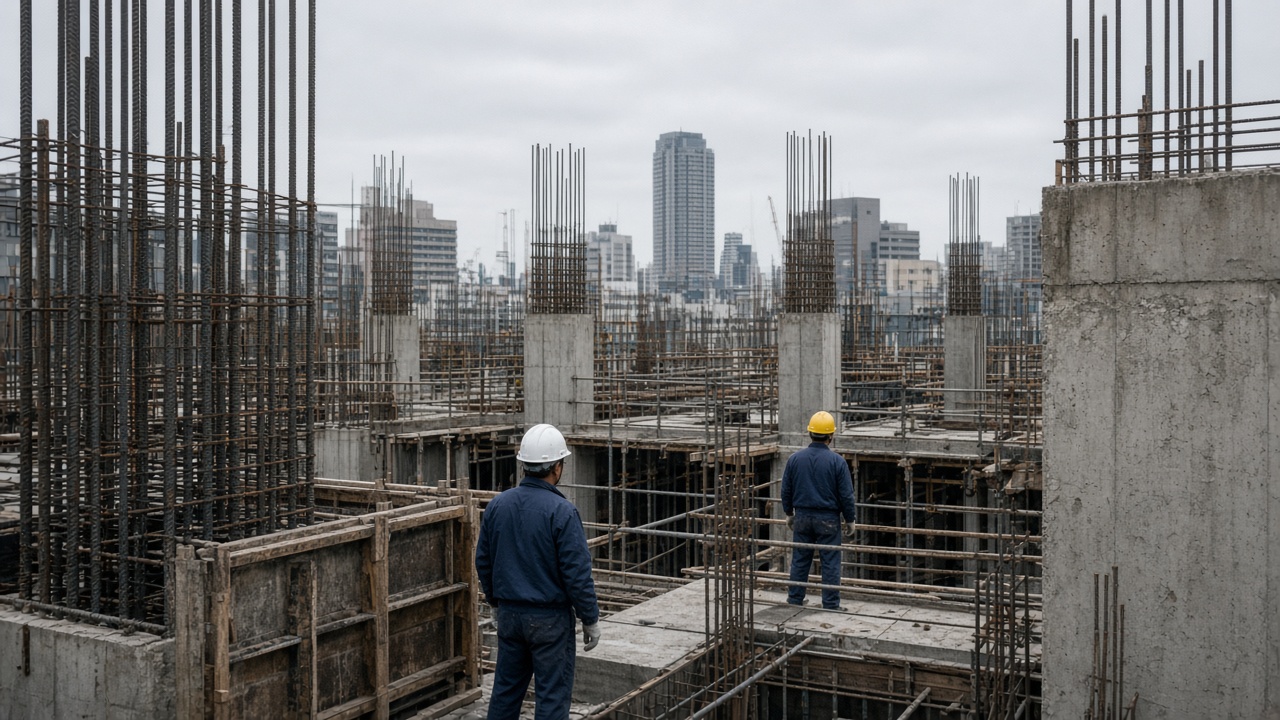
Nippon Ishin’s co-leader Fumitake Fujita walked into the Diet on October 16, 2026 with a list that included more than social-security cuts: he repeated the party’s demand for a secondary capital that can back up Tokyo in a disaster, and Tokyo’s super-contractors priced the sentence before lunch. Kajima Corp. and Obayashi Corp., two of the heavy civil names Ishin’s Osaka base knows by ticker, rose with other Kansai builders as investors bet that coalition math would turn vague “decentralization” talk into bid calendars.
What changed on the policy calendar
The Liberal Democratic Party and Ishin had agreed only a day earlier to open formal policy talks aimed at a coalition that could carry Sanae Takaichi to the prime minister’s chair in the extraordinary Diet session scheduled to convene on October 21, 2026. On the sixteenth, Fujita met LDP President Takaichi with secretaries-general and policy chiefs in the room—a sign that the conversation had moved from posture to paperwork.
Ishin leader Hirofumi Yoshimura, who doubles as Osaka governor, had already called the secondary-capital idea and premium relief for working-age households “absolute requirements.” The party’s ask is not a single blueprint on a map; it is a commitment to designate a region that could absorb national-government functions if Tokyo’s core were knocked offline, then legislate the split of roles between the capital and that backup seat. Takaichi told reporters she would carry Ishin’s demands back inside the LDP.
Why construction led the tape
Markets rarely wait for a bill number. Bloomberg’s October 16 snapshot showed Kansai-facing names catching a tailwind: Hankyu Hanshin Holdings traded up sharply intraday, Keihan Building and Kintetsu Group Holdings joined the move, and Obayashi was among the builders quoted higher. Kajima, which competes with Obayashi for large civil packages nationwide but markets itself heavily on urban renewal and disaster-hardening work, rose in the same session cluster.
The logic is blunt. A backup-capital program implies years of site investigation, transport links, government-office shells, and utility redundancy—work that flows to the handful of listed general contractors with balance sheets that can bond a decade-long pipeline. Ishin’s Osaka roots also keep attention on Hanshin megaproject corridors where Kajima and Obayashi already hold joint-venture slots on rail and port upgrades.
None of that guarantees a line item in the first supplementary budget. Coalition documents signed later in October would pledge a joint task force during the extraordinary session and legislation targeted by 2026, but traders were willing to pay for optionality on the sixteenth because political risk had flipped from “no majority” to “majority with a construction-friendly partner.”
Reading the Friday session
Equity investors were not alone. Super-contractor bonds tightened slightly against the broader industrial curve as domestic funds rotated toward issuers with long-dated order books. Analysts on the sell side cautioned that Ishin’s social-insurance demands could crowd out pure infrastructure yen in the first package; others argued that disaster backup facilities are easier to sell to the Ministry of Finance than open-ended consumption vouchers.
For Kajima and Obayashi shareholders, the near-term tell is not the press conference tone but the Diet timetable. If the LDP and Ishin initial a policy accord that names the secondary-capital task force before the prime minister vote, construction multiples could hold even without a published site list. If talks slip past October 21, the Friday rally becomes a one-day policy beta trade.
Obayashi, meanwhile, carried its own idiosyncratic bid from overseas data-center demand—Nikkei Asia reported on October 18 that the group agreed to buy U.S. builder GCON—so the Ishin premium landed on a name already re-rated for AI infrastructure. Kajima’s move was more purely domestic: investors treated it as a proxy for public works acceleration under a Takaichi-led cabinet that needs Ishin seats.
What to watch next
Policy chiefs meet again on October 17, 2026. Watch for language on the joint task force’s mandate—whether it must pick a candidate region in 2025 or only define evaluation criteria. Either outcome keeps civil engineers in the story, but only the former keeps the Kajima–Obayashi pair on the leader board through month-end.
Until then, the market’s working assumption is simple: Ishin got the LDP to listen on a backup capital, and the companies that pour concrete for a living were the first to collect.