Taiwan’s Mainland Affairs Council told citizens on Thursday not to travel to China for November commemorations of Sun Yat-sen’s 160th birthday, saying Beijing is twisting the legacy of the 1911 revolutionary to push a “oppose independence, promote unification” message and inviting Taiwanese attendees to serve as propaganda props.
Beijing announced last year that it would mark the Nov. 12 anniversary of Sun, who helped overthrow the Qing dynasty and founded the Republic of China—the state that relocated to Taiwan after 1949. Both Taipei and Beijing honor Sun in official rhetoric, but the council said the Communist Party’s version “does not stay faithful to historical fact” and uses the calendar event to undermine Taiwan’s separate political order.
Permits and legal lines
In news release No. 052, the council said it will not approve applications from people seeking to attend the mainland “commemorative conference.” Officials reminded travelers with restricted-status backgrounds— including former defense, foreign-affairs, and national-security personnel—to follow Article 9-3 of the Cross-Strait Relations Act, which limits contact with Chinese authorities.
The statement also warned civic groups against co-hosting Sun anniversary programs with Chinese or Hong Kong and Macau partners in Taiwan, and it urged anyone engaging in cross-strait exchanges to respect mainstream Taiwanese opinion rather than “echo the Chinese communists’ narratives.”
Why the fault line matters now
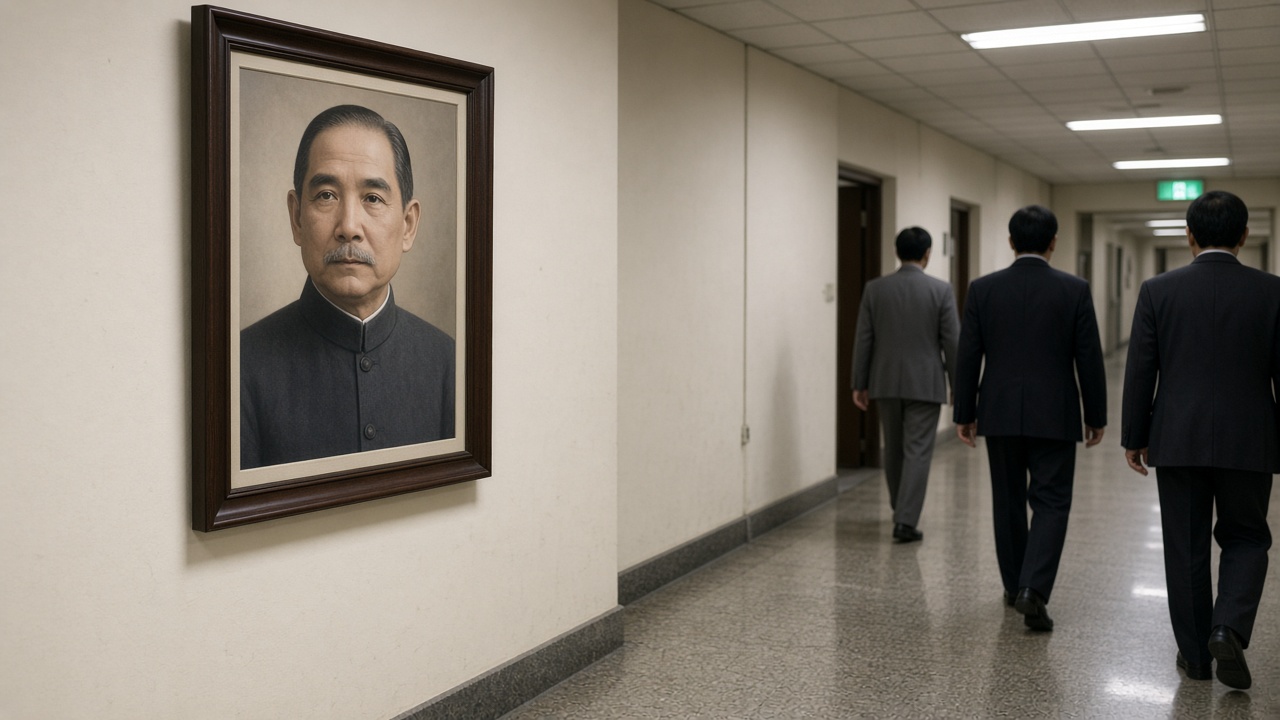
President Lai Ching-te’s Democratic Progressive Party emphasizes Taiwan’s distinct identity, yet his government still displays Sun’s portrait in the presidential office and retains Republic of China state symbols that Beijing claims as its own inheritance. That dual symbolism makes anniversary politics especially sensitive: Taipei does not want citizens lending legitimacy to ceremonies designed to fold Taiwan into a PRC storyline, while Beijing’s Taiwan Affairs Office has not responded to Thursday’s statement.
Taipei has separately protested Chinese efforts to claim credit for World War II victories, arguing the ROC government fought alongside the Allies before the People’s Republic existed. Chinese President Xi Jinping’s 2016 speech tying Sun to opposing any split of Chinese territory remains a reference point for how Beijing frames the anniversary.
Domestic polling consistently shows Taiwanese voters favor maintaining the status quo rather than rapid unification, which makes visible participation in mainland ceremonies politically costly for mayors, legislators, and business leaders who rely on local goodwill. The council’s language is therefore aimed as much at deterring soft-power outreach inside Taiwan as at blocking tourist travel.
With Nov. 12 six weeks away, the warning sets expectations that unauthorized trips will be denied and that co-hosted events in Taiwan could draw scrutiny from both the council and opposition lawmakers. For travelers, the practical upshot is to treat Beijing’s invitation list as a red line until Taipei publishes a narrower exemption list—which officials have not hinted at so far.