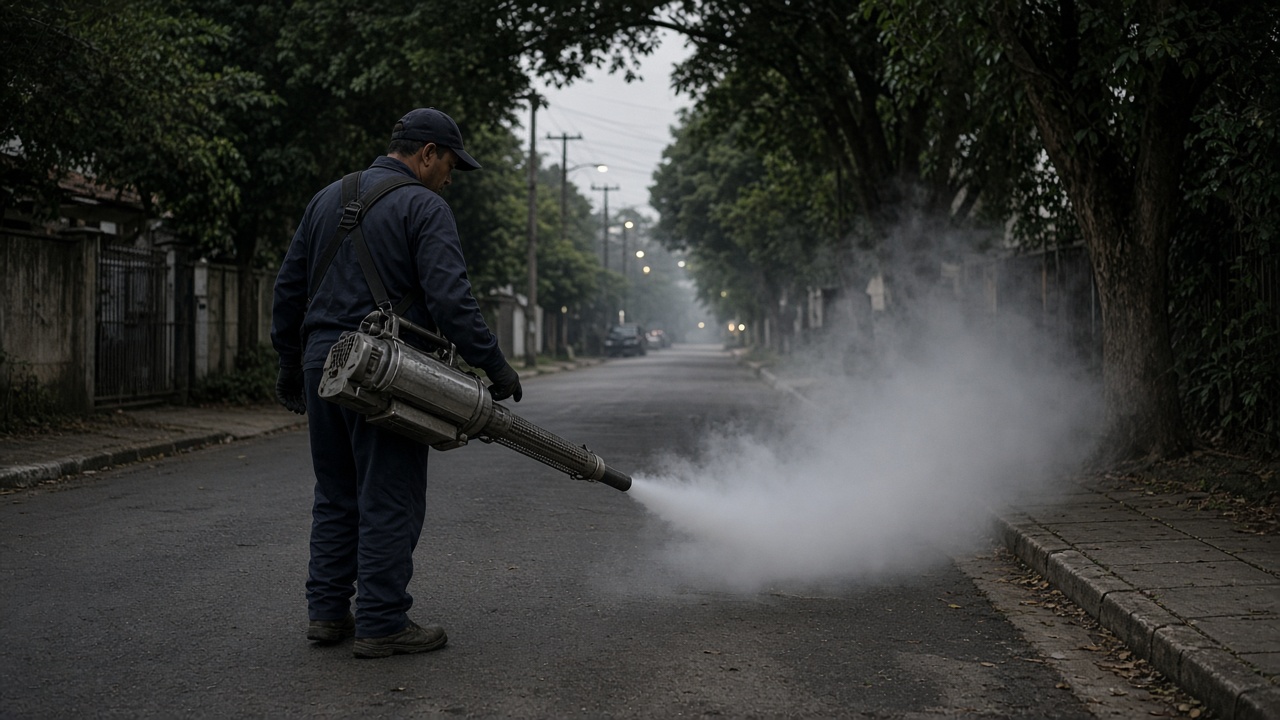
Delhi’s Municipal Corporation ordered intensified fogging around temples and Ramlila grounds this week as dengue infections crossed 799 for the year, with more than 200 cases recorded in October alone, according to the civic body’s vector-borne disease bulletin through 10 October.
October surge
The first week of the month added 98 dengue cases and 23 malaria cases; the second week added 104 dengue and 28 malaria, the MCD report shows. No dengue or malaria deaths have been reported in the capital so far in 2026, but standing committee chairperson Satya Sharma told health officials on 9 October that inspection lapses would not be tolerated.
September remained the highest monthly dengue count this year at 286 cases, up from 260 in September 2025, underscoring how post-monsoon pools still breed Aedes mosquitoes even after the India Meteorological Department declared nationwide monsoon withdrawal on 15 October.
Enforcement numbers
Civic teams have inspected more than 29 lakh households this year, finding mosquito breeding in about 1.98 lakh premises. The MCD has issued 1.37 lakh legal notices, launched over 23,000 prosecutions and collected penalties on 15,656 occasions, according to the latest weekly update.
Domestic breeding checkers have visited more than 3.3 crore premises, a higher count than the same period last year, yet breeding positivity remains near last year’s levels—suggesting enforcement is busy but not yet bending the case curve.
Festive risk
Sharma directed extra anti-larval measures near Ramlila venues and temples expecting Dussehra crowds, when stagnant water in flower vases and decoration tanks often goes unchecked. Malaria tallies, at 294 year-to-date, remain below the 494 recorded by mid-October 2025, but dengue is tracking higher.
Public health officials urged residents to cover overhead tanks and empty cooler trays weekly. Hospitals have not activated mass fever camps, but fever clinics in East and South Delhi reported longer queues in the second week of October.
What households should do
Delhiites traveling for the long festival weekend should use repellent in the evenings and seek testing if fever persists beyond 48 hours. The MCD’s 24-hour helpline accepts breeding-site complaints with ward numbers attached for faster dispatch.
Until overnight temperatures fall consistently, dengue season is not over. Fogging kills adults but does not replace source reduction; the civic data show breeding positives still running into the hundreds of thousands of households.
Laboratory surveillance shows dengue serotype 2 dominating samples sent to the National Centre for Disease Control this month. Private labs in Saket reported two-hour waits for NS1 antigen tests on 15 October.