President Vladimir Putin declared on Friday that Russia is building a military buffer inside Ukraine along the shared border and will refuse to negotiate over that territory in any future peace talks, sharpening the diplomatic standoff one week after a U.S.-backed diesel purchase from Moscow widened the rift between Washington and Kyiv.
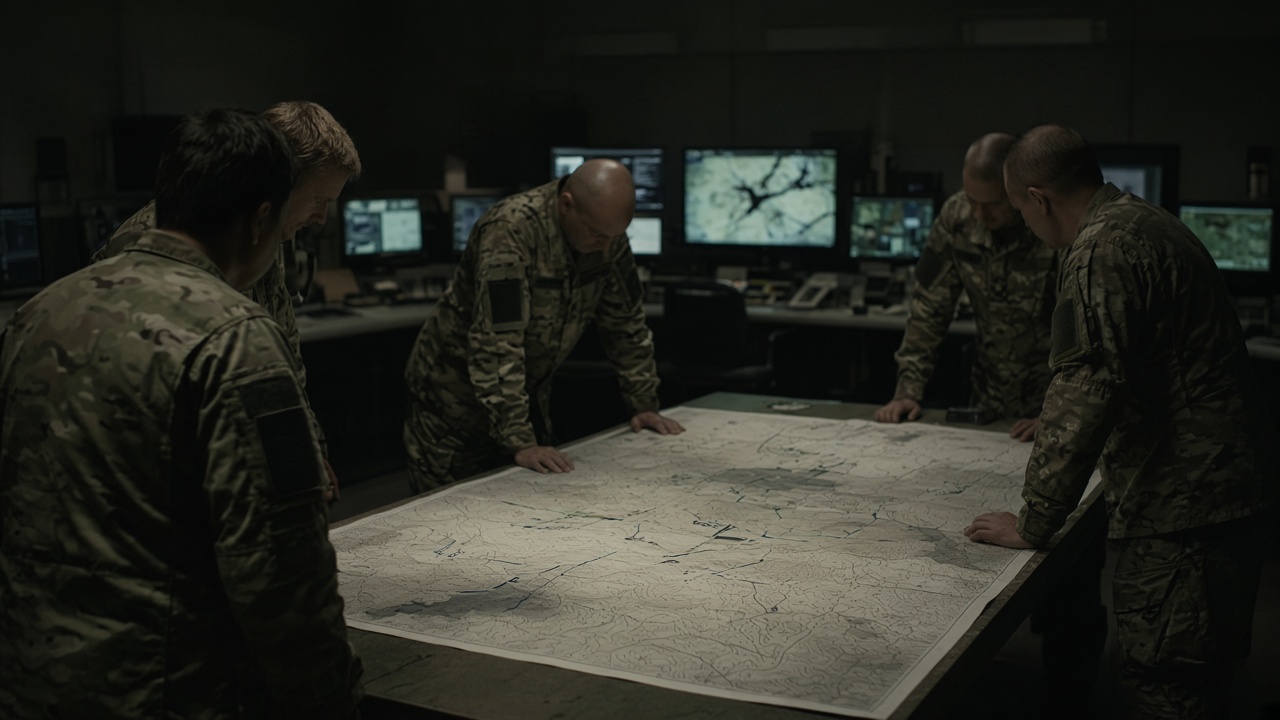
Speaking in televised remarks from a command post while wearing military uniform, Putin said Russian forces were ordered not only to push Ukrainian units out of Russia’s western Kursk region—site of Kyiv’s 2024–25 incursion—but also to secure adjacent Ukrainian land. “This task is being carried out successfully,” he said, adding that Moscow’s goal is “the absolute security of Russia’s border regions for the future.”
What Moscow is claiming
Kremlin spokesman Dmitry Peskov told reporters the planned security zone would run 660 kilometers (about 410 miles) along the state border. He said Russian forces currently control 465 kilometers of that corridor, roughly 70 percent of the planned strip. Peskov did not specify how deep the zone would reach into Ukraine, but Russian advances in recent months have focused on border areas in the Sumy and Kharkiv regions—territory Moscow has not formally annexed since its full-scale invasion in 2022.
Putin has spoken before about creating a buffer after the Kursk incursion, but Friday’s comments were his most explicit attempt to define the zone’s scale and to remove it from the bargaining table. “We do not plan to make this a subject for potential peace negotiations with Ukraine,” he said.
Kyiv and allies push back
Ukrainian officials have framed similar Russian demands as a bid to legitimize occupation. Speaking in Brussels as European Union leaders met on energy and competitiveness, President Volodymyr Zelenskyy asked how much additional territory Putin intends to seize, according to regional broadcasters. Ukraine’s military said this week it had recaptured 277 square kilometers and 16 settlements in the east, even as Russian missile and drone strikes continued against cities.
The timing matters for U.S. diplomacy. President Donald Trump said Thursday that he did not order a recent disruption of the Starshield satellite service that Ukraine relies on for drone operations, distancing himself from a move that had alarmed Kyiv. At the same time, a deal for the United States to buy Russian diesel—welcomed by the Kremlin—has left Zelenskyy arguing that concessions to Moscow are being discussed without Ukrainian input.
What comes next
Putin struck a confident tone toward senior officers, saying Russian forces still need to capture just over 10 percent of Ukraine’s Donetsk region and 16.5 percent of Zaporizhzhia—objectives that would require sustained offensives. Western capitals are unlikely to treat the “security zone” declaration as a new legal border, but it signals that any cease-fire talks would open with Moscow insisting on keeping ground it is still fighting to hold.
For Ukraine, the immediate risk is military: border oblasts that were not part of Russia’s 2022 annexation claims could see reinforced pressure as Moscow tries to complete the remaining 30 percent of the corridor Peskov described. For negotiators, Putin’s line that the zone is “non-negotiable” sets a hard predicate before any renewed push for a summit—whether hosted in the Gulf, Europe, or elsewhere.