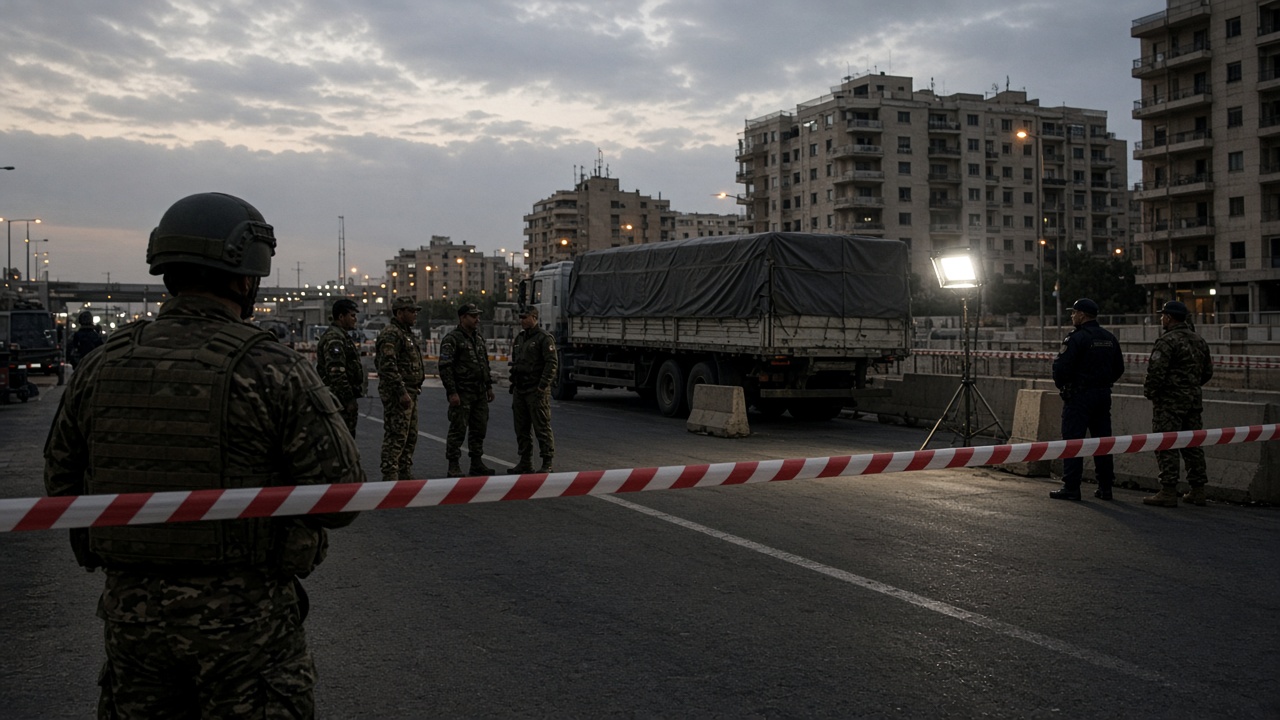
Secretary of State Marco Rubio pressed Lebanese President Joseph Aoun on Wednesday not to hand back a truckload of explosives that security forces intercepted on the highway between the Bekaa Valley and Beirut, telling him that restoring the shipment to Hezbollah should be "out of the question," according to U.S. and Lebanese officials briefed on the call.
The seizure has become an early test of Aoun's pledge to keep heavy weapons outside state control. Hezbollah has acknowledged the explosives were its property and said they were bound for use against Israeli forces in southern Lebanon, while rivals in Beirut have cited the incident as proof that the group's parallel arsenal still endangers civilians in the capital.
What Lebanese forces found at the checkpoint
Lebanese security officials said the truck was stopped last week at a checkpoint on the main road linking Beirut to the eastern Bekaa Valley. Inside, investigators recovered about 780 kilograms of explosives, including roughly 250 kilograms of TNT and 250 kilograms of C-4 plastic explosive, according to figures cited by Lebanese authorities and reported by the Associated Press.
Two people transporting the shipment were arrested. A Hezbollah official said Thursday that the cargo belonged to the group and denied that it was meant for attacks inside Lebanon, framing the material as destined for the front line with Israel. Political opponents and civil-society groups have rejected that distinction, arguing that moving industrial quantities of high explosive through a densely populated corridor poses its own risk regardless of the stated target.
Rubio's message to Aoun
A State Department official said Rubio urged Aoun to hold accountable anyone who ordered, financed or directed the shipment and stressed that the explosives must not be returned to Hezbollah. Axios, which first reported details of the conversation, quoted the official as saying Rubio framed the decision as a measure of whether Beirut will enforce disarmament steps it has promised since the 2024 ceasefire arrangement.
Aoun's office said the president assured Rubio that the army and internal security forces are implementing orders to prevent armed displays, confiscate unauthorized weapons and combat smuggling. He also said judicial authorities would show no leniency toward those responsible, according to a Lebanese official quoted by Reuters and Al Jazeera.
"No one will be released unless he is innocent," Aoun told Rubio, the official said, in response to pressure from Hezbollah and allied factions to free the two detainees and restore the explosives.
Why the standoff matters beyond one truck
Lebanon's government is trying to rebuild credibility with Western donors and Gulf capitals that conditioned aid on measurable progress disarming militias. Returning the shipment would signal that Hezbollah can still move war materiel through state checkpoints and recover it when caught, undermining Aoun's repeated assurances that only the national army may bear arms.
Israel, which continues intermittent strikes in southern Lebanon, has pointed to smuggling routes as evidence that Hezbollah is reconstituting. U.S. officials have paired military aid to the Lebanese Armed Forces with demands that seizures like this one be followed by prosecutions rather than quiet handbacks.
Parliament has not yet scheduled a public session on the incident, but several anti-Hezbollah blocs said they would seek testimony from the interior minister on how the truck passed initial screening points.
What happens next
Judicial officials in Beirut are expected to formalize charges against the drivers while a wider probe examines whether senior Hezbollah logistics figures knew of the route. Hezbollah's allies in cabinet have filed administrative requests for the material's release, according to Lebanese media accounts.
Rubio's intervention raises the diplomatic cost of any reversal. Western embassies in Beirut have been privately aligned with Washington's line, several diplomats said, because a second major smuggling case in a month would complicate already stalled IMF talks.
U.S. officials said they would watch whether the explosives are destroyed or transferred to military storage under international supervision, a step Beirut has used after past arms busts to assure partners the material will not re-enter circulation.