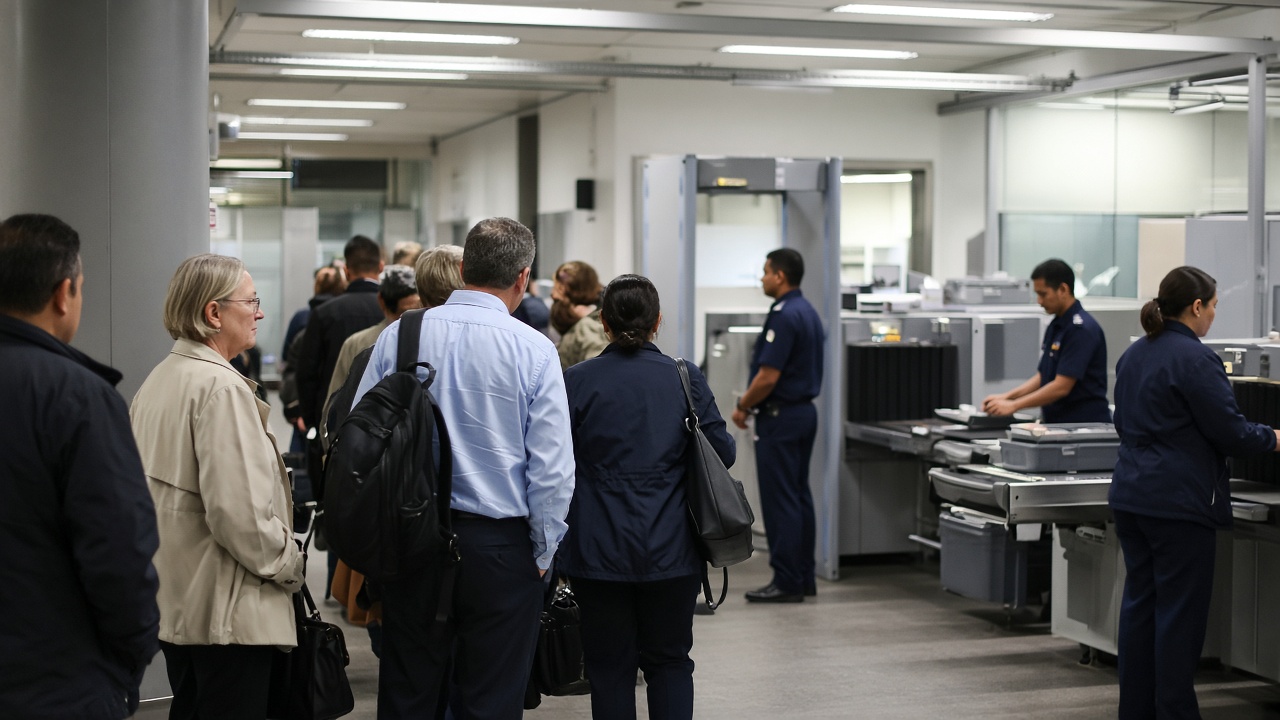
Hundreds of security screeners at Sydney Airport stopped work on Friday in two four-hour stoppages, as the Transport Workers Union escalated a pay and rostering dispute with contractor Certis on one of the country’s busiest travel days.
The union said members walked off from 6 a.m. to 10 a.m. and again from 5 p.m. to 9 p.m. across domestic and international terminals. Certis and Sydney Airport said screening remained open but at reduced capacity, and airlines warned passengers to allow extra time.
What the union wants
In statements issued before the action, the TWU accused Certis of cutting part-time hours, relying on casual rosters and refusing commitments on job security. The union framed Friday’s stoppages as the next step after failed crisis talks on Thursday, following shorter walkouts in late September that also targeted the same workforce.
Certis countered that it had engaged constructively and was rostering contingency staff with Sydney Airport to keep aviation security compliant with federal regulations. A company spokesperson said the priority was safety and minimizing disruption, while accusing the union of choosing industrial action that affects the travelling public.
Passenger impact
Sydney Airport’s public advice mirrored airline notices: checkpoints would stay staffed but queues could lengthen during the strike windows. Virgin Australia published a specific alert for Friday departures, citing planned industrial action by Certis employees. By mid-morning, some terminal wait-time boards still showed relatively short security lines, but airport officials cautioned that evening peaks could look different.
The dispute sits against a wider squeeze on airport labour costs after the pandemic-era travel rebound. Security contractors nationally have faced union pressure over wages that workers say have not kept pace with inflation, while airports and carriers resist fare-driven cost increases.
What happens next
Neither Certis nor the TWU announced a return to formal bargaining timetables on Friday morning. Federal workplace laws require protected action to be notified in advance; further stoppages would need fresh ballots unless negotiators reach a deal.
For travellers, the practical test is whether evening departures clear security within airline cut-off times. Sydney Airport said it had added baggage and passenger-support staff in terminals and urged customers to monitor messages from their carrier. If delays cascade, knock-on effects could hit domestic connections and long-haul banks that depend on tight turnarounds at T1.