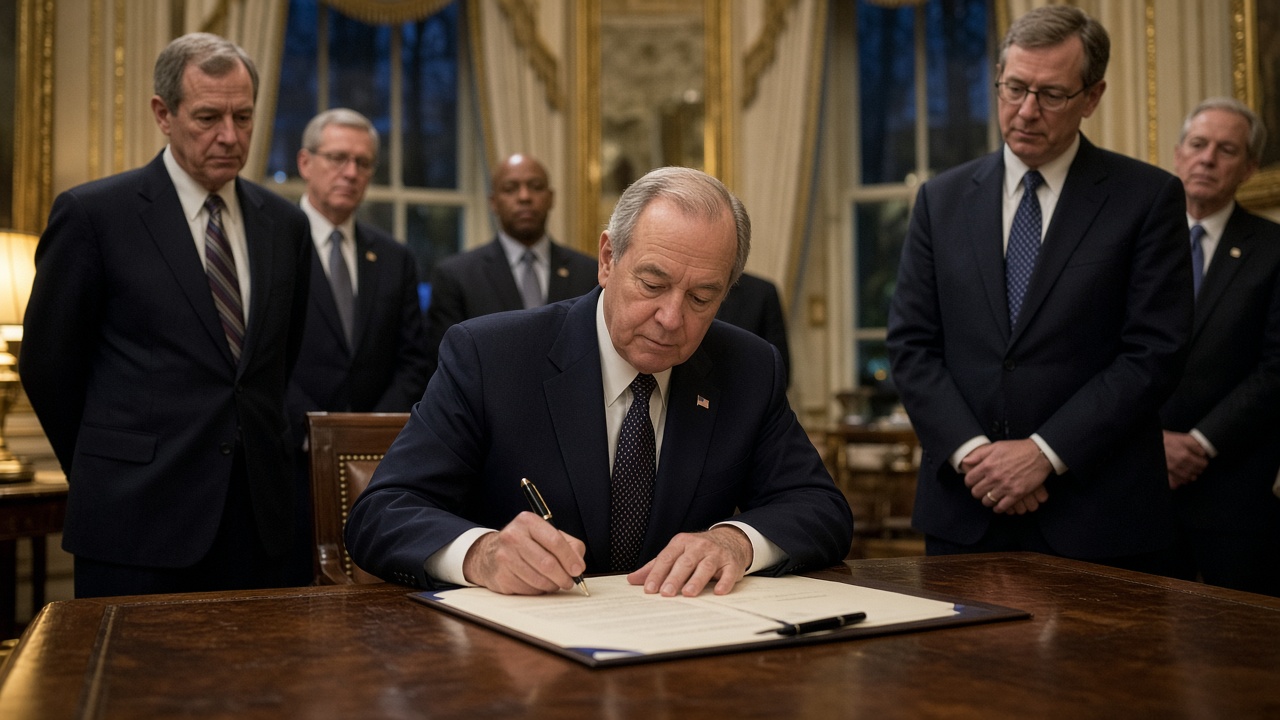
President Donald Trump signed an executive order on Friday that waives sanctions, import restrictions and tariff authorities under the Lindsey O. Graham Sanctioning Russia and Iran Act of 2026, stopping the package from taking full effect just two days before a statutory implementation date of 18 October.
The White House said Trump certified to Congress that the pause is in the national interest. The order covers duties that could have reached 100% on goods from major buyers of Russian oil and gas, along with sanctions tools lawmakers designed to tighten the economic pressure on Moscow over its war in Ukraine.
What the waiver freezes
Trump signed the Graham Act into law on 18 September. The statute gave the president wide authority to target Russia’s energy exports, financial institutions and so-called shadow fleet tankers, and it allowed tariffs on countries that continued large-scale purchases of Russian crude or gas.
Friday’s order invokes Section 115 of the law, which permits waivers when the president submits a written certification to Capitol Hill. The White House publication states that Trump is waiving “the application of such sanctions, restrictions, and duties provided for in the Graham Act,” and that the waiver stays in place until he or senior cabinet officials decide further action is warranted.
Reuters reported that the move halts penalties that were days from activation, including duties on the five largest importers of Russian energy and countries the law treats as facilitators of Russian sanctions evasion. The order does not unwind separate Russia sanctions imposed under earlier executive authorities.
Capitol Hill and Kyiv react
A bipartisan group of 20 lawmakers wrote to Trump on Thursday urging “full and faithful implementation” of the Graham Act, arguing that applying the tools “to their fullest extent and without delay” would be decisive in pushing Vladimir Putin toward serious peace talks.
Democrats moved quickly to attack the waiver. Representative Don Beyer of Virginia said on social media that Trump had again “betrayed our Ukrainian partners” and defied congressional intent behind legislation meant to punish Russia’s invasion.
The timing lands amid renewed friction between Washington and Kyiv. Ukrainian President Volodymyr Zelenskyy has criticized Trump’s agreement to purchase Russian diesel as a gift to Putin, while the administration has warned it could limit intelligence sharing if Ukraine keeps striking Russian refineries. Zelenskyy said this week that a slowdown on the Starlink network during Russian missile attacks was a “very dangerous and unpleasant surprise,” with speeds still not fully restored as of Friday.
Energy politics before the midterms
Trump has linked Russia energy policy to domestic fuel prices, which rose sharply after the U.S. confrontation with Iran earlier in the year. On 9 October he said he and Putin had discussed U.S. diesel purchases during a phone call, a step European allies warned could undercut the coalition supporting Ukraine.
With congressional elections in November, Republicans and Democrats are both watching pump prices and household costs. Friday’s waiver keeps the Graham Act’s toughest trade weapons holstered for now, even as lawmakers who backed the bill say the administration should have let the Sunday deadline stand.
The White House has not detailed which foreign governments might have faced tariffs had the waiver not been issued. India and China rank among the largest remaining buyers of Russian crude, and both were frequently cited when the bill moved through Congress this summer after Senator Lindsey Graham’s death in July.
Administration officials have not scheduled a public briefing on the certification sent to Congress. For Ukraine’s government, the immediate question is whether any Graham Act sanctions will be applied at all before winter fighting intensifies along the front.