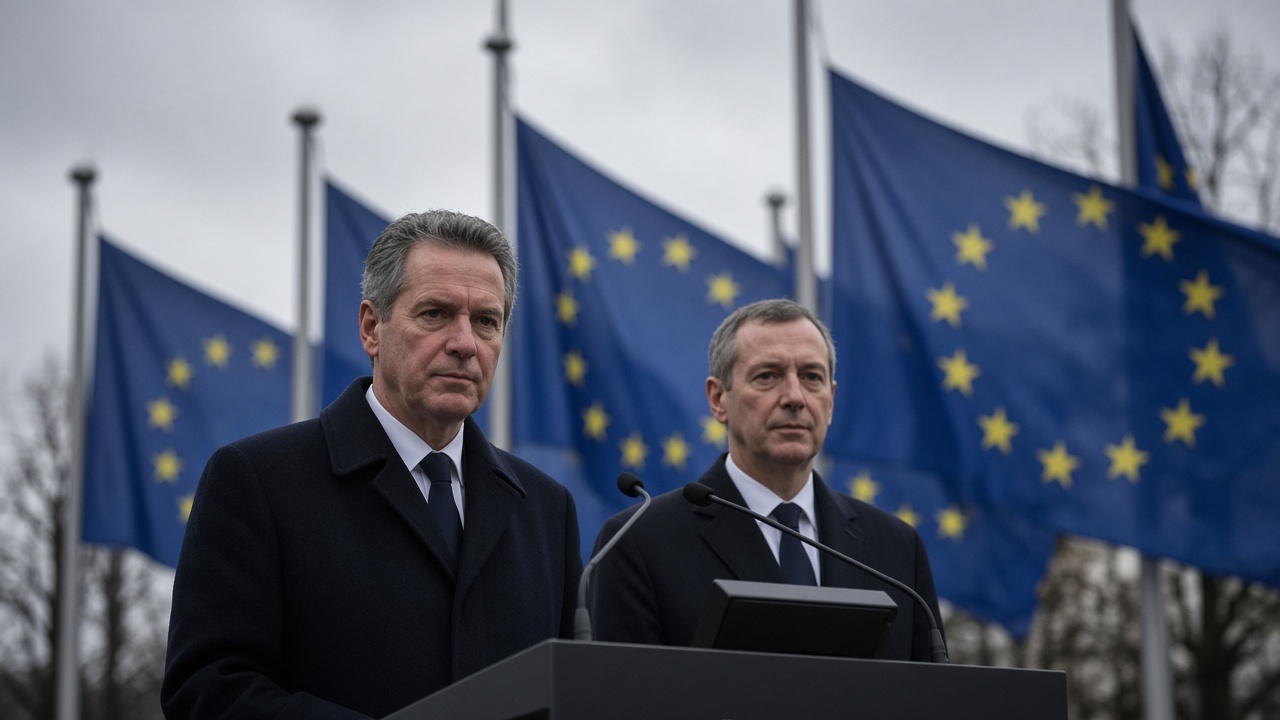
Volodymyr Zelenskyy arrived at the European Council on Friday with a winter shopping list measured in billions of euros and hundreds of Patriot interceptors, and EU leaders answered with a promise to keep pressure on Moscow rather than relief for the Kremlin.
Standing beside Zelenskyy at a doorstep briefing, European Council President António Costa said support for Ukraine "remains as strong as ever" and warned that now was "no time to relieve Russia's sanctions." European Commission President Ursula von der Leyen pledged that the bloc would stand by Kyiv through another winter of strikes on power plants and water systems, telling reporters that Russia was "trying everything" to break civilian infrastructure.
Seventy billion euros and 300 Patriots
In his address to heads of government, Zelenskyy said Ukraine would need roughly 155 billion euros to sustain the war in 2027 and asked the EU to close at least 70 billion euros of that gap with direct support for weapons and resilience spending. He framed the figure as realistic, not aspirational, and linked it to holding Russian advances before any negotiation.
Separately, he called for a "winter package" that includes 300 Patriot interceptors aimed at ballistic missiles, which have returned to Ukrainian cities alongside jet-powered Shahed drones. Several European militaries still hold Patriot stocks, but diplomats have cautioned that transfers are politically sensitive for Spain and Greece, which worry about depleting their own air defenses.
Frozen assets and a divided table
Zelenskyy also revived the idea of using immobilized Russian central-bank assets inside the EU, proposing a European custodian structure to reduce the risk of funds being unfrozen without Kyiv's consent. Belgian Prime Minister Bart De Wever, whose country hosts much of the collateral, told journalists overnight that he did not want to "operationalize" those assets before a peace settlement, echoing long-standing fears about financial-market retaliation.
EU rules require unanimity to release the roughly 200 billion euros in frozen reserves, and De Wever insisted no holder could act alone. Even so, Zelenskyy's trio of requests — interceptors, budget cash, and asset mechanics — is likely to dominate technical talks in Brussels for weeks, with leaders saying Friday's summit was a political signal rather than a funding decision.
Washington's shadow
The Brussels meeting unfolded as Kyiv and Washington traded public barbs over Starlink service for Ukraine's military and U.S. moves that Kyiv says weaken sanctions enforcement. Zelenskyy told reporters that Starlink connectivity had been restored but not yet to full prior speeds, a reminder that European aid is only part of Ukraine's wartime logistics chain.
German Chancellor Friedrich Merz said there was broad agreement to sustain assistance through the coming winter, while French President Emmanuel Macron highlighted satellite imagery and early-warning support. For now, EU capitals are being asked to translate Friday's rhetoric into Patriot deliveries, budget lines, and — if they can agree — a legal path on Russian assets before the next wave of cold-weather strikes.