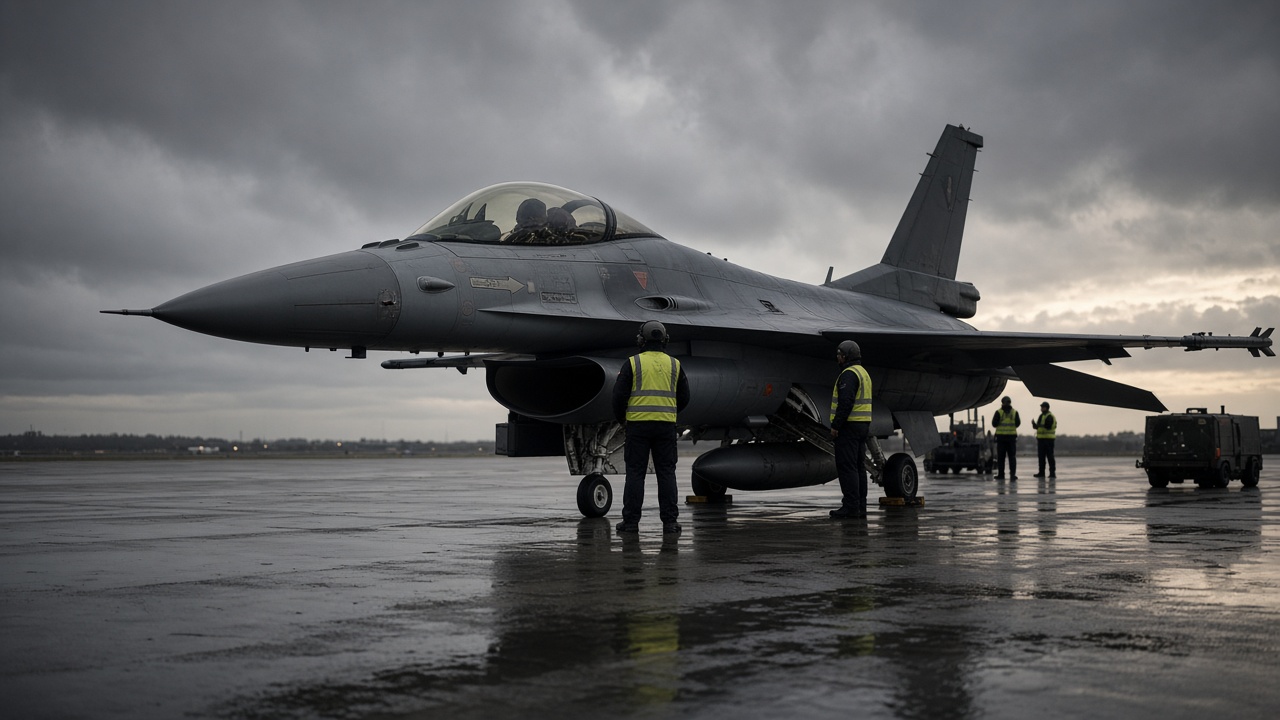
Belgian Prime Minister Bart De Wever said on Thursday night that his government will deliver ten F-16 fighter jets to Ukraine before the end of 2026, reopening a transfer schedule that had slipped while Belgium waited for Lockheed Martin F-35s to replace its aging fleet.
De Wever spoke after a bilateral meeting with President Volodymyr Zelenskyy on the sidelines of the European Council summit in Brussels. He told journalists that Ukraine “urgently needs operational jets” and that Belgium could help, even as he declined to disclose every detail of the conversation.
Why Kyiv is pressing for jets now
De Wever cast the F-16s as one of the few systems that can still blunt Russia’s jet-powered Shahed-style drones and protect infrastructure that Moscow has repeatedly targeted. He cited grain exports moving across the Black Sea, energy plants and urban areas as examples where Ukrainian pilots need persistent air cover.
Zelenskyy thanked Belgium on social media and said F-16s were already playing a “significant role” in repelling Shahed attacks. He added that the two leaders discussed securing additional aircraft and ammunition “as soon as possible.”
F-35 delays had held back Belgian handovers
Belgium’s previous government committed to sending dozens of F-16s to Ukraine as F-35s arrived, but the timetable has been tied to how quickly Belgium can induct the new American fighters. De Wever said Belgium had “fallen a little behind because of delays with the F-35s” but that deliveries are “now starting to arrive,” which frees airframes for Ukraine.
Earlier reporting from Belgian outlets had described a slower near-term pace — including plans for only a handful of operational jets by December — so De Wever’s public pledge of ten aircraft this calendar year marks an acceleration he linked directly to the F-35 pipeline.
Ammunition and money still on the table
De Wever said he and Zelenskyy also discussed Belgian-made ammunition for the F-16s, including rounds produced by FN Herstal. On funding, he said he told Zelenskyy that Belgium should keep supporting Ukraine through the European Union, though he did not preview a specific financing vehicle.
Belgium has been cautious about proposals to tap frozen Russian central-bank assets held largely at Euroclear, citing legal and financial risk. De Wever did not offer new commitments on that front after Thursday’s meeting, even as EU leaders continued broader talks on sustaining Kyiv through another winter.
What happens next
Zelenskyy is scheduled to address EU heads of state and government on Friday, giving Ukraine a chance to align member states behind fresh military and budget requests. For Belgium, the immediate test is logistical: confirming which F-16 airframes are ready to leave Belgian service, training Ukrainian maintainers and pairing jets with the ammunition De Wever highlighted.
Western officials have warned that every week without additional interceptors leaves Ukrainian ports and power grids exposed as Russia adapts its strike mix. De Wever’s statement does not by itself put ten jets in Ukrainian hangars, but it sets a public deadline — ten aircraft in 2026 — that NATO allies and Kyiv will now measure against delivery notices and flight hours over the front.