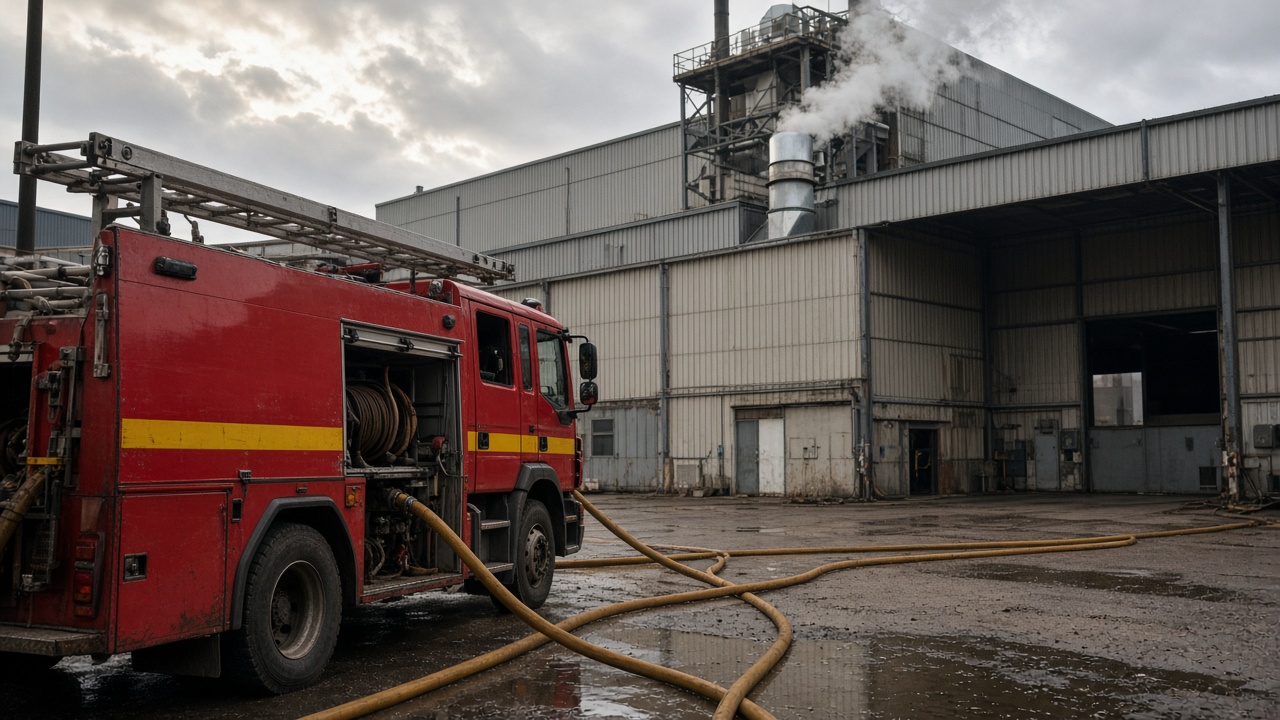
Fire and Rescue NSW is still working to extinguish a blaze inside a feed mill at Cardiff, south of Newcastle, after flames that began in a dust-control vent spread through exhaust ducts and pushed temperatures near the plant’s grinder to about 500 degrees Celsius.
Crews were called to Nelson Road just after 10 a.m. on Friday when an automatic alarm sounded. Zone commander James Manuao said the fire started in the venting system and travelled through piping toward the bottom of the mill, where meal grinding equipment sits.
How crews are attacking the fire
Manuao told the ABC that firefighters had contained surface flames but were methodically tracing the duct network to reach burning material lower in the structure. He said readings near the grinder remained near 500C while sections closer to the roof had cooled below 200C.
Engineers were on site to advise on the mill’s mechanical layout. Manuao said exclusion zones stayed in place and that crews expected to gain control within a few hours, though he cautioned that heat was still propagating downward through the system.
At its peak, up to 50 firefighters responded. Manuao said water had been shut off to parts of the area while crews worked, and that smoke was no longer visible from the street by Friday night even as internal hotspots persisted.
Site risks and community impact
Authorities said they did not believe the fire had jumped into separate silos on the property, but they were monitoring whether dust residues could reignite as crews opened sections of ducting. Feed mills carry combustible grain dust, which can fuel rapid pressure rises when confined.
Cardiff sits in the City of Lake Macquarie, part of the Hunter industrial belt that supplies poultry and livestock producers across New South Wales. A prolonged shutdown at the Nelson Road plant could ripple into feed deliveries if grinding lines remain offline.
Police had not released information on injuries by late Friday. Fire and Rescue NSW said its focus remained on fully extinguishing the fire and confirming the building was safe before investigators examine the vent where the alarm first triggered.
What happens next
Once the blaze is out, SafeWork NSW and fire investigators typically interview operators and review maintenance records on dust-collection equipment. Manuao emphasised that crews were prioritising safety over speed because of the narrow access paths inside the ductwork.
Residents in surrounding streets were asked to keep clear of the exclusion perimeter. The ABC reported that firefighters would remain on scene until thermal scans showed the grinder area had cooled enough to inspect.
No evacuation of nearby homes was announced, but authorities warned that odour and smoke could return if crews opened additional hatches to attack hidden fire pockets. The mill operator has not issued a public statement on production impacts.