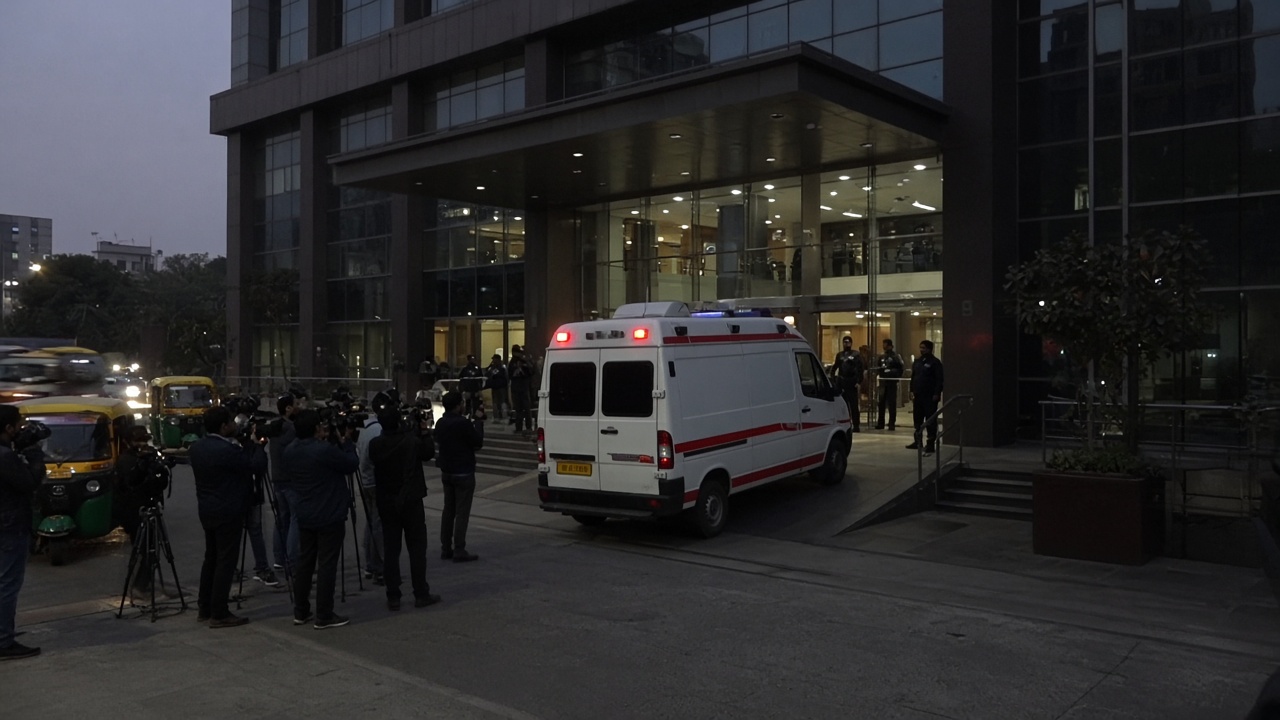
Lal Krishna Advani, the 98-year-old Bharatiya Janata Party patriarch and former deputy prime minister, was admitted to Indraprastha Apollo Hospital in south Delhi on Friday evening after complaining of a chest infection, hospital officials said. His condition was described as stable.
Advani arrived at the hospital around 7:30 p.m. and was placed in the pulmonary department under a team of doctors, according to statements from Apollo and reports in The Hindu and The Indian Express. Officials said diagnostic tests were underway but did not specify how long he would remain inpatient or whether he would need intensive care.
A familiar hospital corridor
The admission is the second time in six months that Advani has been treated at the same facility for age-related illness. He was hospitalised in May 2026 and discharged after a short stay. He also faced repeated medical evaluations in 2024, including admissions to Apollo and the All India Institute of Medical Sciences in New Delhi, with at least one spell in intensive care that December before he was discharged on Christmas Day.
Family members and party colleagues have not issued detailed medical bulletins beyond the hospital's stability assessment. At 98, even routine respiratory infections carry elevated risk, and Delhi's post-monsoon air quality often complicates recovery for elderly patients with limited lung reserve.
Political weight beyond the ward
Advani remains a symbolic anchor for the BJP even though he has largely withdrawn from day-to-day politics. He served three stints as party president between 1986 and 2005, led the Ram Rath Yatra in 1990 that reshaped national discourse on the Ayodhya movement, and was Union home minister during the 1999 Kargil conflict and the 2001 Parliament attack. As deputy prime minister from 2002 to 2004, he was among the most powerful figures in the Atal Bihari Vajpayee government.
Prime Minister Narendra Modi visited Advani at his Delhi residence on October 7 — nine days before this hospitalisation — to seek his blessings on completing 25 years as a head of government, a milestone marking Modi's first oath as Gujarat chief minister in 2001. Modi later said Advani's decades of public service had left a lasting imprint on national life.
Honours and legal closure
President Droupadi Murmu awarded Advani the Bharat Ratna, India's highest civilian honour, in March 2024 at his home, with Modi and other senior leaders present. Born in Karachi in 1927, Advani migrated to India during Partition and rose from grassroots organising to become one of the defining figures of Hindu nationalist politics.
A special Central Bureau of Investigation court acquitted him and other leaders in the criminal case tied to the 1992 Babri Masjid demolition, closing a legal chapter that had shadowed his career for decades. Supporters cast the verdict as vindication; critics argued it left unanswered questions about accountability for the violence that followed the structure's destruction.
What happens next
Hospital authorities have not announced a discharge timeline. BJP leaders are expected to refrain from large gatherings at the campus to avoid crowding medical staff, a pattern followed during his previous admissions. Opposition figures across parties typically issue goodwill messages when senior veterans fall ill, reflecting Advani's cross-cutting stature in India's post-Independence political history.
For now, the focus is clinical: treating the chest infection, monitoring oxygen levels and cardiac function, and deciding whether Advani can return home or requires a longer convalescence. Party workers and historians alike will be watching the bulletins — not for campaign strategy, but for news about a leader whose career spans nearly the entire life of modern Hindutva politics.