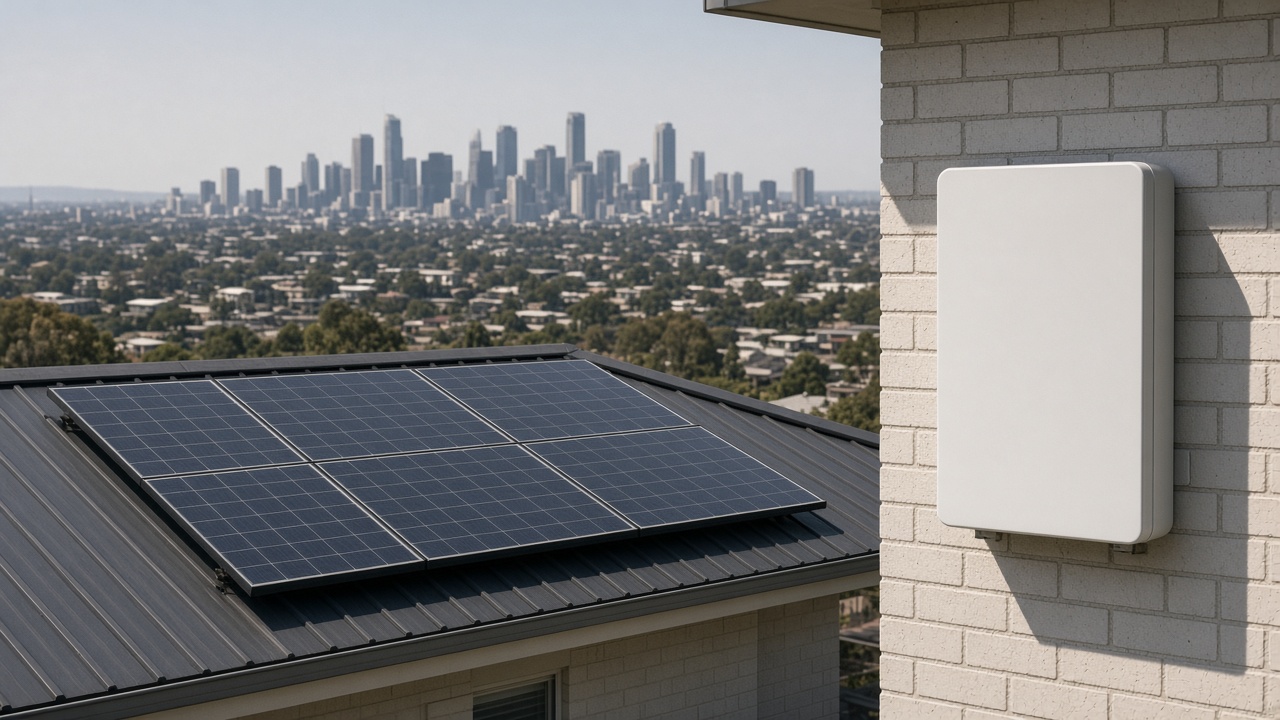
Household and small-business batteries across New South Wales earned about two million Australian dollars in a single afternoon this week when wholesale electricity prices spiked during a spring heatwave, according to retailer Amber Electric and grid data cited by the ABC.
The episode on Monday laid bare how vulnerable Sydney's supply stack remains when temperatures climb past 34 degrees Celsius while multiple coal units and high-voltage lines are offline for maintenance. The Australian Energy Market Operator said demand jumped by nearly 2,000 megawatts within an hour as air conditioners ramped up, just as roughly 2,400 megawatts of coal capacity was unavailable across the state.
Prices hit the ceiling
NSW spot prices on the National Electricity Market whipsawed after 3 p.m. AEDT, repeatedly brushing the market's maximum price of 23,107 dollars per megawatt-hour. Amber co-chief executive Dan Adams told the ABC that revenue flowing to battery owners connected to the retailer's trading platform was "probably" a record for a single day.
Customers with rooftop solar paired to batteries or electric vehicles capable of vehicle-to-grid export could charge when power was cheap and sell back into the grid during the spike. The windfall was concentrated among the relatively small share of households enrolled in dynamic retail plans that pass through wholesale volatility rather than smoothing it with flat tariffs.
Coal and wires
Four of NSW's 12 coal-fired units were out of service during the heatwave, including two at Origin Energy's Eraring plant, the state's largest generator. AEMO confirmed that constraint, adding that several transmission corridors were derated, limiting how much renewable generation and grid-scale storage in western NSW could reach coastal load centers.
Grid-scale batteries have more than doubled in the past year to exceed nine gigawatts nationally, and AEMO chief executive Daniel Westerman said batteries set the wholesale price almost half the time in the third quarter of 2026. Monday's event shows home batteries can capture the same scarcity rents when policy and retail products expose consumers to real-time signals.
Policy questions
Energy Minister Chris Bowen has promoted consumer energy resources as a flexibility tool, but Monday's split outcome — pain for buyers on exposed tariffs, gains for battery owners — will fuel debate about equity. Critics argue that wealthier households with capital to install storage benefit from volatility that raises bills for renters and fixed-contract customers.
For the market operator, the priority is keeping the lights on during overlapping maintenance seasons and heatwaves that climate scientists say are arriving earlier each spring. Until Eraring's units return and transmission work clears, NSW is likely to see more days where a few thousand home batteries earn outsized returns while the wider system pays scarcity prices.