Ofcom said UK mobile networks carried 3,294 petabytes of data in the second quarter of 2026, up 13.2% year on year, even as fixed-line voice revenues slid 16.1% to £874.2 million—a split that shows where consumer spending and network investment are heading.
The regulator’s quarterly market update, published 14 October, also counted 91.5 million mobile subscriptions excluding machine-to-machine lines, and 29.5 million fixed broadband connections. Average monthly mobile revenue per subscriber reached £13.63, with post-pay customers contributing £16.22 compared with £5.41 on pre-pay—evidence that operators still monetise contract bundles even as voice minutes fade.
Data growth versus legacy voice decline
Mobile-originated voice minutes fell 5.1% to 35.2 billion, while SMS and MMS volumes dropped 17.1% to 4.51 billion messages. Dedicated mobile broadband subscriptions rose 7.5% to 5.3 million, suggesting dongles and router plans remain a niche but growing escape hatch for households off full fibre. Fixed originated call volumes plunged 16.3% to 3.02 billion minutes as PSTN switch-off campaigns push remaining landline users toward VoIP.
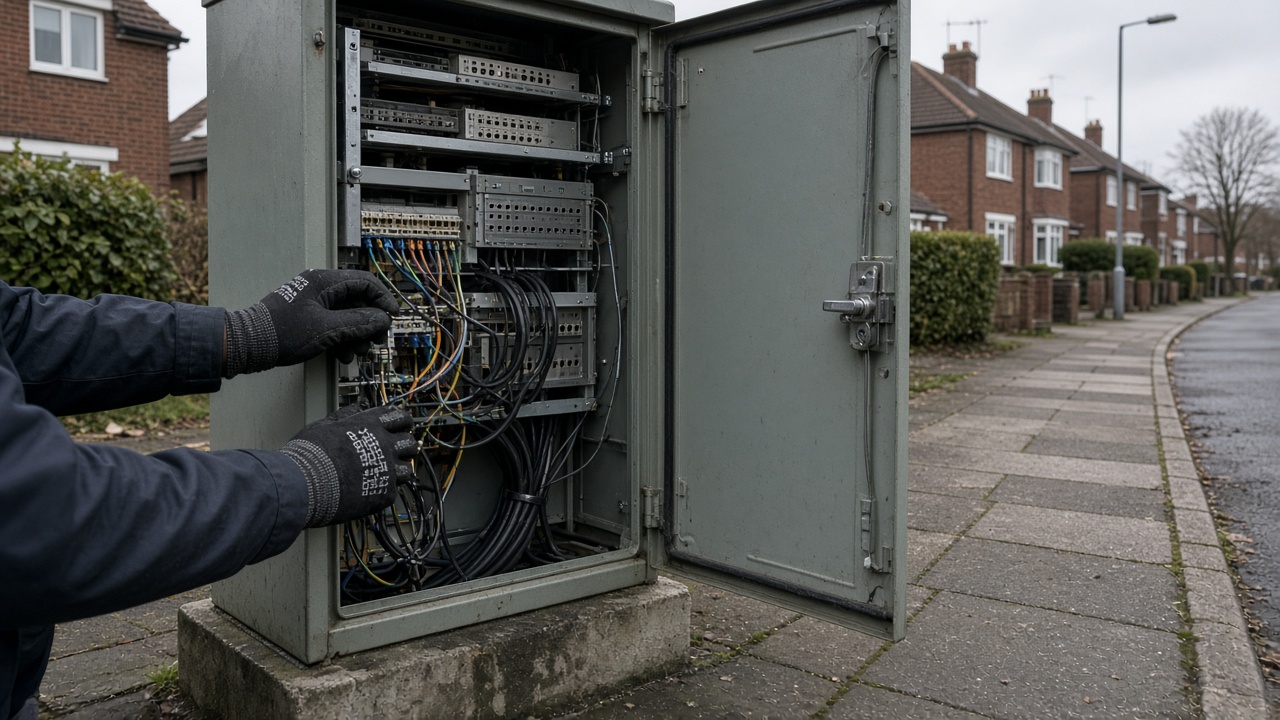
For policymakers, the figures underpin Ofcom’s parallel work on resilience. On 13 October the regulator published consumer advice on weather-related outages and reminded providers they must identify, mitigate and report significant incidents under the Telecommunications Security Act regime. Networks that carry ever more data must still function when storms knock out power to roadside cabinets.
What Mobile Matters adds for households
Ofcom’s Mobile Matters interactive report, refreshed 16 October, packages coverage and experience data for shoppers comparing operators. Rural 5G patchiness remains a political sore point, but the aggregate statistics show subscriptions still climbing modestly—1.7% year on year—without the price wars seen a decade ago.
Retail fixed voice revenue falling £168.2 million year on year is the quieter headline. Operators cannot subsidise fibre roll-out with international call charges that no longer exist. Instead, they chase ARPU on unlimited data plans and convergence bundles with broadband and TV.
Investment signals for the next auction cycle
Rising petabyte counts justify spectrum and backhaul spending, while collapsing voice revenue pressures legacy product lines. Ofcom’s data release is not a policy speech, but it gives investors a clean read on UK telecom economics mid-year: data is the product, voice is the legacy cost centre, and resilience rules are the regulatory price of carrying both on the same mast.
Fixed broadband steady growth
Fixed broadband lines rose 298,000 year on year to 29.5 million, a 1% increase that keeps pace with household formation but not with government gigabit targets. Full-fibre roll-outs show up gradually in connection counts; the Q2 release is a lagging indicator of yesterday’s civil works.
Mobile retail revenues reached £3.72 billion in the quarter, up £38 million annually. Operators offset falling voice and SMS with data bundles and insurance add-ons. Regulators watching consumer bills will note post-pay ARPU creeping higher even as inflation cooled through 2026.
AI in telecoms oversight
Ofcom’s September discussion paper on AI in telecoms markets asked how chatbots, network planning tools and cyber-defence models should be disclosed to consumers. The Q2 data release predates enforcement actions, but it sets the baseline traffic volumes AI systems will optimise. Operators experimenting with AI-driven congestion management must still meet existing quality-of-service obligations.
Ofcom’s strategic AI approach for 2026–27 promises further work on trust and assurance for cyber-defence automation under telecom security law. Rising data petabytes make manual network tuning obsolete; regulation must keep pace without stifling investment.
Wholesale line rental declines continue to pressure Openreach’s regulated returns, a backdrop to Ofcom’s next price-control review. Retail mobile growth cannot indefinitely subsidise fixed legacy products.