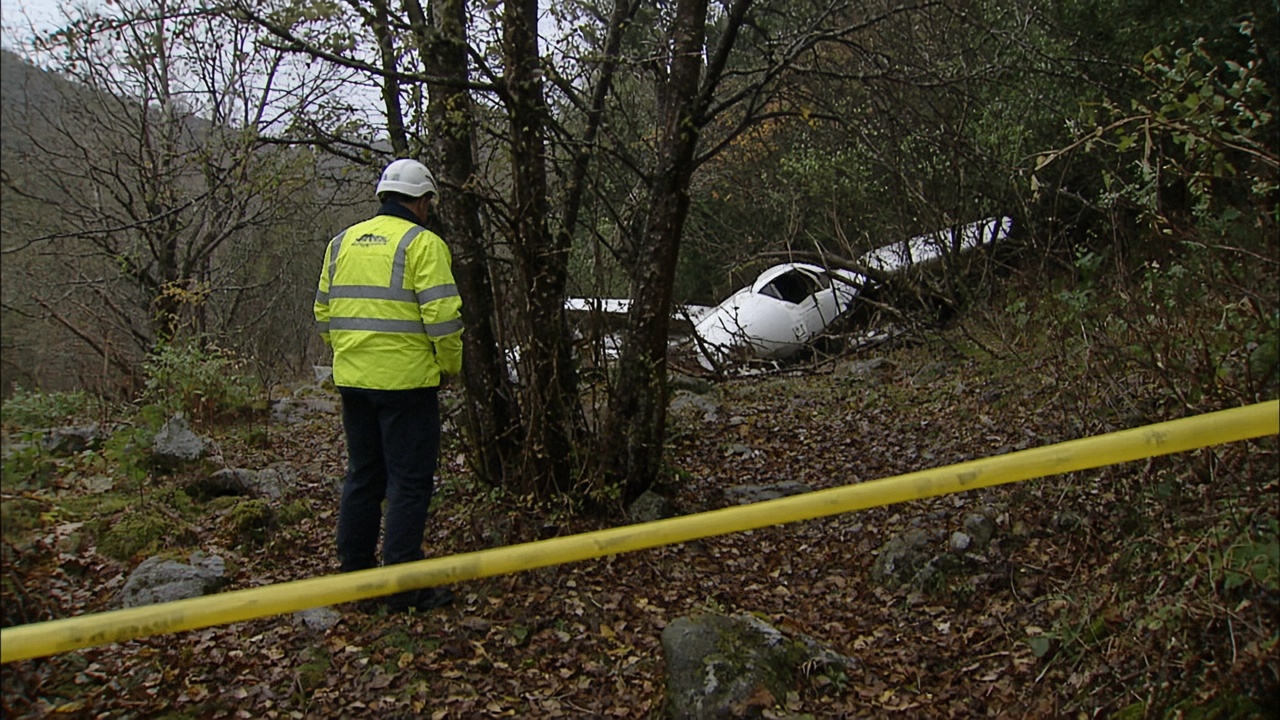
A 16-year-old boy and an 80-year-old man died when a Piper Tomahawk II training aircraft crashed in woodland northeast of Drymen, Stirling, on Friday afternoon, Police Scotland said, prompting temporary airspace restrictions while air accident investigators document the wreckage.
Emergency crews were called at about 16:45. Both occupants were pronounced dead at the scene and next of kin have been informed, the force said in a statement released overnight. The Air Accidents Investigation Branch (AAIB) dispatched a team to examine the site near Loch Lomond, a busy corridor for light aviation between Glasgow and the Highlands.
Flight path from Cumbernauld to the final sortie
According to police and flight-tracking data cited by broadcasters, the aircraft registered G-LFSU belongs to Leading Edge Flight Training in Renfrew, per the Civil Aviation Authority register. It departed Cumbernauld Airport at 11:46 Friday morning, landed at Glasgow Airport roughly 15 minutes later, then remained on the ground until about 13:00.
The Tomahawk then flew northeast toward Newport-on-Tay before returning to Glasgow, where it spent just over an hour on the apron. It took off on its final leg at 16:17 from Glasgow Airport and stopped transmitting about 20 minutes later a few miles northeast of Drymen, police said.
Restrictions and training context
The UK Civil Aviation Authority and National Air Traffic Services imposed temporary restrictions over the crash area so investigators could work without other light aircraft entering the zone. Local residents reported helicopter activity into the evening as police guarded access roads.
The Piper Tomahawk is a common two-seat trainer across Britain's flying clubs. Leading Edge markets introductory lessons and private pilot licence courses from western Scotland; the company has not yet issued a detailed statement on the identity of the occupants or whether the flight was instructional, though the age gap between the victims suggests a student-and-instructor pairing or a family flight.
What investigators will examine
AAIB protocols call for wreckage mapping, engine and control-surface checks, weather reconstruction and a review of maintenance logs. Investigators will also pull radar and radio tapes from Glasgow approach controllers to see whether the pilot reported difficulties before the transponder went dark.
Scotland's crash rate for general aviation is closely watched because Highland tourism and university flying clubs keep small aircraft in the air year-round. Any finding of mechanical failure could trigger airworthiness directives across the Tomahawk fleet; pilot incapacitation or weather-related loss of control remain alternative lines of inquiry until the AAIB publishes a preliminary bulletin, usually within a few weeks.
Community reaction
Gavin Birch-Williams, managing director of Glasgow Airport, said staff were aware of the incident involving an aircraft that had departed from the field. "This is a deeply tragic event," he said, "and the thoughts and heartfelt sympathies from all at Glasgow Airport are with the friends and families affected."
Local councillors in Stirling asked residents to avoid the forest tracks near the crash site while police family liaison officers support relatives. No ground injuries were reported; the fire service attended as a precaution but police did not describe a large post-impact blaze.
Further updates are expected once the AAIB confirms whether it will hold a site recovery operation into Saturday and whether Glasgow Airport's runways saw any related disruptions beyond routine safety pauses for light aircraft departures.