Sadie Hawkes walked out of an Ilkley pharmacy believing her allergy pills would cost nothing. She was pregnant, the pharmacist had told her she would not be charged, and the boxes went into her bag. Two months later she miscarried. Four months after that, a letter from the NHS Business Services Authority arrived demanding £56.10.
The letter was not priced like a shop receipt. It asked for a £46.75 penalty plus a £9.35 prescription charge for medicine that had nothing to do with the pregnancy she could no longer prove on paper. Hawkes told the BBC in May 2023 that the call handler who followed up had “no sympathy whatsoever” and still expected her to pay the prescription fee. The Department of Health and Social Care replied that patients are responsible for declaring exemptions correctly. Her case is extreme, but it sits on the same rails as millions of ordinary English prescriptions: a flat statutory charge per drug line that does not follow the NHS’s own price list.
A £56 demand for allergy pills
The allergy pills were not expensive because the NHS buys them that way. They were expensive because English law treats every paid line the same. Maternity exemption certificates can be backdated by a month once a pregnancy is registered, which left Hawkes outside the paperwork after her miscarriage. The enforcement letter treated the declaration on the form as the binding fact, not the conversation at the counter.
That gap between what happened in the shop and what the back office reads is not a glitch in one tragic story. It is how the English system is built.
The question your receipt does not answer
Why does England still charge £9.90 for each drug on an NHS prescription when a packet of pills can cost the health service pennies and a biologic can cost thousands?
The usual guess is that the till payment is a copayment on the medicine itself, a small contribution toward what the pharmacy just handed over. That guess feels fair until you notice the words on NHS.uk: prescription charges apply to each item, not each prescription. Three medicines on one form means three charges if you are not exempt. Combination packs can multiply the charge further because there is a fee for each different drug in the pack, according to the NHSBSA patient leaflet HC11.
None of that language mentions ingredient cost. It mentions items.
What the pharmacy is paid
While Hawkes was arguing about £9.35, the NHS was recording an entirely different set of numbers for England’s community pharmacies. In 2023/24, dispensers supplied 1.21 billion prescription items with a net ingredient cost of £10.9 billion, according to the NHSBSA Prescription Cost Analysis. Atorvastatin alone accounted for 65 million items. Beclometasone dipropionate inhalers carried the highest ingredient bill at £320 million. Those figures come from the Drug Tariff and manufacturer prices that determine contractor reimbursement, not from whatever the patient hands over at the till.
When contractors send prescriptions to the NHSBSA for payment, they must sort forms into charge status groups: exempt, chargeable at the current rate, or chargeable at an old rate after an April price change. The patient charge rate itself is listed in Drug Tariff Part XVI, note 1, but that note fixes the levy for eligible patients; it does not set the ingredient reimbursement for the line. If a contractor submits a form in the wrong group, the NHSBSA changes the charge status and increases or reduces the contractor’s payment accordingly. The till and the tariff are linked administratively, yet they are not the same price list.
Prepayment certificate income is part of the same policy family. NHSBSA data for 2023/24 shows £241,650,072.87 collected from certificates, alongside £24,114,891.25 from dispensing doctors who collected charges directly. Those flows sit in NHS England’s fees and charges accounts, which reported group prescription fees and charges of 693,188 thousand pounds in 2023/24 and charges revenue in 2023/24. None of that accounting re-prices individual tablets; it records who paid the statutory charge or bought a certificate.
Put those two totals side by side and the patient levy covers only a few percent of the ingredient bill. The NHS still pays pharmacies for almost every line from central funds. The £9.90 question is not what the pill cost on the tariff. It is whether the patient owes the statutory item charge.
What Parliament charges you
Parliament answers that question in the National Health Service (Charges for Drugs and Appliances) Regulations 2015. The rules require a doctor or pharmacist supplying under the regulations to recover a charge for each quantity of a drug, with separate amounts for appliances and elastic hosiery. The 2024 amendment raised the single charge from £9.65 to £9.90, an increase of 2.59 percent, with effect from 1 May 2024. Ministers described the move in the explanatory note as an update to the flat prescription charge, not a repricing exercise tied to individual medicines.
The charge is older than the current wording. The 1952 Charges Regulations came into operation on 1 June 1952, when the levy was one shilling per prescription form. England has since moved from per-form to per-item charging, but the principle stayed: a statutory cash amount set by regulation, adjusted periodically.
Some lines never hit the till at all. NHS.uk lists contraception and medicines for hospital inpatients as always free. Everything else depends on exemptions, prepayment certificates, or payment.
Who pays £9.90 and who walks past
NHS England’s 2023/24 accounts state that around 90 percent of prescription items are dispensed free each year where patients are exempt from charges. The exemption file behind the Prescription Cost Analysis tells you who dominates that majority: people aged 60 or over accounted for 742,669,530 items in 2023/24 in the published exemption table, the largest single category. Children, medical exemptions, Universal Credit claimants, and prepayment certificate holders fill out much of the rest.
Working-age adults without a certificate are the population for whom the £9.90 line still bites. They can buy a season ticket instead: a 12-month prescription prepayment certificate cost £114.50 when ministers froze charges for 2025/26, with a three-month certificate at £32.05. DHSC noted that prescription charges apply in England only; Scotland and Wales have taken different paths on dispensing fees, which is why a reader in Leeds pays a till levy a reader in Glasgow does not.
In April 2025 the government froze the single charge at £9.90 for the first time in three years, keeping the headline below ten pounds. The political debate was about household budgets. The structural fact underneath was unchanged: the number is still per item, still statutory, still uncoupled from the ingredient line on the tariff.
Ministers raised the charge by 25 pence to £9.90 in 2024, following the convention of rounding to the nearest five pence described in the 2024 explanatory memorandum. For 2025/26 they chose a freeze, estimating about £18 million of patient savings in Hansard statements that accompanied the announcement. The freeze kept prepayment prices steady too, which matters for patients who face multiple chargeable lines each month.
The enforcement rail
Pharmacy First and electronic prescribing have not replaced the paper logic of exemptions. From July 2024, most electronic prescriptions checked as exempt through real-time exemption checking could be reported with a specific reason code, although NHSBSA notes still list gaps for scanned paper forms and manual entries. The administrative ideal is instant verification. The patient experience can still be a letter months later.
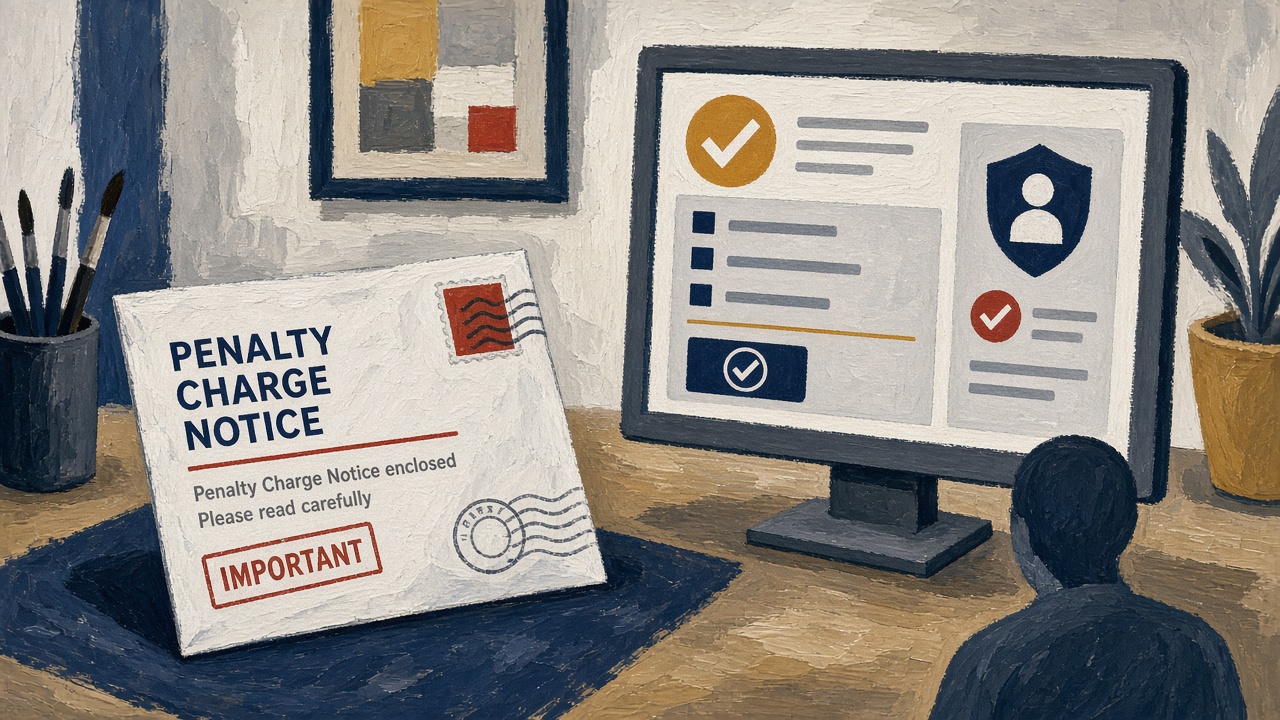
Declarations matter because the NHSBSA runs a parallel enforcement machine on top of dispensing. The authority issued 616,512 prescription penalty charge notices in 2023 and 630,720 in 2024, according to its published penalty datasets. Investigating false exemption claims cost about £14.8 million in 2023/24, the authority told a freedom-of-information request. Patient leaflet HC11 walks through how penalties stack when multiple HRT items are wrongly claimed, illustrating the arithmetic with a £99 penalty example before any actual prescription charges.
Hawkes landed on this rail after a pregnancy exemption could not be verified. A DHSC spokesperson told the BBC that patients must ensure they claim only entitlements they are eligible for and tick the correct box on the form. NHS England’s accounts describe the policy goal in drier language: the financial objective of prescription charges is to collect only from patients who are eligible to pay, while treating the income as a contribution to pharmaceutical services including drug supply.
Even with hundreds of thousands of notices, the NHSBSA told a 2023 freedom-of-information request that it had not commenced court action to recover prescription penalties as a civil debt. The deterrent is the letter and the arithmetic, not a courtroom.
Patients are responsible for ensuring they are claiming an entitlement to which they are eligible, and making a correct declaration on their prescription form.
Two prices on one piece of paper
Go back to the pharmacy counter. The pharmacist scans the form, checks exemption status, and either takes £9.90 per chargeable line or waves the patient through. Behind the same counter the NHS will later reimburse that line using tariff prices that can be far below or far above £9.90. Hawkes’s allergy pills sat on that paper twice: once as a £9.35 historical charge in 2023, once as a test of whether her declaration matched a certificate she never had time to file.
England has frozen the headline at £9.90 for 2025/26, but freezing the number does not merge the ledgers. Parliament still sets the till. The Drug Tariff still sets the reimbursement. Until those are the same document, the question is not what the pills cost the NHS. It is whether you ticked the right box, bought the certificate, or owe the item charge on every line.
Sadie Hawkes told the BBC she thought the demand was “absolutely disgusting.” The NHS’s own accounts, meanwhile, still describe prescription charges as a contribution to pharmaceutical services, not a price tag on the drug inside the bag. Two prices, one piece of paper, and a declaration box that can outrank the pharmacist’s reassurance.
Contraception remains the clearest example of a line that never carries the levy, which is why sexual health clinics can dispense without the till ritual that still governs allergy pills and statins for paying adults.