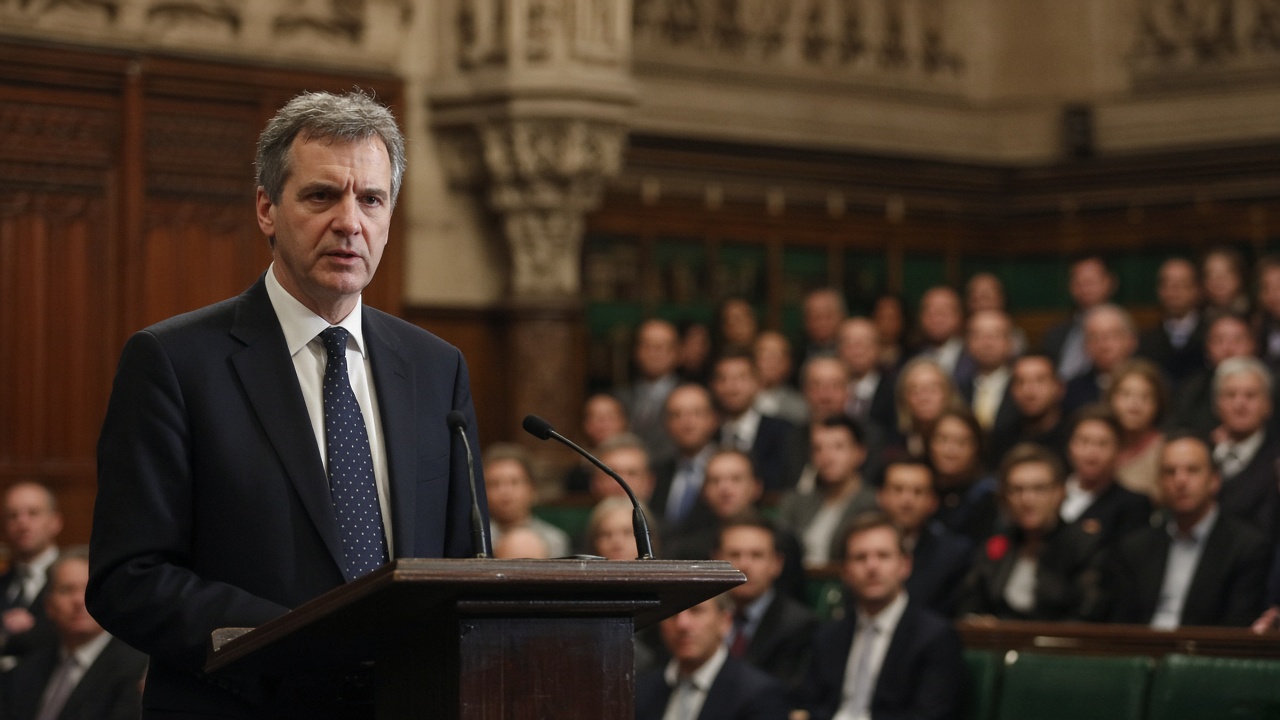
Keir Starmer told Labour MPs on Friday that he is “not prepared to walk away” from Downing Street, hours after Scottish Labour leader Anas Sarwar became the most senior figure in the party to demand his resignation over the Peter Mandelson scandal.
Sarwar’s intervention landed at a fragile moment. Starmer had already accepted the resignation of his chief of staff, Morgan McSweeney, after weeks of scrutiny over last year’s appointment of Mandelson as ambassador to the United States amid renewed attention to Mandelson’s links to Jeffrey Epstein. Opposition parties and several backbenchers had called for the prime minister to go; Sarwar’s press conference in Glasgow made the challenge internal and impossible to dismiss as partisan noise.
What Sarwar said
“The distraction needs to end, and the leadership in Downing Street has to change,” Sarwar told reporters. He said he had warned Starmer earlier in the day that he would go public and that “it’s fair to say, we didn’t agree.” Sarwar described Starmer as a “decent man” but argued that too many mistakes had been made at the top of government.
With Scottish Parliament elections due in roughly three months, Sarwar framed the call as a judgment about what Scottish Labour could tolerate while trying to win back voters. He said he was not backing any alternative candidate, leaving the question of succession deliberately open. Downing Street responded that Starmer was not resigning.
Starmer’s counter at the PLP
Starmer then addressed a packed meeting of the Parliamentary Labour Party for more than an hour. According to extracts released by Number 10 and accounts from MPs, he said: “Every fight I’ve been in, I have won.” He added that after fighting to change the country, he was “not prepared to walk away from my mandate and my responsibility to my country, or to plunge us into chaos, as others have done.”
He repeated his apology for appointing Mandelson but insisted he would stay. MPs described a standing ovation at the end—an important whip-count signal, though not a guarantee of calm. Cabinet ministers including Health Secretary Wes Streeting and Chancellor Rachel Reeves publicly backed Starmer within hours of Sarwar’s remarks, a coordinated show of support meant to choke off speculation about an imminent leadership contest.
Why the row still matters
Starmer may have cleared the first hurdle, but the arithmetic of his majority does not forgive prolonged scandal. Around half a dozen Labour backbenchers had already called for him to quit in the preceding days, and two senior figures on the opposition benches had done the same. Conservative and Scottish National Party leaders have kept pressure on Starmer to explain what he knew about Mandelson before the appointment.
Separately, media reports on Friday said the cabinet secretary could become the third senior departure from Number 10 in days, and that the permanent secretary at the Department for Work and Pensions would step down after the carer’s allowance scandal—adding to a sense of administrative churn around the prime minister even as he claims stability.
For Labour, the next tests are practical: whether Sarwar’s Scottish colleagues campaign alongside a leader they have asked to leave, and whether Westminster MPs who stayed silent on Friday begin filing letters if new Mandelson disclosures emerge. Starmer’s line that he will not “walk away” buys time; it does not close the contest.