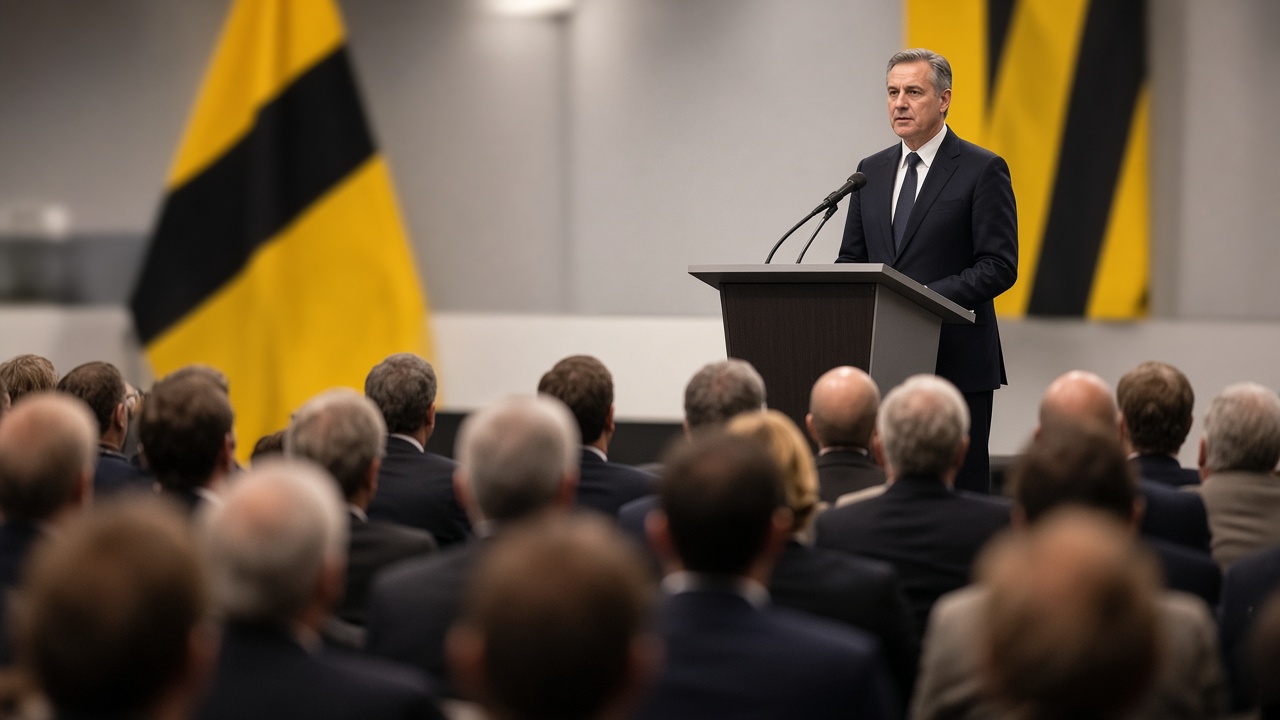
Scottish First Minister John Swinney told SNP activists on Saturday that “the stars are aligning” for independence, using his closing speech at the party’s Aberdeen conference to argue that unionist parties at Westminster are weaker than they have ever been.
Addressing delegates at Teca on the final day of the 92nd annual conference, Swinney said winning May’s Holyrood election kept the independence cause from being “set back decades.” He claimed opponents “threw absolutely everything” at the SNP yet failed to remove the party from government.
A keynote framed around momentum
According to excerpts released ahead of the 3:05 p.m. slot on the conference schedule, Swinney planned to tell members that 2026 “has been a turning point in Scotland’s journey towards statehood” and that “there is no turning back.” The Herald reported he would add that “the wind is now firmly in the sails of Scotland’s independence movement.”
Swinney pointed to nationalist-led executives in Belfast, Cardiff and Edinburgh, saying every first minister in those capitals now backs self-determination for their nations. He contrasted that alignment with what he called panic among unionists in the House of Commons.
Polls still show a contested argument
The rhetorical confidence on stage sits alongside stubbornly close polling. The National reported that a Survation survey commissioned by the SNP and shared with the paper projected a 54% to 46% lead for independence if a referendum were held immediately, after removing don’t-know responses.
Other polls published during conference week continued to show the country split on the constitution, a reminder that Swinney’s majority at Holyrood rests on a power-sharing arrangement rather than an outright SNP majority. He nonetheless told activists that Westminster parties are “weaker than they have ever been” in the Scottish Parliament chamber.
What happens after Aberdeen
Conference resolutions and a panel on the “pathway to independence” chaired by Deputy Leader Keith Brown filled the morning agenda before Swinney’s address. Party officials used the weekend to tie day-to-day delivery—health, housing, budgets—to the longer campaign for another referendum the UK government has so far refused to authorise.
Prime Minister Keir Starmer’s administration maintains that the 2014 vote settled the question for a generation. Swinney’s response is to treat every election win as proof that Scotland’s voters want a different constitutional conversation.
Whether that conversation produces a new Section 30 request, court challenges, or continued stalemate will depend on votes in Westminster and Edinburgh, not slogans in Aberdeen. For now, Swinney leaves conference insisting the alignment he sees in Belfast, Cardiff and Edinburgh will eventually force London to respond.