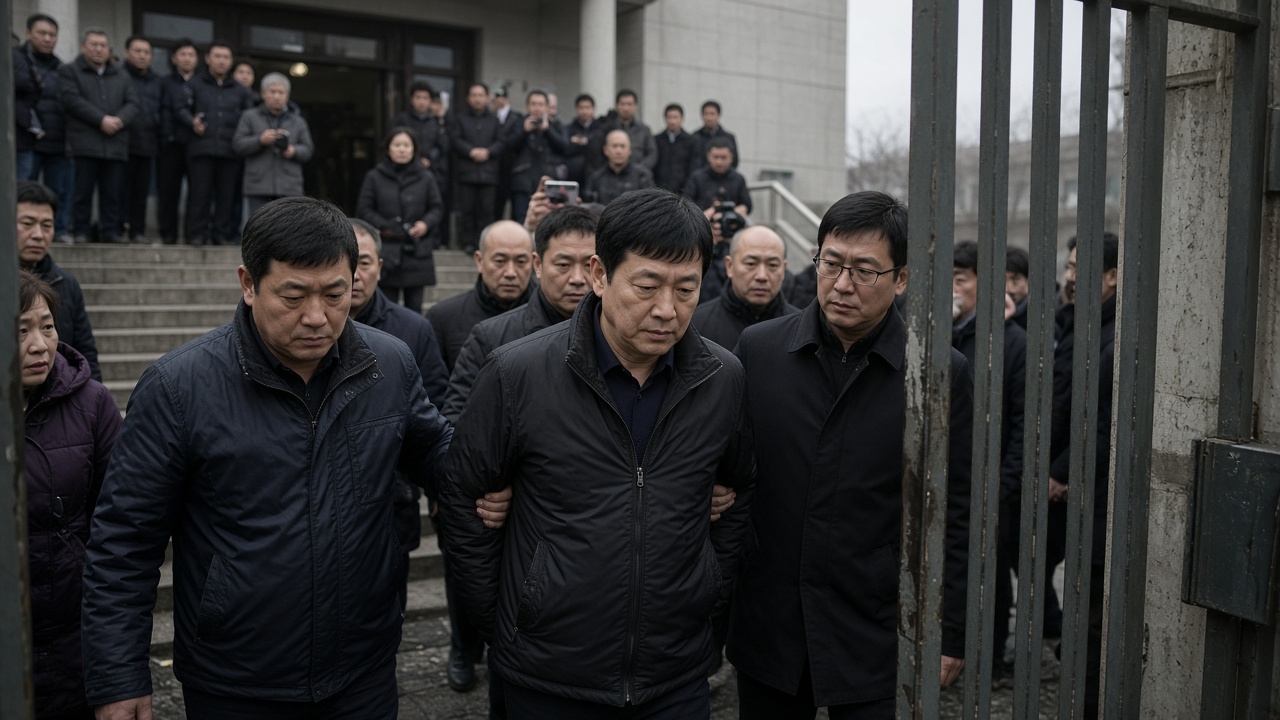
A court in northwestern China sentenced the operator of a private kindergarten to life in prison on Friday, closing a food-safety case that left nearly every enrolled child with elevated blood-lead levels and revived public anger over how toxic additives can reach school canteens.
The Lanzhou Intermediate People’s Court found that Li Huifang, the de facto operator of Heshi Peixin Kindergarten in Tianshui’s Maiji district, Gansu province, had directed kitchen staff to mix lead-containing pigments into meals to make them look more colorful and appealing. State media said the ruling was handed down in a public first-instance session on the afternoon of 16 October.
Who was punished and for how long
Li received life imprisonment, lifetime deprivation of political rights and confiscation of 500,000 yuan (about $74,800) of personal assets, according to Xinhua and court summaries reported by China Daily. Zhu Jinglin, the kindergarten’s executive principal, was sentenced to 15 years in prison and fined 300,000 yuan.
Four kitchen employees — Niu Aiyuan, Wen Yafang, He Xuxia and An Chunling — received prison terms of six to eight years plus fines, the court said. All six were convicted of producing and selling toxic and harmful food under circumstances Chinese law treats as especially serious.
Scale of the poisoning
The privately run nursery opened in August 2022 inside a residential compound. Provincial investigators reported last year that 247 of 251 children tested had abnormal blood-lead levels, along with 28 of 34 staff members, according to Xinhua accounts cited by international outlets.
Prosecutors said contaminated pastries had been served to children and staff monthly since May 2024. By July 2025, authorities said most hospitalized children had completed an initial course of treatment and been discharged; experts reported average blood-lead levels had fallen about 40 percent after intervention, meeting expectations for that stage of care.
Why the case landed so hard
Chinese commentators and foreign news organizations described the scandal as among the country’s worst kindergarten food-safety failures in nearly two decades. The South China Morning Post noted that parents had confronted school officials months before the criminal verdict, demanding accountability as hospital tests stacked up.
Friday’s sentences do not by themselves answer every operational question — including how regulators missed repeated adulteration inside a licensed facility — but they signal that courts are willing to treat deliberate tampering with children’s meals as a capital-scale food crime rather than a paperwork violation.
What happens next
Defense lawyers may appeal, though Chinese first-instance outcomes in high-profile safety cases are rarely reversed. Local education and market-supervision agencies face continued pressure to audit catering contracts and test kitchens serving preschoolers.
For the affected families, the legal chapter is only one part of a longer recovery. Physicians have warned that lead exposure in early childhood can affect development even after levels fall, which means follow-up monitoring in Tianshui is likely to continue long after the courtroom doors close.