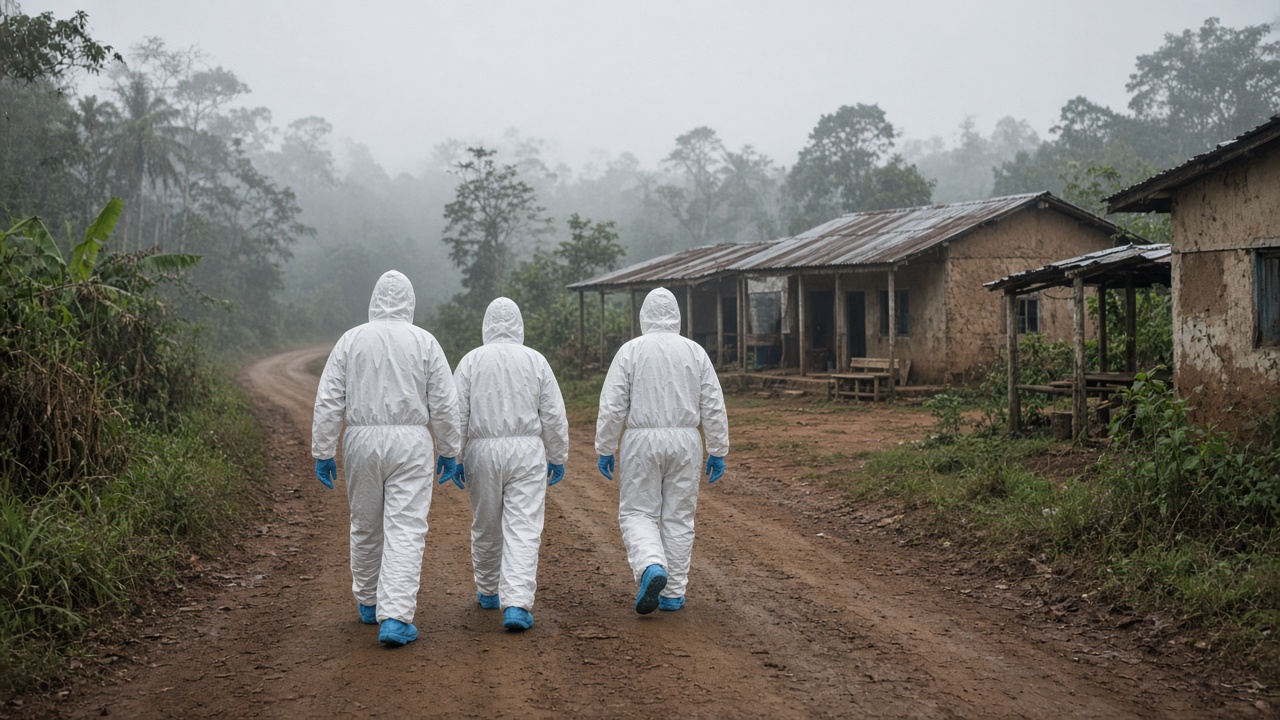
Congo's Ebola outbreak crossed into Nord-Ubangi province on Sunday, with health authorities confirming two cases in the Wapinda health zone — one fatal — as the epidemic tied to the rare Bundibugyo virus continued to widen geographically even as daily case counts fluctuate in the east.
The National Institute of Biomedical Research reported the Nord-Ubangi infections on 18 October, according to Congolese officials and wire reports. Both patients were men in their 20s. The province sits in the country's northwest, borders the Central African Republic and lies between Sud-Ubangi and Bas-Uélé, where transmission had already been recorded this year.
Why the map matters
Expanding the outbreak into an eighth province does not by itself mean a surge in national totals — Nord-Ubangi accounted for two of the 67 new confirmed cases logged in the 24 hours through 16 October, with 26 deaths in that window, ministry figures cited by Xinhua and NBC News show. It does, however, force surveillance, contact tracing and safe burials into a new corridor where roads and communications are thin and displaced populations move across a porous border.
Ituri remains the epicentre, supplying roughly three quarters of confirmed infections and 44 of the 67 newest cases in the latest daily report. Sixty-six health zones across eight provinces have now recorded confirmed disease since the outbreak was declared in May, making this the deadliest Ebola epidemic in Congo's history by case count.
Response under strain
World Health Organization regional director for Africa Mohamed Yakub Janabi told the Associated Press on Friday that pockets of transmission were easing in some areas while the geography of infection kept spreading — a pattern consistent with mass displacement, armed violence and community mistrust of treatment centres. Field coordinators in Haut-Uélé have described periodic home visits because families feared hospitals.
The virus behind this wave is Bundibugyo, for which there is no approved vaccine or antiviral. Congo has deployed the Ervebo shot in a monitored programme for front-line workers, but its effectiveness against Bundibugyo remains under study. Kenya reported an eighth case on Sunday, while Uganda has declared itself free of the disease after earlier spillover.
What authorities are doing next
North Kivu authorities plan a one-week ban from Monday on entry from Ituri, Congo's state news agency reported, alongside limits on motorcycle and car occupancy and suspensions of large gatherings. Those measures aim to slow cross-provincial movement while vaccination, laboratory capacity and dignified burial teams remain concentrated in the east.
Public-health officials continue to urge anyone with compatible symptoms or exposure to call designated services before travel, avoid contact with bodily fluids and follow provincial burial protocols. The Nord-Ubangi confirmation is a reminder that border provinces — not only Ituri's dense outbreak zones — now sit inside the response perimeter.