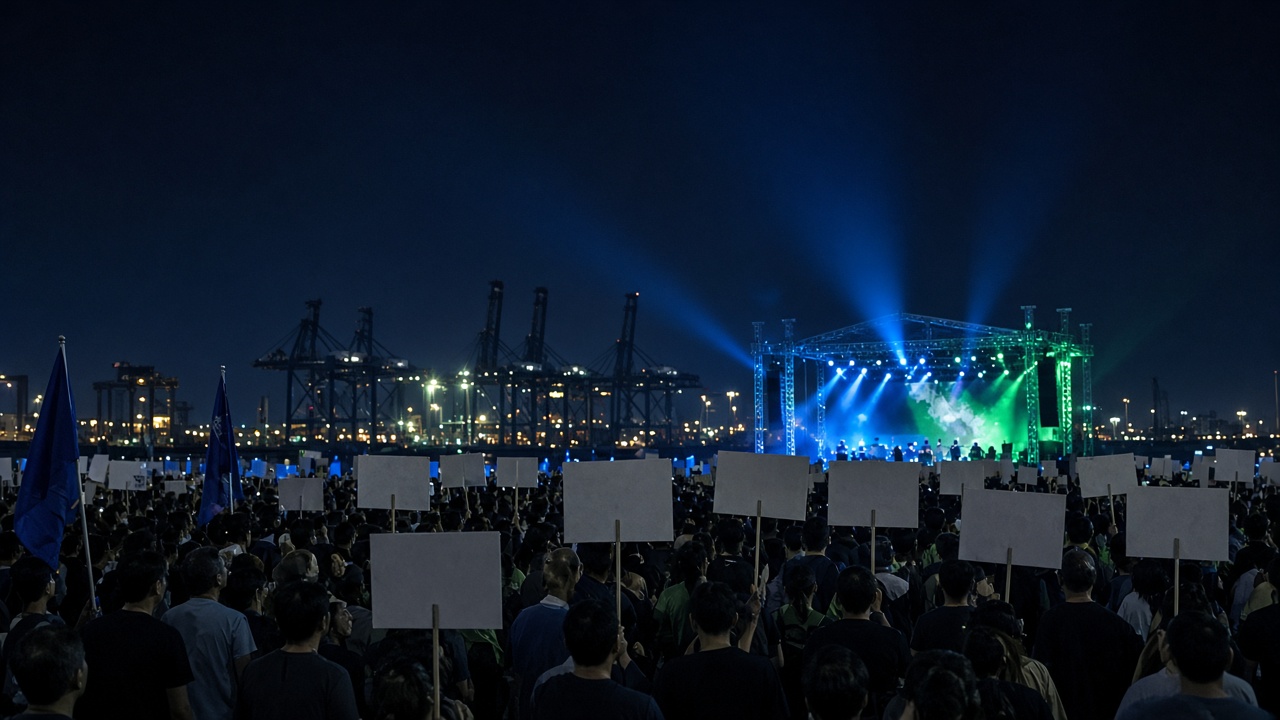
Kaohsiung’s mayoral contest spilled into dual mega-rallies on Saturday as the Democratic Progressive Party’s Lai Jui-lung packed a Fengshan campaign hall with former president Tsai Ing-wen and Vice President Hsiao Bi-khim, while Kuomintang hopeful Ko Chih-en drew thousands at a Xiaogang temple fair with Legislative Speaker Han Kuo-yu.
DPP bets on continuity
Tsai told supporters that handing Kaohsiung a fourth consecutive DPP term would keep port upgrades and submarine maintenance programs on schedule. Lai Jui-lung highlighted flood-control spending in Zuoying and pledged to expand light-rail links to the Asia New Bay Area tech park, framing the race as a choice between steady governance and “experiments” from Taipei outsiders.
KMT leans on grassroots optics
Han, who built his career on night-market walkabouts, kept Ko’s event intentionally small-scale—a temple courtyard concert with local candidates—arguing that Kaohsiung voters want a mayor who “smells like salt air, not studio makeup.” Ko promised to reopen stalled waterfront restaurants and audit city-owned land leases that she said favor connected developers.
What polls cannot capture yet
Public surveys still show a tight margin with undecided voters concentrated among young renters in Nanzi and Qianjin. Both camps are courting them with housing vouchers and night-market sanitation pledges. With three weeks until the November 28 vote, Kaohsiung is less a national bellwether than a test of whether the DPP’s southern fortress can hold against a KMT speaker who never stopped campaigning after his 2020 presidential run.
Down-ballot effects
Six legislative seats in Kaohsiung are also in play, and Saturday’s rallies doubled as pep talks for city council candidates who must win pluralities in fragmented districts. The DPP is defending working-class neighborhoods in Cianjhen, while the KMT hopes Han’s turnout machine can lift newcomers in Fongshan.
Business groups in the Asia New Bay Area asked both mayoral camps to commit to 24-hour cargo clearance at Kaohsiung port, citing semiconductor equipment imports that currently idle over weekends. Neither candidate has published a detailed customs reform plan, but both pledged Saturday to press Customs Administration for pilot Saturday shifts.
Transit authorities added late-night MRT service after Game One at the dome, and campaign volunteers from both camps handed out shuttle maps linking sports fans to rally sites—a small example of how Taiwan’s November ballot mixes with everyday city logistics.