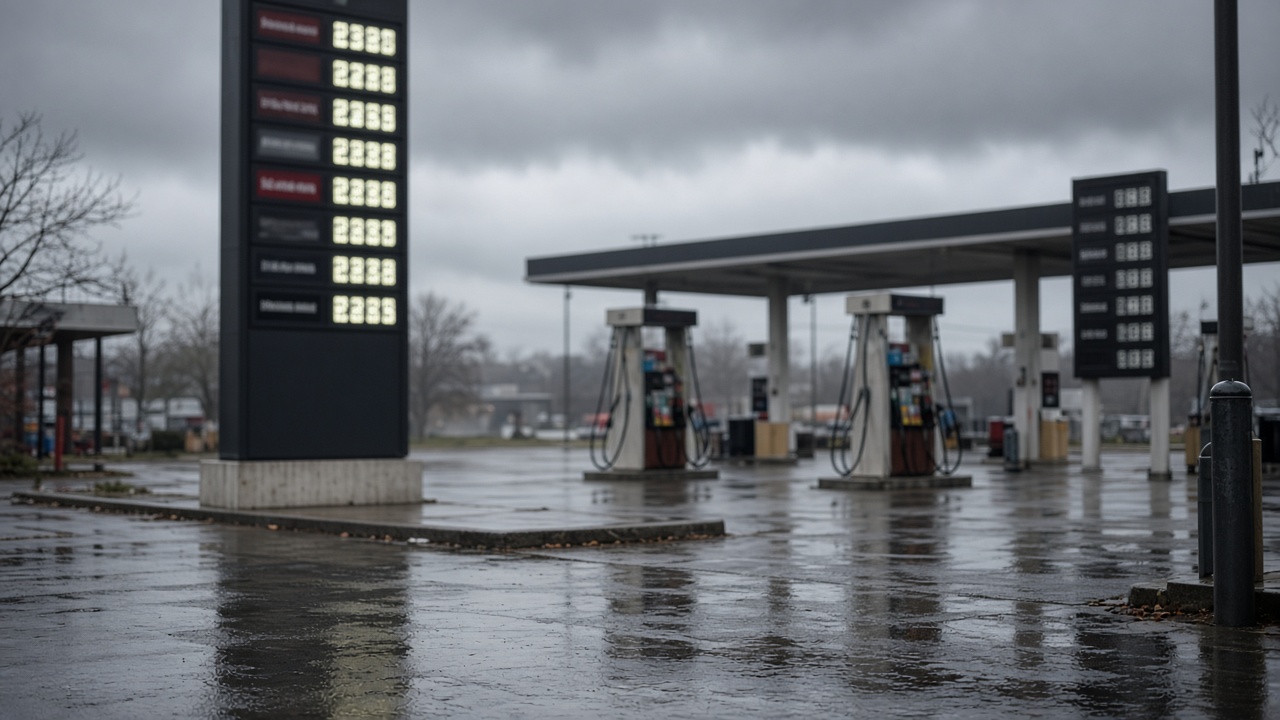
The Ministry of Trade, Industry and Energy extended South Korea’s retail fuel price cap for an 11th straight round on Friday, freezing nationwide ceiling prices from October 17 for four weeks even as Brent crude traded above 100 dollars a barrel.
What drivers will pay
Under the renewed order, gasoline caps at 1,784 won per liter, diesel at 1,773 won, and kerosene at 1,380 won at stations that participate in the government monitoring program. MOTIE said the freeze is meant to blunt pass-through from international crude spikes while refiners absorb margin pressure through inventory timing and import blends.
Why the cap stays while Brent stays hot
Officials pointed to lingering Middle East supply risk and a strong dollar that makes dollar-denominated crude more expensive in won terms. Rather than letting pump prices float daily with spot markets, the ministry is using the cap as a shock absorber for households and small logistics firms that cannot renegotiate delivery contracts every time Brent jumps.
Refiners have warned that prolonged caps squeeze refining margins when crude rises faster than domestic sales prices. MOTIE’s statement acknowledged that gap and said it would watch inventory levels and import costs weekly, keeping the option to adjust subsidy mechanics if stations report supply strain. Consumer groups welcomed the extension but asked for clearer signage so drivers can tell which stations honor the cap versus premium grades priced above it.
Household and industrial ripple
Diesel at 1,773 won matters beyond passenger cars: farm equipment, last-mile vans, and coastal ferries index fuel surcharges to government benchmark tables. Kerosene at 1,380 won feeds into rural heating budgets as nights turn cooler. Economists note the cap is a political tool as much as an economic one—election-season sensitivity to inflation keeps energy ministries reluctant to pass through full crude moves.
The four-week window runs through mid-November, overlapping with year-end inventory draws at refineries. If Brent retreats, MOTIE may let the cap lapse quietly; if prices stay elevated, an 12th extension is likely before winter demand peaks. For now, drivers should expect stable posted ceilings even when global oil headlines swing.
Station operators must file weekly price reports to the Korea Petroleum Quality & Distribution Authority. Violations can trigger fines and removal from the subsidy list. MOTIE said compliance checks will intensify during the Chuseok travel aftermath when highway traffic remains heavy.
How the cap interacts with taxes and imports
Excise and transportation surcharges still apply on top of the capped product price, which is why posted pump boards can show totals slightly above the headline ceiling figures. Importers hedging on Singapore or U.S. Gulf benchmarks face margin calls when forward curves spike; MOTIE officials said they are coordinating with the Finance Ministry to keep duty adjustments out of this four-week window so consumers see a single stable number at the nozzle.
Independent stations that opt out of the program may price above the cap but lose access to certain inventory support programs. Industry data show roughly 85 percent of nationwide outlets remained enrolled in the tenth round, and the ministry expects similar participation now. Trucking associations asked for a diesel rebate carve-out for long-haul fleets; MOTIE declined a separate category but said it would monitor fleet fuel receipts through toll-tag samples.
Analysts at Seoul brokerages noted that every extension pushes more margin pain onto refiners’ third-quarter statements, which already absorbed a weaker won. Equity investors treated the announcement as neutral—expected—while bond markets focused on whether household energy subsidies would appear in a supplemental budget debate later this fall.
At the pump, drivers should still compare cash versus card discounts; some franchises stack loyalty points that effectively shave a few won per liter even when the statutory cap is fixed. MOTIE’s consumer hotline will operate extended hours through the first week of the freeze to field price-gouging reports.