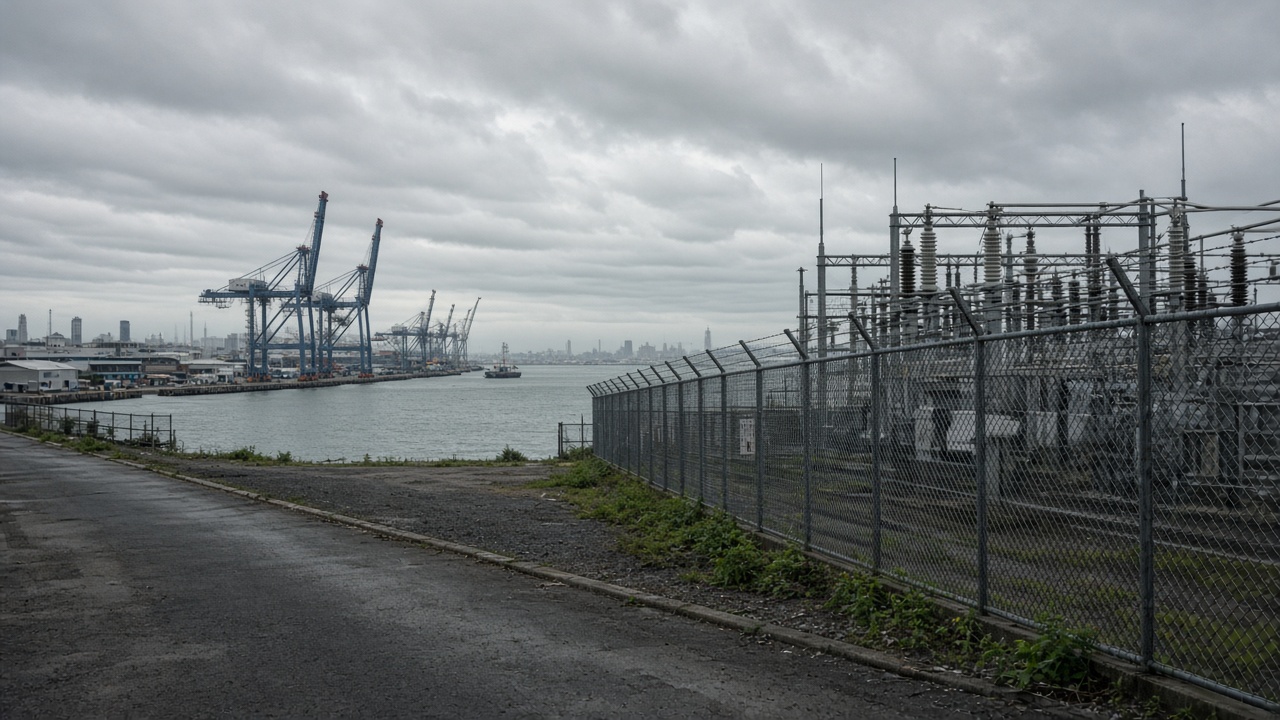
Osaka Prefecture opened a one-stop permit desk this week bundling zoning, environmental, and high-voltage power reviews for NTT Data Group’s planned waterfront artificial-intelligence data center, a bureaucratic sprint Haruto Suzuki’s technology desk ties to Nikkei reports that the operator is in final talks to build Anthropic’s first Japan-dedicated compute campus in southern Osaka. The desk pools prefectural planners, municipal fire officials, and regional grid operators so NTT Data can parallelize submissions that usually queue for months across siloed agencies.
Why Osaka moved now
Competition for hyperscale projects has become inter-prefectural sport. Chiba’s Inzai corridor already hosts expanding campuses, while Tokyo Bay faces land and cable landing constraints. Osaka pitches cheaper industrial land, submarine cable access through Kansai gateways, and political appetite to offset manufacturing migration. Nikkei reported Oct. 16 that the prefecture formed a public-private coordination body to accelerate development permits and grid interconnection studies for the NTT Data site, with a southern waterfront industrial belt as the leading candidate.
Total power demand could reach 500 megawatts at full build—among the largest single-campus loads discussed publicly in Japan—forcing early engagement with Kansai Electric Power Co. on substation upgrades and marine cable routes.
Project economics and timeline
Nikkei Asia on Oct. 13 pegged construction costs near $6.3 billion with partial operations targeted around 2028. NTT Data’s broader domestic plan envisions more than 1.5 trillion yen of data-center investment through 2033 to quadruple compute capacity toward one gigawatt. Hosting a U.S. frontier-model vendor brings export-control and customer-data localization questions: Suzuki expects METI and the Personal Information Protection Commission to scrutinize training-data flows even when inference workloads stay in-country.
Anthropic has not confirmed a binding lease; the Osaka desk is insurance that permits will not become the bottleneck if commercial terms close.
Local stakes
Osaka’s governor’s office markets the desk as a template for other digital infrastructure, including chip packaging plants and battery recycling parks that share heavy-power permitting paths. Labor unions want clarity on operations jobs versus construction temp hires. Nearby fishing cooperatives have raised cooling-water discharge questions; the integrated review promises early environmental impact scoping rather than post-hoc lawsuits.
National policy context
Tokyo’s economic security push treats sovereign AI capacity as strategic, echoing AirTrunk and other operators’ billion-dollar Kanto expansions. Osaka hopes to avoid becoming a late entrant with only warehouse-scale colocation: landing a frontier lab tenant would validate tax incentives passed after the Expo 2025 hangover.
What could delay the campus
Grid reinforcement slippage, yen volatility raising imported turbine costs, or U.S. export rules on accelerators could push opening dates regardless of permit speed. Competitors might also bid anchor tenants away with cheaper power purchase agreements in Inzai.
Bottom line
The one-stop desk does not guarantee Anthropic’s signature, but it signals Osaka intends to win the next hyperscale wave on process efficiency—not just land price. For Japan’s technology map, the story is whether Kansai can balance Tokyo Bay’s head start in the AI land rush.