Starlink told Indian regulators and customers on Friday that it has spent more than five years building in-country gateways and support systems with government approvals, declaring itself ready to sell high-speed satellite broadband even as Reliance Industries reiterated that every player—including Elon Musk’s company—must follow Indian licensing law.
The exchange on social media platform X capped a week of unusually public sparring between Mukesh Ambani’s conglomerate and Musk over who controls access to India’s still-unallocated satcom market. For consumers in fibre-dark villages and maritime users, the fight is less about personalities than about when spectrum will be priced and whether services can launch before the 2027 rural broadband deadlines.
What Starlink claims is already built
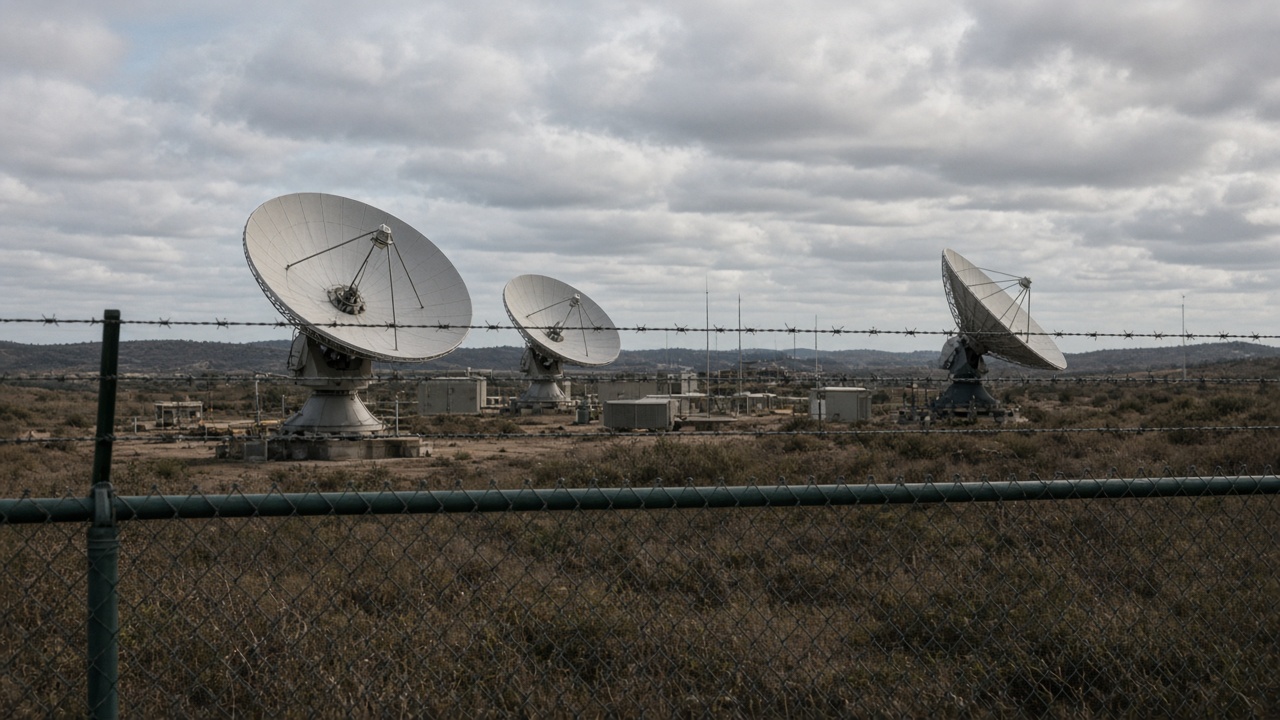
In its post, Starlink said it erected dedicated gateways, ground systems and network operations capacity inside India to carry Indian traffic without routing through overseas hubs. The company did not publish site locations, but Department of Telecommunications filings reviewed by analysts show earlier applications for gateway earth stations in several states.
Starlink holds a GMPCS licence allowing it to operate satellite communication services, yet commercial activation still requires spectrum assignment and security clearances that the Department of Telecommunications has not finished for any applicant. Jio’s satellite unit, a partnership with SES, remains in the same queue.
Reliance frames the fight as rule of law
Reliance’s statement, also issued Friday, welcomed competition but argued that India’s openness to foreign investment depends on uniform compliance. The company cited Jio’s decade-long mobile rollout—from zero subscribers to more than 530 million—as proof that domestic firms can scale when rules are predictable.
Musk had earlier mocked Ambani’s political influence, prompting the Ministry of Communications to reject claims that India’s framework favours incumbents. Officials said Indian and foreign applicants face identical processes, a line Reliance quoted directly.
Enterprise buyers watch capex
Shipping lines, offshore oil platforms and Himalayan tour operators have queued for beta access since 2023. Many purchased VSAT kits from legacy vendors and want Starlink only if Indian billing and lawful-intercept requirements are met. Telecom lawyers said gateways inside India solve data-localisation questions but do not remove the need for a clear spectrum price.
DoT’s 2026 authorisation rules also created a separate licence class for cloud-hosted telecom networks, which could let hyperscalers host core functions for satcom operators. That may lower capex for newcomers but adds another approval layer.
What comes next
Industry groups expect the government to outline spectrum pricing before the winter session of Parliament. Until then, Starlink’s “ready to connect” message is a readiness claim, not a launch date. Jio will likely match rhetoric with its own site tours once allocations arrive.
For now, the public argument has at least clarified the stakes: India’s satcom market will not open on Musk’s timeline or Ambani’s unless the bureaucracy finishes the spectrum chapter both say they are willing to compete on.
Enterprise procurement timelines
Large logistics firms have issued requests for information to both Jio-SES and Starlink, according to two procurement officers who asked not to be named because talks are private. They want service-level agreements that mirror fibre broadband, with latency under 60 milliseconds for warehouse scanners in Rajasthan and Gujarat.
Until spectrum prices are known, finance teams cannot model total cost of ownership. That uncertainty keeps most contracts in pilot mode, which suits incumbents that already sell geostationary bandwidth to the same clients.