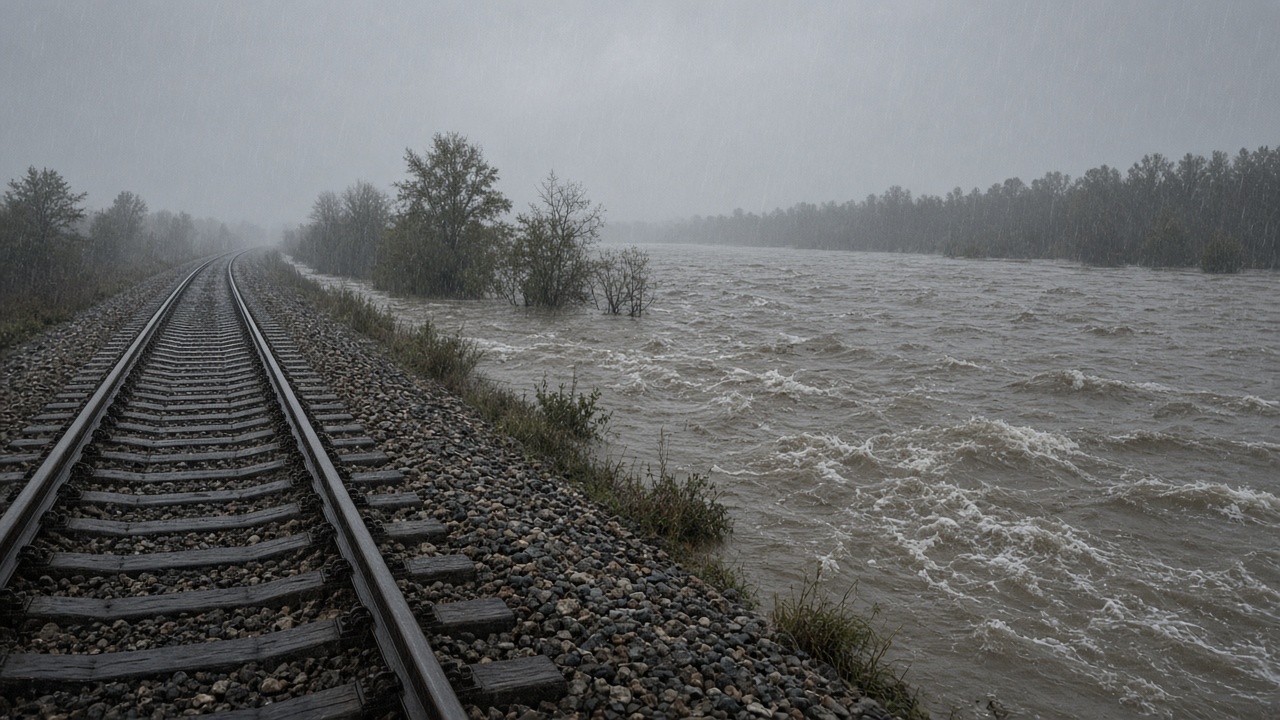
Welsh Labour ministers demanded faster rail substitution buses on Sunday after amber rain warnings soaked embankments along the South Wales Main Line, leaving morning passengers stuck between Bridgend and Newport while Network Rail inspected track drainage.
Transport for Wales ran diesel units on reduced speeds through the worst sections, but social media clips showed platforms at Cardiff Central packed with travellers unsure whether to wait or drive on the M4, which itself faced spray-related delays.
Weather driving infrastructure stress
The Met Office issued amber rainfall alerts for parts of south Wales through Monday, citing saturated ground after a wet half-term week. Hillside cuttings that were upgraded after previous storms still rely on Victorian drainage channels that clog when leaves and debris wash downhill.
Welsh Government transport officials said Westminster must fund more resilient earthworks, not just emergency pumps. Ministers want automatic ticket flexibility when amber warnings cover three consecutive peaks, mirroring policies used during heatwaves.
Political friction in Cardiff Bay
Labour runs the Welsh Government but does not control Network Rail funding, creating a familiar blame loop after each storm. Plaid Cymru said both governments had underinvested in valley branch lines, while Conservatives said delayed electrification left older diesels more prone to wheel-slip on wet rails.
UK ministers responded that record capital spending is flowing through the Restoring Your Railway fund, though Welsh projects compete with English priorities. Sunday’s arguments landed ten days before Chancellor John Healey’s budget, when Cardiff hopes for Barnett consequentials on any infrastructure uplift.
Passenger rights
Passengers delayed more than 60 minutes can claim compensation under national rail conditions, but bus substitution entitlements vary by ticket type. Consumer groups asked Transport for Wales to publish live capacity counts for rail replacement coaches, a data feed that exists for some English franchises but not consistently in Wales.
Hotels near Cardiff Central reported walk-in demand from rugby fans travelling to Sunday fixtures, another reminder that weather shocks collide with event peaks.
What happens Monday
Network Rail engineers planned overnight drainage clears with drones inspecting landslip-prone slopes. If amber warnings extend, ministers said they will request Great Western Railway to accept each other’s tickets across the England-Wales border, a mutual aid pact used sparingly since the pandemic.
For commuters, the immediate lesson is to check TfW alerts before leaving: Sunday’s rain was forecast, but substitution buses materialised slower than passengers expected, keeping Welsh Labour’s pressure on Whitehall alive into the new week.
Freight and supply chains
Freight operators moving steel from Port Talbot reported delayed paths because passenger diversions consumed diesel multiple units needed for rail-replacement buses. Hauliers said they may shift loads to road if flooding persists, increasing M4 congestion and undermining Welsh climate targets.
Agricultural suppliers in Pembrokeshire warned that milk collection tanks could miss processing windows when rural lines close without notice. Welsh ministers asked for priority reopening criteria for food routes, not just commuter arteries into Cardiff.
Community rail partnerships along the Valleys lines offered volunteer station announcers to read live bus substitution updates after automated PA systems failed in previous storms. Network Rail said it would test battery-backed announcement kits at ten stations if flooding continues through Monday evening peaks.