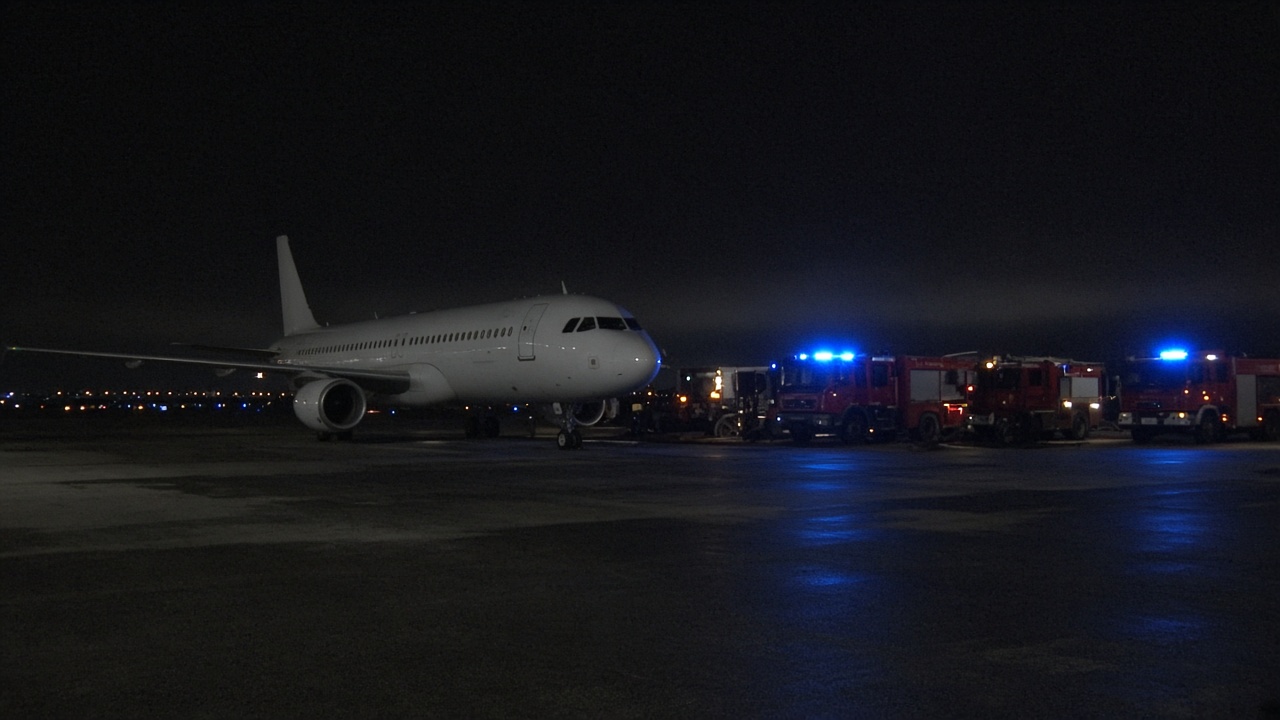
Austrian Airlines flight OS82 from Tel Aviv to Vienna made an unscheduled landing in Sofia on Sunday evening after the crew reported a bomb threat while the Airbus A320 was approaching the Romanian border, Bulgarian authorities and the Lufthansa Group carrier said. All 51 passengers and six crew members evacuated safely, security teams searched the aircraft and luggage, and the airline cleared the jet to continue to Vienna once no danger was found.
How the diversion unfolded
The flight departed Ben Gurion Airport at about 7:04 p.m. local time on October 18, according to tracking data cited by Israeli and European outlets. Roughly 40 minutes into the cruise, the captain squawked the international emergency code 7700 and turned toward Sofia, where the plane touched down at about 9:25 p.m. Bulgarian time.
Bulgaria’s transport ministry said the crew decided on an extraordinary landing after the threat signal was received on the border with Romania. Bulgarian media reported that the air force scrambled a MiG-29 fighter to escort the airliner into Sofia Airport, where emergency crews and bomb-disposal personnel met the aircraft on an isolated stand.
Passengers and crew left the plane under security supervision while technicians swept the cabin and cargo areas. Austrian Airlines confirmed on Monday that “no danger was identified” during searches of the aircraft, passengers and crew. The airline reboarded everyone and sent the flight on to Vienna the same night.
Israeli authorities stay on the sidelines
The Israel Air Force said the incident did not occur in or near Israeli airspace and that it was not required to respond. That left Bulgarian and Austrian security services to run the on-ground checks, a familiar division of responsibility for threats reported once foreign-flagged flights are over neighboring territory.
Israeli media noted the episode came less than three weeks after aviation regulators in the United Arab Emirates opened a criminal case against a flydubai co-pilot over a Dubai–Tel Aviv flight in late September. Official statements described the incident as a planned suicide attack on Ben Gurion, keeping aviation security in the spotlight even though Sunday’s threat ended without injury.
What airlines and regulators do next
Austrian Airlines, a Lufthansa Group subsidiary, did not identify the source of the threat in its public statements. Sofia Airport said standard procedures were followed and that no explosive device had been located by the time its initial advisory went out. The carrier has not said whether OS82’s schedule on Monday was affected beyond the overnight delay.
Threats against Israel-bound flights are not new, but each diversion still forces quick coordination among pilots, civil-defense agencies and diplomats. For passengers on OS82, the operational question is whether investigators can trace the warning quickly enough to deter copycat calls. For regulators, the test is whether escort and search protocols moved fast enough to keep a crowded narrow-body jet out of harm’s way without panicking a cabin already on edge after weeks of heightened security headlines.