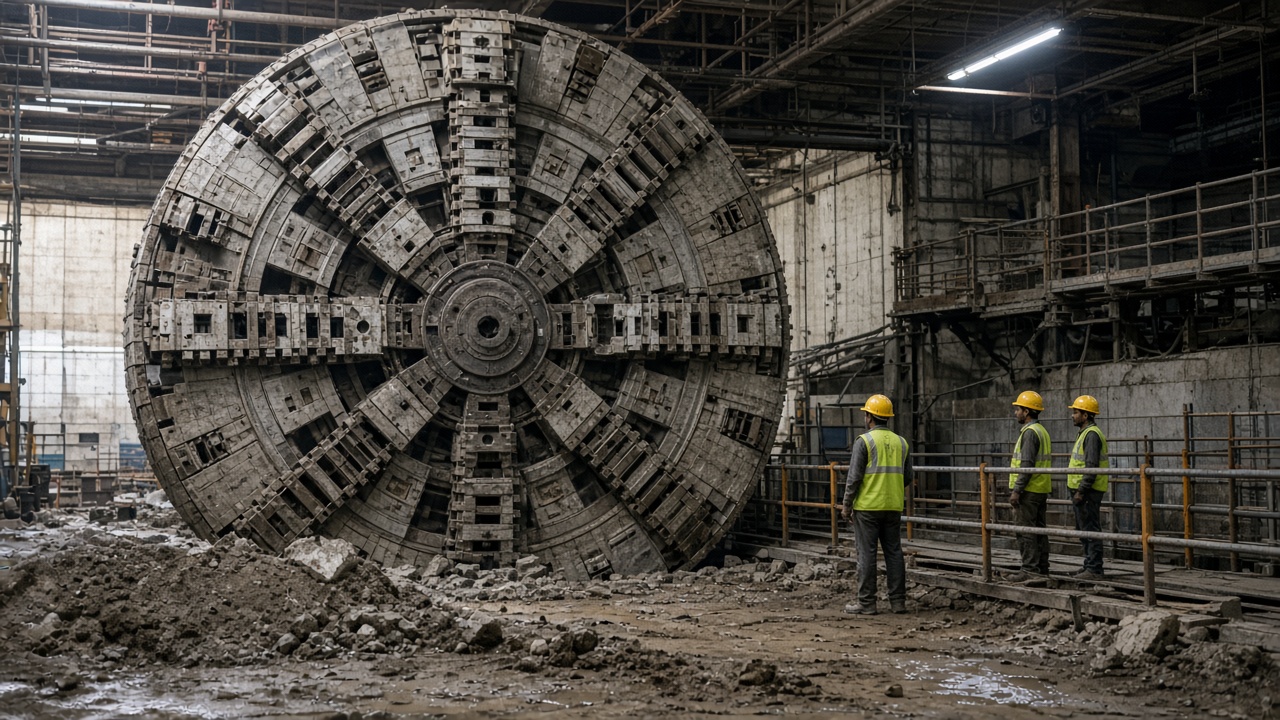
China announced export controls on tunnel-boring machines on Monday, citing national security as Indian infrastructure agencies wrestle with customs delays on Chinese TBMs already ordered for metro and highway projects. The measure takes effect on November 18 and adds another layer to a widening technology trade fight between the neighbors.
What Beijing announced
Chinese authorities said the controls are meant to “better safeguard national security and interests,” according to state media summaries of the notice. Tunnel-boring machines — massive underground drills used for metros, water tunnels and mountain highways — are now on a list requiring government approval before shipment abroad.
The timing follows a separate Chinese move days earlier to restrict exports of dozens of advanced technologies, including some solar manufacturing tools and certain artificial-intelligence platforms. New Delhi has treated those steps as pressure tactics; Beijing frames them as standard trade-security policy.
Why India feels the pinch
India does not yet mass-produce the largest TBMs domestically. Several state governments and the national highways programme rely on Chinese suppliers for machines that can bore wide tunnels through hard rock and soft soil alike.
Officials and contractors have reported customs clearance problems and port delays on Chinese TBMs even before Monday’s announcement, according to Indian business press accounts. Metro expansions in major cities and long tunnel segments on Himalayan road projects are among the workloads at risk when shipments stall.
A delayed TBM can idle hundreds of workers at a shaft site and push opening dates by months, because alternative machines are scarce and expensive to reroute from other continents.
Delhi’s likely response
India’s commerce and external affairs ministries have not issued a formal statement in the hours after the Chinese notice. Past rounds of export controls — on rare-earth processing gear and specialist batteries — drew diplomatic protests and accelerated “Make in India” procurement rules.
Policy analysts in New Delhi said Monday’s step may speed talks with European and Japanese TBM makers, and could renew pressure on public-sector engineers to license or co-produce smaller-diameter machines at home. None of those alternatives can replace a stranded mega-TBM on short notice.
Broader trade context
Border tensions and market-access disputes have shadowed India-China trade for years, even as bilateral goods flows remain large. Controls on underground construction equipment hit a practical nerve: they target civil infrastructure, not only defence electronics.
Beijing’s language mirrors U.S. and EU export-control rationales on dual-use technology, a symmetry Indian officials often highlight when arguing that China is weaponizing supply chains.
What contractors watch next
From November 18, each Chinese TBM export will need explicit approval. Indian project managers will track whether existing contracts signed before that date are grandfathered, and whether spare parts and cutter heads face parallel restrictions.
Until those details are published, the immediate effect is uncertainty on timelines and financing for tunnel-heavy projects — exactly the sort of choke point Beijing can tighten without a formal border escalation.