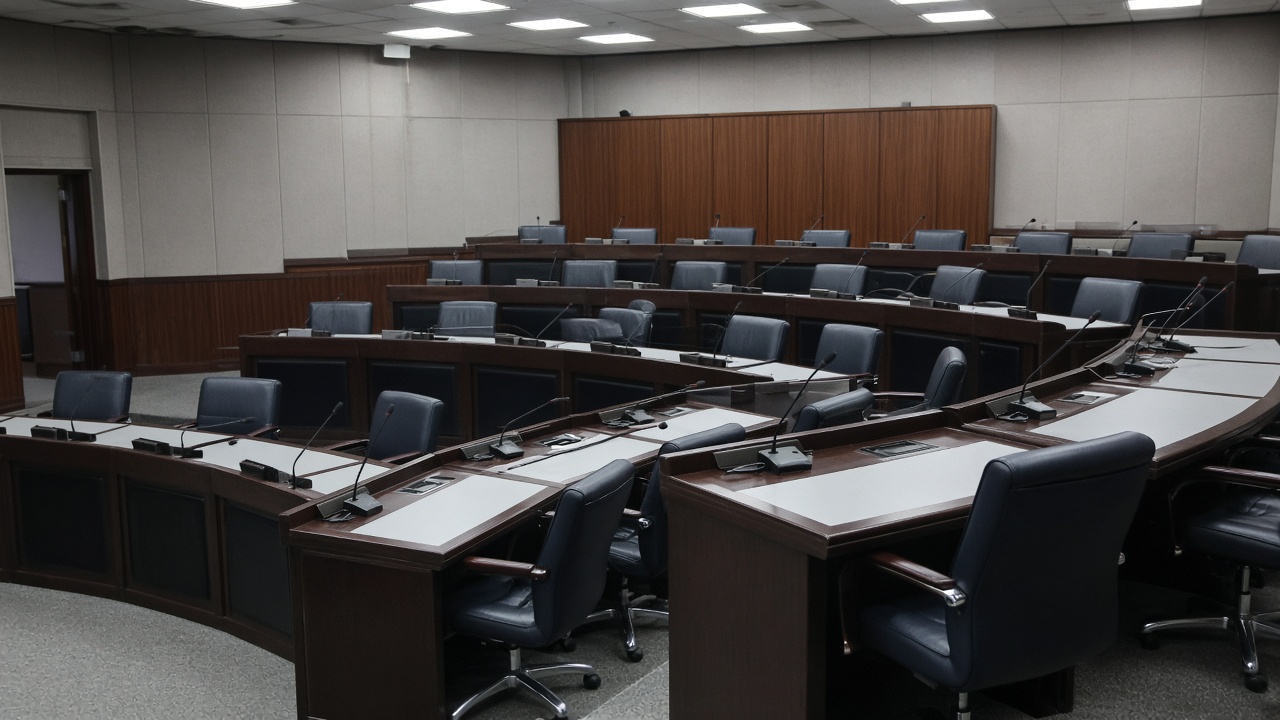
Legislators on the Finance Committee summoned Financial Supervisory Commission Chairman Peng Chin-lung and exchange leaders to Taipei on Monday for a full-day briefing that is expected to cover market turmoil, the 2027 central-government budget timetable, and consumer credit trends as revolving balances creep higher.
What is on the Monday agenda
According to the Legislative Yuan bulletin, Peng will field questions alongside heads of the Taiwan Stock Exchange, Taiwan Futures Exchange, Taiwan Depository & Clearing Corp. and related agencies. The session also begins markup on the fiscal 2027 general budget review schedule, a process that continues on Wednesday.
The hearing lands after a week in which the New Taiwan dollar weakened sharply and Taiwan futures slid in the overnight session, raising the stakes for any FSC guidance on margin requirements, short-selling rules or issuer disclosures.
Card market snapshot
The FSC’s August 2026 statistical release shows 59.61 million effective credit cards in circulation across issuers, with total outstanding revolving credit and related cash-card balances continuing to climb from post-pandemic lows. While the legal ceiling for revolving credit annual percentage rates remains 15 percent under Banking Act Article 47-1, lawmakers have periodically pressed issuers on minimum-payment structures that keep consumers in long-duration debt.
Banking Bureau materials note that issuers must price credit extensions based on funding costs, operating expenses and customer risk, but opposition and ruling caucus members have argued that weaker households feel rate pressure faster when the NT dollar depreciates because imported goods and fuel invoices reprice in local currency.
Why foreign-exchange moves matter to cardholders
United Daily News reported Sunday that the NT dollar lost 4.63 percent against the U.S. dollar last week, encouraging some importers to rush dollar purchases while exporters delayed conversion. For consumers, that translates into higher costs for overseas online subscriptions billed in foreign currency and for travel booked in dollars, even if the statutory card rate cap is unchanged.
Committee members are likely to ask whether issuers are seeing higher utilization on overseas spending categories and whether installment plans tied to electronics or travel are delinquent at rising rates. Peng’s team typically publishes aggregated delinquency bands rather than issuer-level data in open session.
Investor protection on the same docket
Because TWSE and TAIFEX leaders are attending, questions may also touch on intraday volatility safeguards after heavy foreign selling. The FSC has stressed orderly markets rather than price targets, but lawmakers from export-heavy districts often tie currency swings to retirement-account sentiment.
Consumer groups, meanwhile, want clearer disclosure when banks market zero-interest installments that revert to revolving credit if a payment is missed—a pattern that can surprise cardholders who assume promotional rates extend through the full term.
What changes are not on the table
There is no pending bill in this session to alter the 15 percent revolving cap, and banking lobbyists say funding costs have risen with global rates, compressing issuer spreads. Any committee push is more likely to focus on fee transparency, dispute-resolution timelines for unauthorized e-commerce charges, and coordination with the central bank on FX communication rather than statutory rate cuts.
Peng is expected to reiterate that card issuers must comply with anti-fraud reporting tied to phishing surges documented by the Criminal Investigation Bureau, a separate issue from Monday’s market-focused hearing but one that affects chargeback volumes.
Household takeaway
For cardholders, Monday’s session is a temperature check on whether regulators see consumer credit stress building beneath headline stock volatility. With effective cards near 60 million and the NT dollar on a weaker footing, lawmakers will want assurances that issuers are not loosening underwriting to chase fee income—and that dispute processes keep pace with online scam losses.