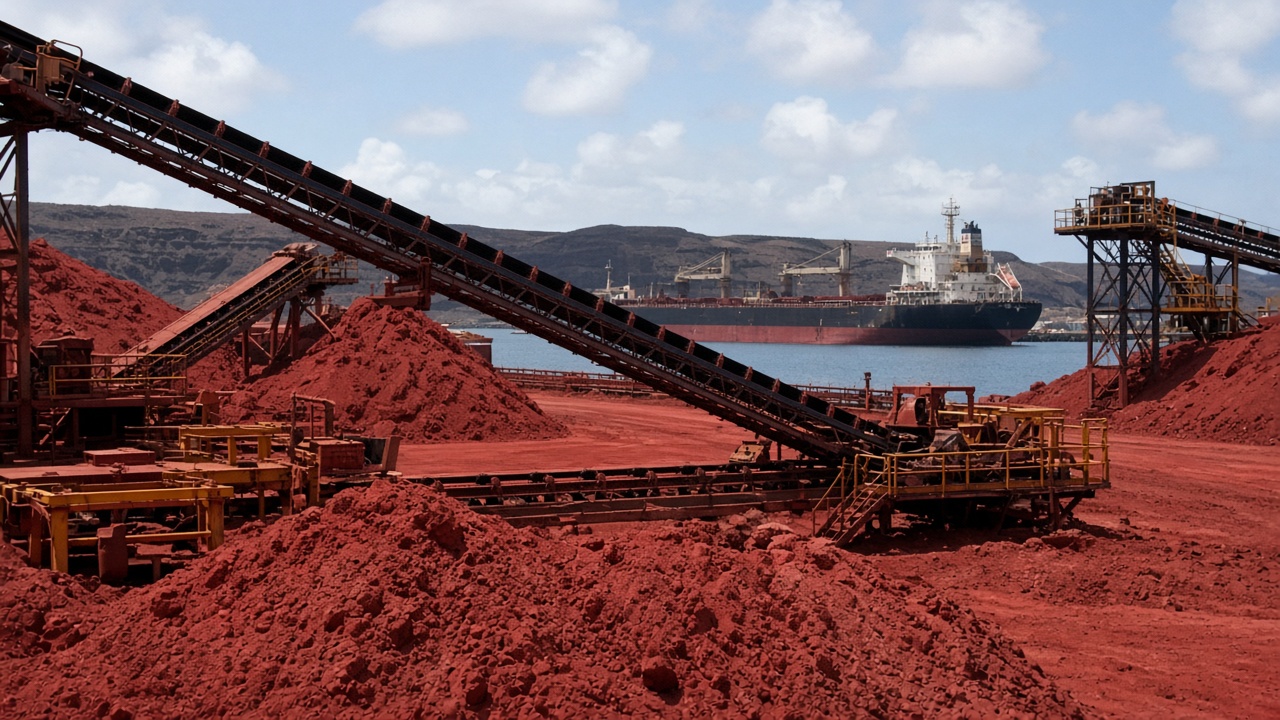
Fortescue Metals Group and BHP pulled the S&P/ASX 200's materials cohort lower on Monday as Singapore iron ore futures retreated from levels inflated by Middle East shipping risk, splitting the index between weak miners and steadier banks heading into a September-quarter inflation print on 28 October.
Ore prices lose the war premium
Iron ore had been supported for weeks by concerns that Gulf and Red Sea disruptions would lift freight and insurance costs, keeping Chinese steel mills bidding aggressively for Australian lump and fines. As some routes stabilised and traders booked profits, the spot benchmark softened, feeding straight into valuations for Pilbara producers whose margins are tethered to the Singapore curve.
Fortescue, with its higher exposure to lower-grade fines and its own shipping book, often moves more than BHP on short-term ore wiggles. BHP's diversified petroleum and copper earnings provide a partial buffer, but its ASX listing still reacts when the iron ore forward curve slips.
Macro cross-currents
The miner weakness landed against a messy global backdrop. Wall Street's technology sell-off on Friday weighed on local growth names, while weaker-than-expected Australian labour force data for September reduced the implied probability of a November cash-rate increase—helpful for rate-sensitive real-estate trusts but cold comfort for miners priced on Chinese demand.
Economists at several banks said the consumer price index release on 28 October, not Monday's share moves, will drive the Reserve Bank of Australia's 3 November board meeting. Oil still near $US106 a barrel keeps diesel and transport costs in the inflation basket, even as iron ore cools.
Who wins the rotation
When materials lag and banks lead, the ASX 200 can look flatter than the experience of diversified portfolios. Exchange-traded funds tracking the benchmark still funnel inflows into the big four lenders, which reported strong capital positions and are entering a period when franked dividends attract retirement-money bids.
Small-cap miners without production hedges faced sharper falls than the majors. Lithium names, already volatile after a year of project deferrals, traded mixed as investors separated battery-chemicals stories from bulk-commodity beta.
China still sets the tone
Steel output data from China remains the dominant swing factor. Any hint of property-sector stimulus can revive iron ore within a session; conversely, mill maintenance seasons or port stock builds in China pull Australian grades lower regardless of Gulf headlines.
For now, the market is treating the pullback as a breather after a war-driven spike rather than the start of a demand collapse. Traders will watch whether BHP and Rio Tinto shipment guidance for the December quarter changes tone when updates arrive later this month.
Monday's session underscored a familiar Australian equity trade: when ore sneezes, the index's mining-heavy tail catches a cold—even as bank dividends try to hold the line.
Further context
Analysts watching the sector said Monday's developments should be read alongside Canberra's wider economic agenda, including energy costs and household budgets that dominate talkback in Sydney and Melbourne. State governments are simultaneously rolling out infrastructure pipelines that depend on stable capital markets, so any signal from listed companies or regulators ripples through procurement offices and council finance teams.
Investors with self-managed super funds told brokers they are keeping more cash on hand until the Reserve Bank's November decision, wary that oil-linked inflation could delay rate relief. That caution shows up in trading volumes on the Australian Securities Exchange, where midday turnover often trails the morning futures impulse once offshore cues fade.
Consumer advocates urged households to verify official guidance on government websites rather than relying on social media summaries, a reminder that policy detail still moves through formal channels even when headlines move faster on phones.