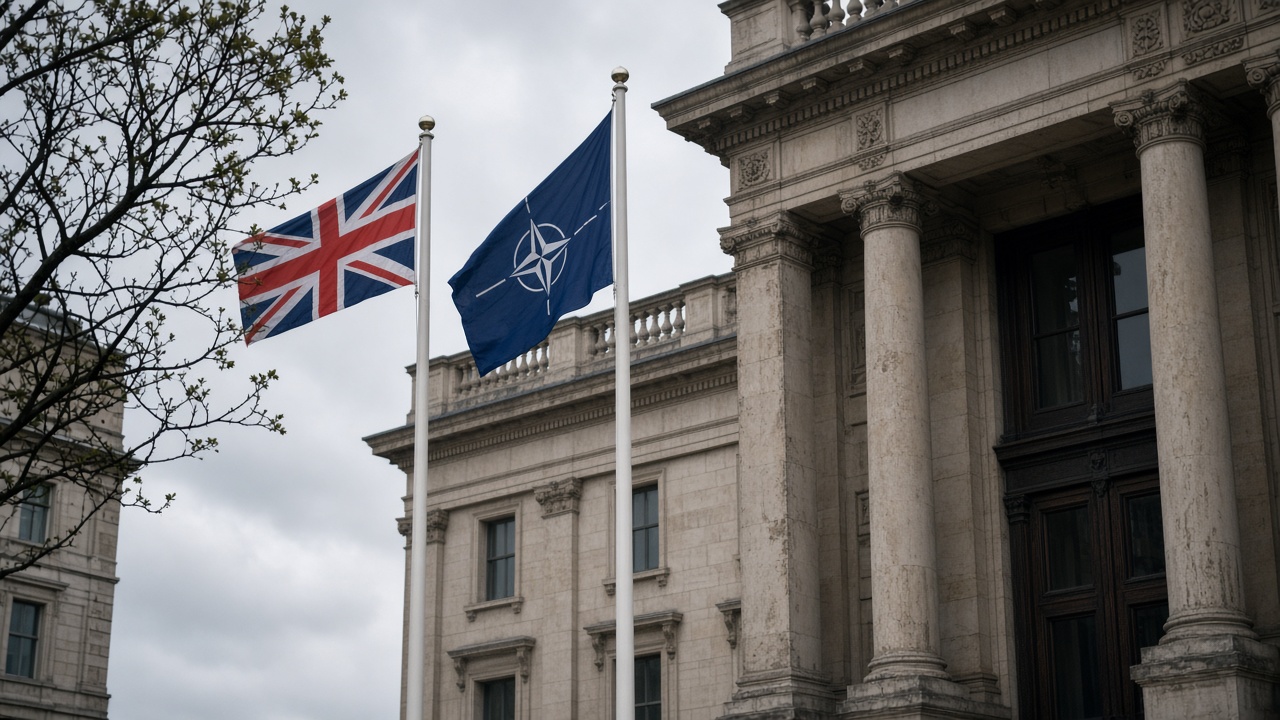
Downing Street delivered a rare public rebuke to Donald Trump’s defense secretary on Monday, saying Pete Hegseth was “wrong” to suggest that most non-American NATO troops in Afghanistan did not fight. The prime minister’s spokesperson said the United Kingdom and its allies paid a heavy price after the alliance invoked Article 5 following the September 11 attacks, and that it was wrong to diminish their role.
What Hegseth told cadets
Hegseth made the remarks while speaking to U.S. Army cadets about his own service as a captain in Afghanistan. He described walking into coalition headquarters in Kabul and seeing dozens of national flags on display.
“It was a beautiful thing to see, 50 different countries contributing to the NATO alliance and the mission there,” he said, according to accounts of the speech. “Except there were maybe five that contributed. It was actually closer to one or two that by the end were actually involved in kinetic operations.”
He added that troops joked the ISAF patch — for the International Security Assistance Force — stood for “I Saw Americans Fighting.” ISAF drew contributions from dozens of nations over two decades before the mission ended in 2021.
London’s response
Asked about the comments, a No 10 spokesperson said “the facts speak for themselves” on the UK and NATO contribution. Thousands of British and allied families made sacrifices, the spokesperson said, and more than 450 British personnel never returned from the war.
Their deaths, the spokesperson added, came “in the service of collective security and in response to an attack on our ally.” The United States remains the only country to have triggered NATO’s collective-defense clause after 9/11.
Veterans’ charity Help for Heroes has tallied more than 1,100 non-U.S. coalition deaths in the conflict, the vast majority from NATO members. Britain suffered the second-highest military death toll after the United States.
Allied pushback widens
Polish officials joined the criticism on Monday, according to European media reports, arguing that Hegseth’s framing ignored years of allied combat deployments, training missions and stabilization work across Afghanistan.
The row lands at an awkward moment for transatlantic ties. European capitals are already debating burden-sharing, Ukraine support and Washington’s posture toward NATO. A sitting U.S. defense secretary questioning allied combat records feeds directly into those arguments.
Echoes of earlier Trump remarks
Trump himself faced backlash earlier this year after suggesting coalition partners had stayed “a little back, a little off the front lines” in Afghanistan. He later posted on Truth Social praising “the GREAT and very BRAVE soldiers of the United Kingdom,” citing 457 deaths and injured personnel.
Downing Street’s language on Monday was sharper toward Hegseth than toward the president’s earlier comments, but stopped short of demanding an apology. British officials instead leaned on casualty figures and the Article 5 history to rebut the secretary’s anecdote.
What happens next
Neither the Pentagon nor Hegseth’s office had issued a detailed walk-back by Monday afternoon in London. NATO headquarters in Brussels often avoids commenting on individual ministers’ speeches, but allied diplomats said the remarks were circulating in capitals.
For British veterans’ groups and families, the exchange is less about parliamentary timing than about how the Afghanistan war is remembered. No 10’s statement framed allied service as a response to an attack on the United States — a reminder that the next U.S. administration debate over NATO may reopen old wounds as well as new ones.