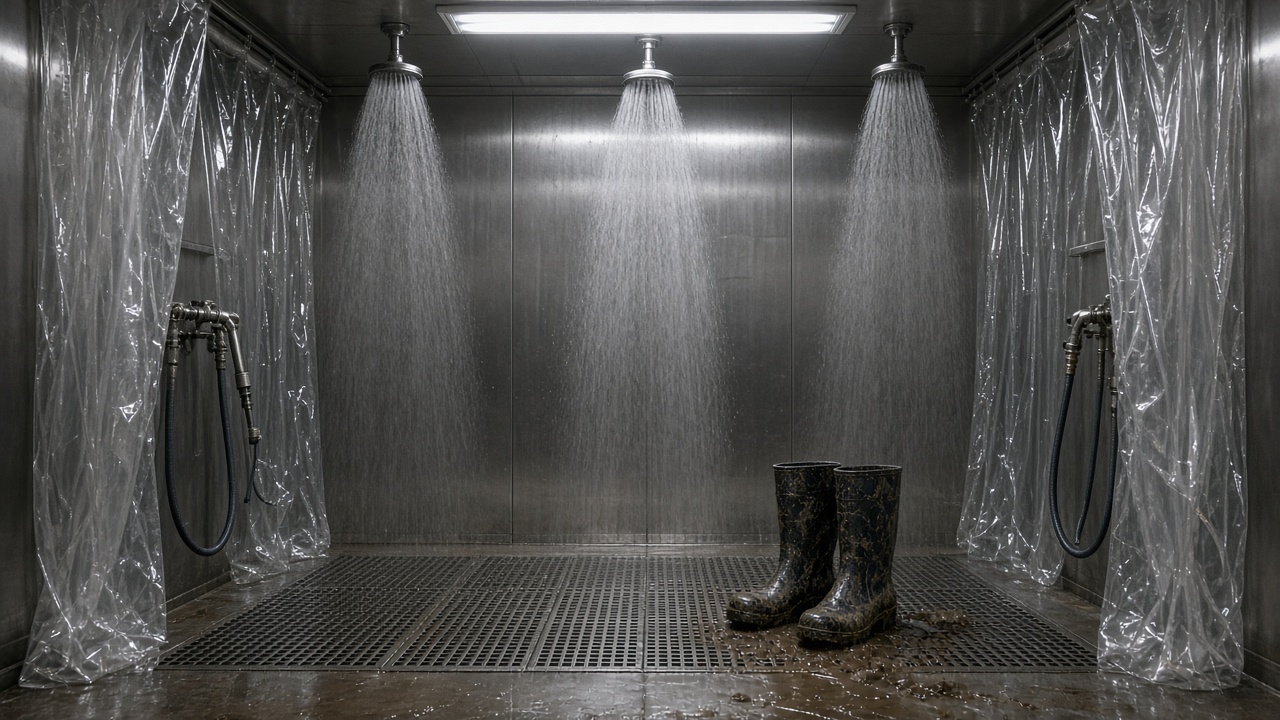
Jeju National University Hospital opened three temporary mud-decontamination bays Monday after Sunday’s storms sent a dozen patients with floodwater exposure to its emergency department, keeping them separate from flu-shot lines ahead of a midweek cold snap.
Staff hose down boots and lower garments before patients enter triage, reducing bacteria tracked into hallways already busy with seasonal influenza vaccines. The bays reuse outdoor shower frames from COVID-era ambulance workflows, repositioned near the ER ramp.
Clinical protocol
Doctors follow KDCA guidance for floodwater: tetanus updates when wounds contact sediment, antifungal surveillance for immunocompromised patients, and mental-health referrals when cars were submerged. None of Sunday’s cases required ICU admission, but three children were observed overnight for hypothermia after being rescued near swollen streams.
Separating mud cases from vaccine queues prevents cross-contamination fears that kept seniors away during prior typhoon seasons when ERs looked chaotic on television.
Capacity planning
Hospital administrators expect flu traffic to rise when temperatures drop four degrees midweek. Decontamination bays will stay through November if Jeju keeps seeing heavy rain bands. Elective surgeries proceed, but morning briefings now include drainage status around the campus—parking lots that flooded Sunday remain partially cordoned.
Island insurers said hospital surge costs are modest compared with mainland auto claims, yet Jeju’s tourism board worries muddy ER images could deter weekend travelers if social media clips spread.
Public guidance
KDCA reiterated glove-and-boot protocols for residents pumping basements: wash breaks, no eating in contaminated zones, and bleach ratios posted on hospital social channels in Korean and English. Jeju’s health department distributes N95 masks to cleanup volunteers when mold spores are likely—overkill for outdoor mud, but calming for elderly homeowners.
With KMA clearing rain Monday afternoon, bays may idle by Tuesday—unless the cold snap bursts pipes in older hillside homes, the next predictable wave Jeju ERs already schedule staff to catch.
Island coordination
Jeju’s provincial disaster office routed cleanup volunteers through hospital triage tents when mud exposure was possible, avoiding ad hoc hose-downs in parking lots without eye-wash stations. Pharmacies stocked extra tetanus shots near harbor towns where fishermen wade through flooded stalls.
Telehealth lines added nurses trained on floodwater Q&A after Sunday’s surge in chat volume; most questions involved whether to discard soaked mattresses—a disposal issue hospitals cannot solve but guide with mold timelines.
Week ahead
Administrators scheduled extra environmental health rounds in basement wards and posted bleach-ratio guides in elevators—a small step that reduces readmissions when cold air arrives midweek.
Week ahead
Administrators scheduled extra environmental health rounds in basement wards and posted bleach-ratio guides in elevators—a small step that reduces readmissions when cold air arrives midweek.
Week ahead
Administrators scheduled extra environmental health rounds in basement wards and posted bleach-ratio guides in elevators—a small step that reduces readmissions when cold air arrives midweek.