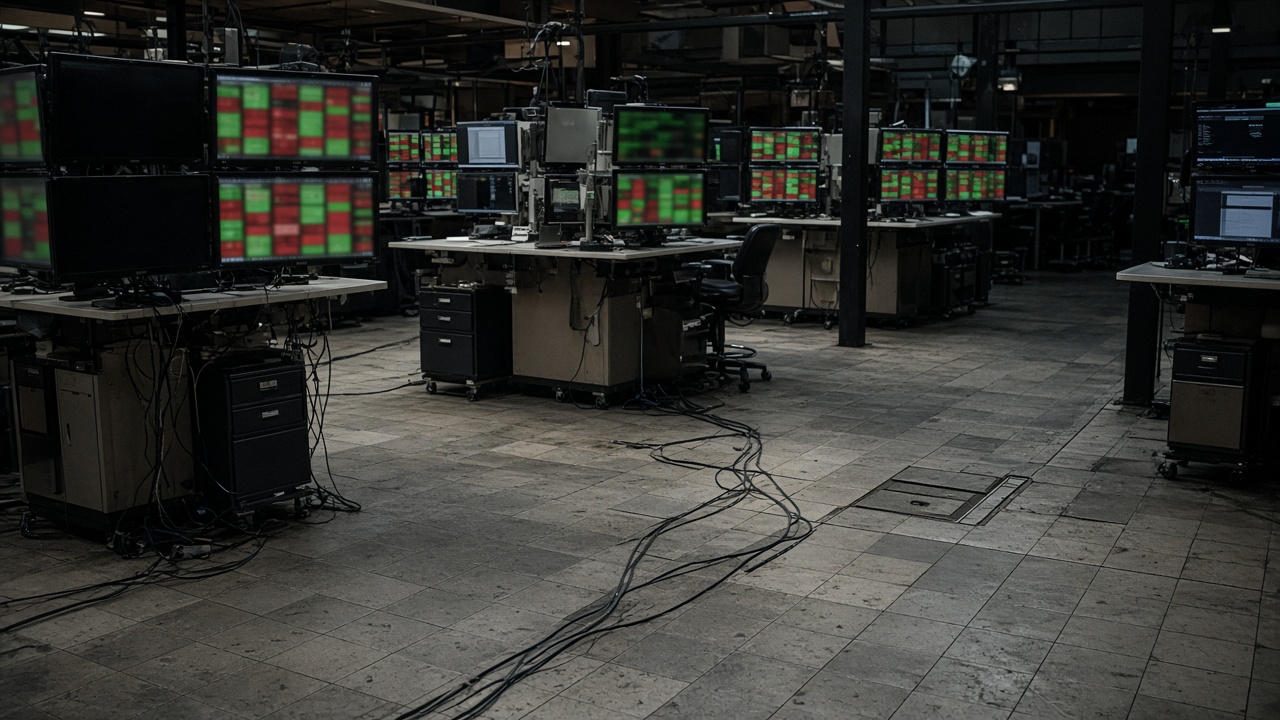
U.S. equity futures split Monday morning as the Nasdaq 100 tried to recover from its steepest weekly slide since June while the Dow drifted lower on industrial weakness.
Friday’s hangover, Monday’s bid
The Nasdaq Composite fell 573.08 points on Friday to finish at 26,140.03, capping a week in which the tech-heavy index lost more than 4 percent. The S&P 500 closed at 7,659.44, down 1.09 percent on the day and nearly 2 percent for the week. CNN’s Fear & Greed index slid into “extreme fear” territory, reflecting anxiety about how AI data-center debt gets financed as long-term Treasury yields stay above 5 percent.
Before the opening bell Monday, Nasdaq 100 futures were up roughly 1 percent, according to Reuters and CNBC live updates, while Dow futures were slightly negative. Chip and AI infrastructure names led the rebound: Intel shares rose more than 3 percent in premarket trading after JPMorgan analysts upgraded the stock, and neocloud provider CoreWeave gained after a Goldman Sachs upgrade following a 25 percent weekly collapse on financing fears.
Macro crosscurrents
Lower oil prices helped sentiment. Brent crude slipped toward $108 a barrel after the White House waived some Russia-related sanctions on a temporary basis, while conflict around the Strait of Hormuz kept shipping insurance elevated. The 10-year Treasury yield eased to about 5.08 percent, giving growth stocks a little breathing room.
Cleveland-Cliffs jumped more than 10 percent after beating quarterly earnings expectations, a reminder that not every sector traded with megacap tech last week. Equal-weight S&P strategies actually outperformed the cap-weighted index during the tech rout, a pattern some desks continued to watch as a leadership signal.
The calendar that matters
This week’s earnings slate includes Tesla and Meta on Wednesday and Netflix on Tuesday, tests for whether AI spending narratives can stabilize after last week’s selloff. Investors holding semiconductor ETFs saw the VanEck Semiconductor index fall about 3 percent Friday as Micron, AMD, and SanDisk sold off. Monday’s futures bounce does not erase those losses; it only shows buyers stepping in after a washout, with upgrades on Intel and CoreWeave providing the catalyst.
Sector leadership under the surface
Energy and utilities were among the few S&P 500 sectors to finish higher Friday, reflecting oil prices that remain elevated despite Monday’s dip. Communication services and information technology bore the brunt of the drawdown as investors questioned whether hyperscaler capex can keep climbing if borrowing costs stay punitive. Datadog rose about 3 percent premarket after Bernstein cited AI observability demand, showing that software names tied to infrastructure monitoring can decouple from chip volatility when analysts upgrade estimates.
Amazon gained more than 1 percent after Morgan Stanley named it a top pick, a vote of confidence ahead of retail guidance later in the season. Those idiosyncratic moves matter because they suggest the market is willing to differentiate within tech rather than treating every ticker as a proxy for AI debt fears.
Data investors are weighing
Friday’s economic releases included hotter-than-expected import and export prices for September, reminders that inflation has not fully disappeared even as labor markets cool. Industrial production rose 0.7 percent month over month, the strongest print in five months, which helped cyclical names even as megacap growth sold off. Traders will watch whether this week’s tech earnings confirm that cloud revenue is still accelerating or whether customers are pushing out orders.
None of Monday’s futures action guarantees a sustained rally. The Nasdaq still needs to reclaim its four-week uptrend, and any guidance cut from Meta or Tesla could erase the morning gains. For now, the story is a tactical bounce led by semiconductors after an oversold stretch, not a macro all-clear.