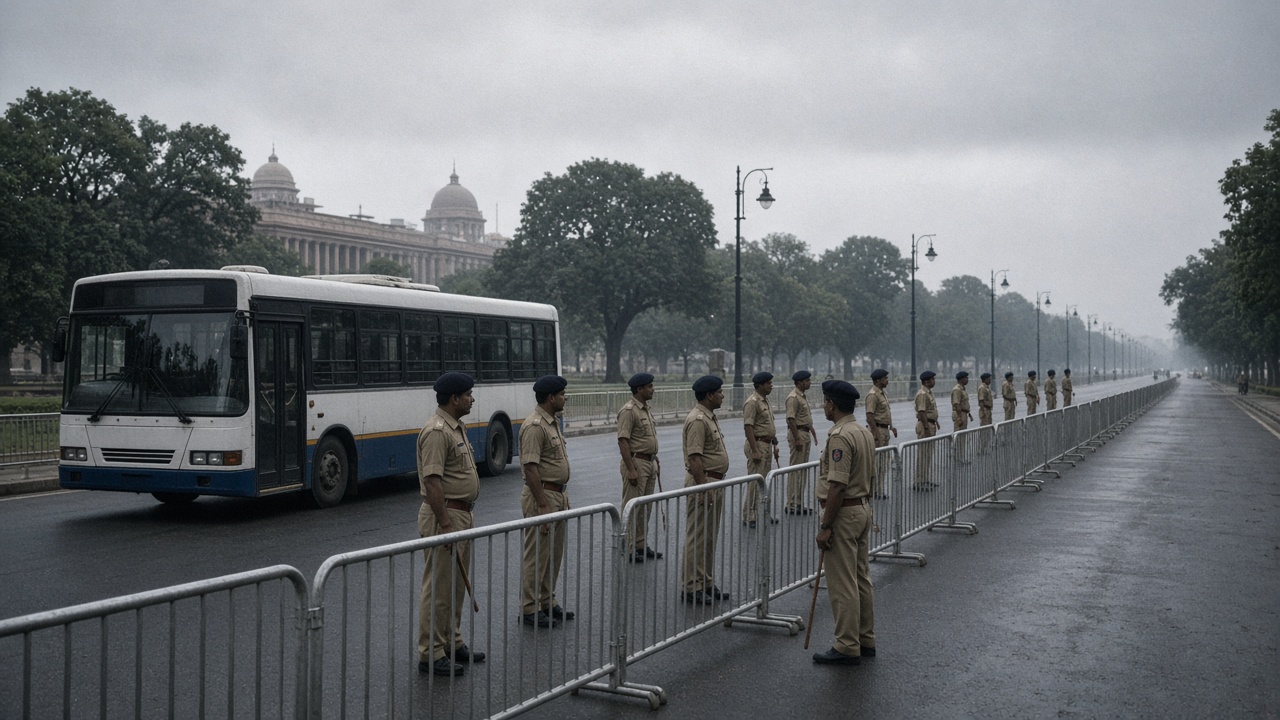
Delhi Police stopped the National Students’ Union of India’s Ungli Toh Uthegi march within metres of its Raisina Road headquarters on Sunday, detaining president Vinod Jakhar and other members who demanded Chief Election Commissioner Gyanesh Kumar resign and the Special Intensive Revision of electoral rolls be scrapped.
Sunday’s standoff
NSUI said it notified authorities of a peaceful walk toward Jantar Mantar, the traditional protest strip that police denotified as a demonstration site on 12 October. Officers and paramilitary personnel deployed along Sansad Marg blocked the column, loaded activists into buses and released most within hours without registering cases, police spokespeople told local media.
Parallel marches by the Revolutionary Workers’ Party of India and Disha Students’ Organisation from Connaught Place met the same fate. Protesters argued alternative venues such as Burari Ground are too distant for media and lawmakers to hear grievances about voter deletions.
What SIR protesters allege
The Election Commission’s intensive revision has removed more than 130 million names nationwide, according to opposition tallies, with critics claiming minorities and migrant workers are disproportionately affected. The commission says the exercise weeds out duplicates, deceased voters and ineligible entries, including suspected foreign nationals.
NSUI’s Jakhar framed Sunday’s raised-finger symbol as a voter-rights gesture, not a partisan attack, though the march fits a wider INDIA bloc pressure campaign that has included court challenges and rallies demanding Kumar step down.
Permits and next dates
While Jantar Mantar remains off limits, police granted the Congress party permission for a 1 November rally at Ramlila Maidan, a larger paid venue in central Delhi. A separate group marched from India Gate toward Rashtrapati Bhavan calling for justice in the 2022 Ankita Bhandari murder case in Uttarakhand, adding to the capital’s crowded Sunday security calendar.
With state elections on the horizon, the standoff over where protests may occur is becoming as contentious as the voter-roll revision itself. Unless the Election Commission publishes granular reconciliation data state by state, street confrontations are likely to continue regardless of which ground is booked.
Opposition strategy
Congress leaders have paired street action with court petitions challenging deletions in Delhi and Uttar Pradesh, arguing that booth-level officers did not give voters enough time to file enumeration forms after moves. The government maintains that digital tools and help desks were available, and that revision is necessary to keep rolls accurate.
For student wings, Sunday’s detentions are a messaging device as much as a policy lever: short arrests generate clips for social feeds without requiring the logistics of a multi-day sit-in. Police, meanwhile, are threading a needle between court orders on protest sites and political pressure to keep central Delhi traffic flowing during the festive season.