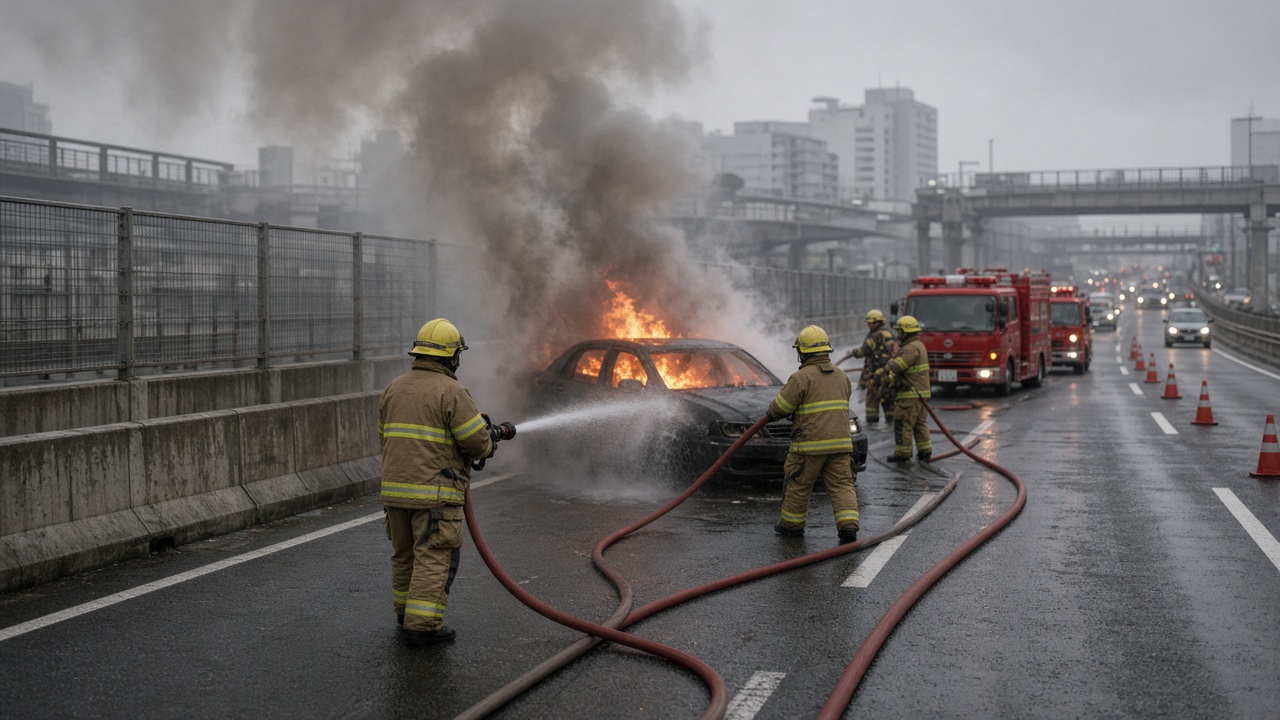
A vehicle fire shut the Shin-Tomei Expressway in both directions near Hamamatsu on Monday morning, forcing drivers on one of Japan’s busiest north–south corridors to detour while firefighters knocked down flames and highway operators inspected the pavement. Central Japan Expressway Co. said the closure between Hamamatsu-Hamakita interchange and Hamamatsu-Inasa junction began around 9:15 a.m. and lingered through the late morning commute.
Traffic ripple across Shizuoka
Television footage showed thick smoke rising above the median as emergency vehicles lined the shoulder. Japan Road Traffic Information Center alerts warned that holiday travelers heading toward Nagoya or Tokyo faced long queues on alternate routes, including sections of the legacy Tomei Expressway and prefectural roads threading through Hamamatsu’s industrial suburbs.
Shin-Tomei was built to relieve chronic congestion on the older Tomei line, and Monday’s shutdown underscored how dependent manufacturers in Shizuoka Prefecture are on uninterrupted expressway access. Logistics firms that serve auto plants in Hamamatsu told local media they were rerouting trucks onto national routes, adding cost and time during an already busy sports-holiday weekend.
Fire crews and investigators on scene
Shizuoka prefectural police said no fatalities had been confirmed in the initial reports, though they had not released details about the vehicle’s occupants by midmorning. Fire departments from Hamamatsu sent multiple engines to keep the blaze from spreading into roadside vegetation, a recurring risk during dry autumn weeks.
Expressway officials said engineers would need to check the road surface and guardrails for heat damage before reopening lanes. Even after traffic resumes, investigators typically photograph burn patterns to determine whether the fire started from a mechanical fault, collision debris or an external spark.
What drivers should expect
Central Nippon Expressway Co., which manages the network, urged motorists to check electronic boards and navigation apps before entering Shizuoka, because partial closures can shift quickly as tow trucks clear wreckage. Train operators did not report parallel disruptions, leaving rail as the most predictable option for passengers trying to reach Nagoya or Shizuoka city centers.
For residents, the episode was a reminder that Japan’s expressway system, while meticulously maintained, still hinges on rapid response when a single passenger car ignites. Until police release a cause, the shutdown will be filed as another midmorning fire drill for emergency crews — but for thousands of drivers stuck in Hamamatsu, it was an hours-long delay on a route they count on to be boring.
Local governments in Shizuoka have been pushing employers to stagger shifts on sports holidays to ease peak loads, yet Monday’s fire showed how quickly a single lane closure can undo those plans. Convenience stores along the detours reported running low on bottled drinks as idling trucks and family cars waited in slow-moving lines, and some schools delayed field trips that depended on bus routes through the expressway corridor.