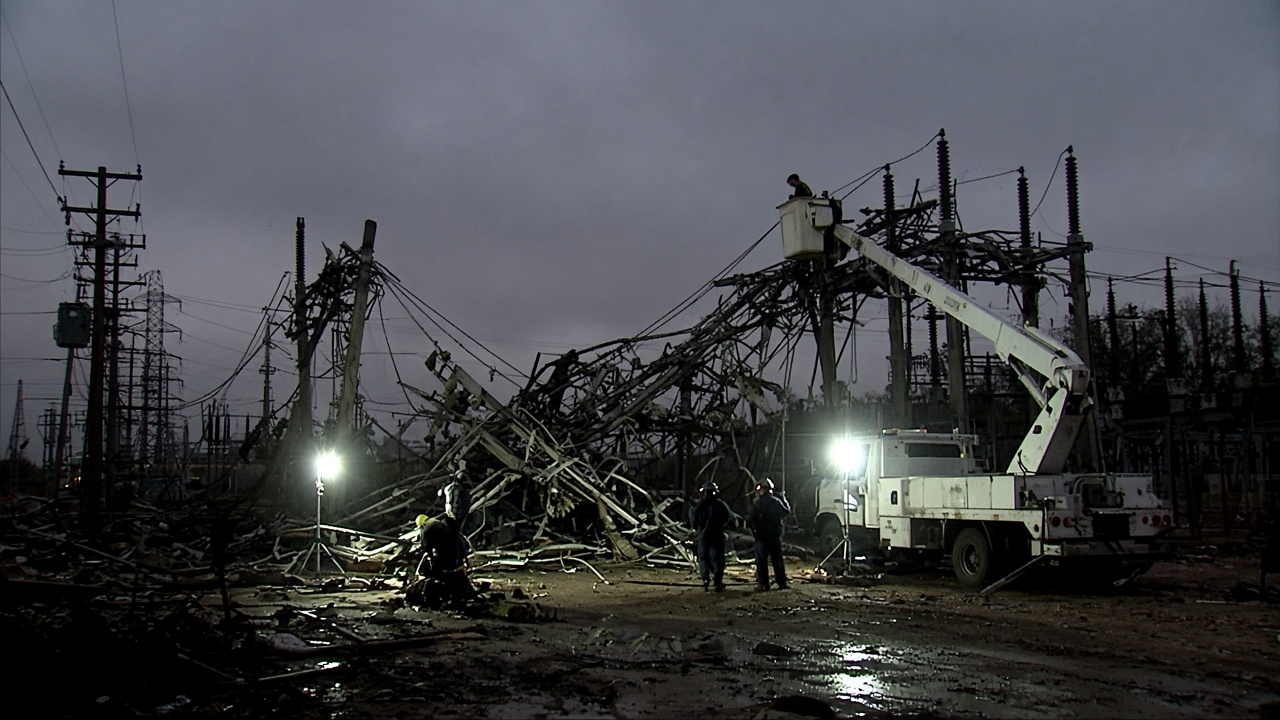
Russia fired one of its largest combined missile-and-drone barrages in months overnight into Monday, damaging more than ten energy facilities and leaving at least 550,000 Ukrainian households without electricity, President Volodymyr Zelenskyy said. State grid operator Ukrenergo reported outages across ten oblasts as emergency crews began repairs where security allowed.
What broke overnight
Ukraine’s Air Force said Russia launched Iskander-M and S-400 ballistic missiles, Iskander-K cruise missiles, 269 Shahed-type attack drones—including 59 jet-powered models—and decoy drones, with impacts recorded at 25 locations. Defenses downed or suppressed 243 drones and four cruise missiles, the command said, without specifying how many ballistic weapons were intercepted.
Zelenskyy said Moscow used 16 ballistic missiles aimed mainly at Kyiv and the surrounding region. Regional governors reported strikes on substations and generation sites from Vinnytsia and Volyn in the west to Kharkiv and Odesa in the east. The Kyiv Independent tallied at least three people killed and 53 injured nationwide in the past day of attacks, including civilian infrastructure beyond the grid.
Grid operators and the energy ceasefire
Ukrenergo said power was cut in Volyn, Zhytomyr, Rivne, Ternopil, Khmelnytskyi, Vinnytsia, Kirovohrad, Kharkiv, Odesa and Mykolaiv oblasts. Prime Minister Serhiy Koretskyi told Ukrainians that energy infrastructure was the primary target. Zelenskyy posted that a medical clinic, a school, a metro station and apartment blocks were also hit.
The assault landed eleven days after U.S. President Donald Trump announced what he called an energy ceasefire. Zelenskyy said Russia had struck Ukrainian energy and oil-and-gas sites 76 times since that statement, undercutting any pause in grid warfare as winter approaches.
Warning intelligence and diplomacy
Zelenskyy said Ukraine received no advance warning from partners before the ballistic salvo, repeating a complaint he has made after prior mass strikes. Reuters reported he spoke the same day with U.S. envoys Steve Witkoff and Jared Kushner about next diplomatic steps, while Secretary of State Marco Rubio denied Washington had paused intelligence sharing.
Repair teams were fanning out Monday, but officials warned that repeated damage to transformers and switchyards could lengthen restoration times if Russia keeps targeting the same nodes. For households already on rolling schedules, another nationwide dip in available power raises the risk of longer blackouts if the weather turns cold before equipment is replaced.
In Kharkiv, regional authorities said a separate drone strike killed six people, including two children, in a park—a toll Zelenskyy called barbaric as he pleaded for more air-defense interceptors. Western diplomats in Kyiv said the overnight pattern showed Moscow still prioritizing grid collapse over battlefield gains, even as Trump administration officials publicly insisted intelligence flows to Ukraine had normalized after earlier disputes over Starlink velocity limits and targeting data.