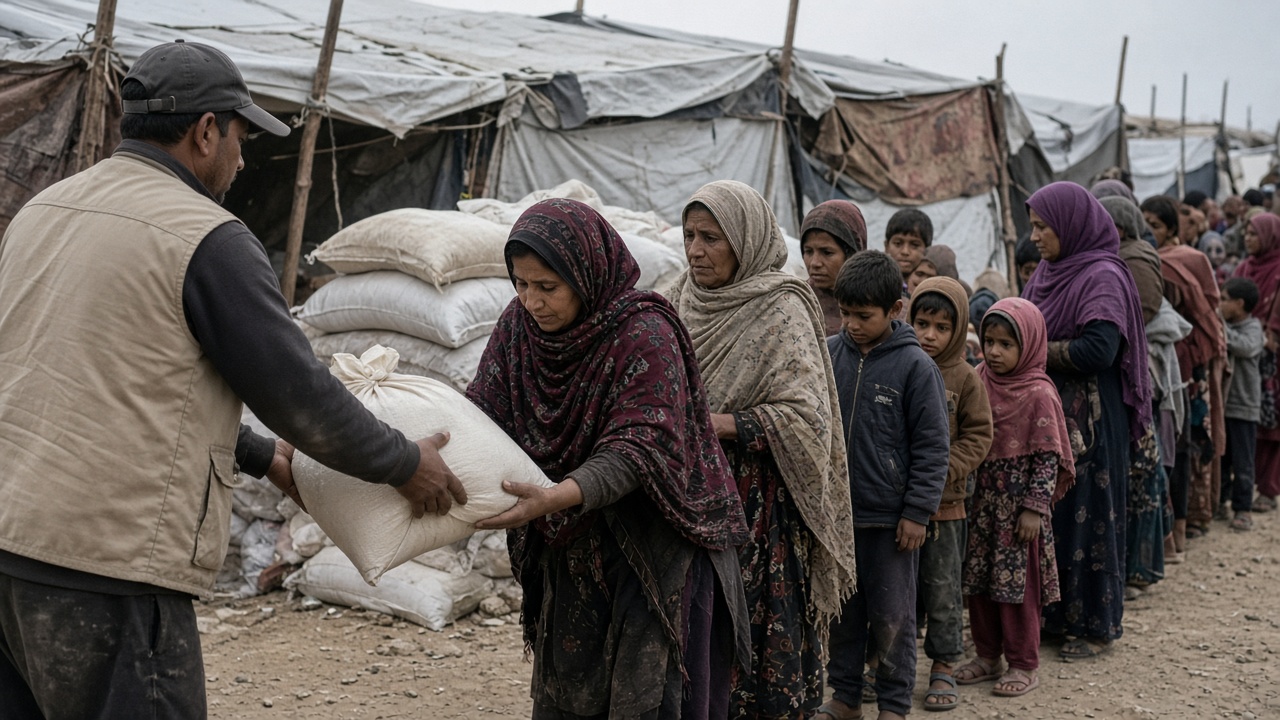
The United Nations World Food Programme said Sunday it will shrink Gaza assistance by roughly one-third this month, dropping monthly coverage from 1.6 million people to 1.1 million because donations no longer match operating costs. Agency officials stressed the pullback is driven by finance, not falling need, as winter approaches and most families still depend on aid.
What changes on the ground
Starting in October, WFP will support only the most vulnerable cohort it can still fund. Food rations are being cut in half: households that received two parcels will get one, and flour bags will be smaller. Hot meals from community kitchens will fall from 250,000 per day to 150,000, and families near the Israeli military’s so-called yellow line will receive a cooked meal every other day instead of daily service.
Cash transfers to 75,000 families are also being reduced in value, extending cuts that began in July for roughly half a million people who use vouchers to buy food in local markets. Direct food handouts will cover about 600,000 people each month, down from 1.1 million under the previous plan.
Why the agency says it had no choice
WFP Palestine director Shaun Hughes told reporters the decision is “not because the needs are coming down, or because we don’t have access.” The agency received less than half the funding for Palestinian operations in 2026 that it had in prior years and says it needs $450 million over the next six months to keep bakeries, nutrition programs and school snacks running at current levels.
West Bank operations were already scaled back in September, when monthly caseloads fell from 400,000 to 200,000. Gaza’s cuts land on top of that contraction and arrive a year after a ceasefire that improved delivery routes but did not restore jobs or markets for most residents.
Hunger metrics remain fragile
UN-backed food security analysts estimate about 1.4 million Gazans—67 percent of the population—still face crisis-level hunger or worse, down modestly from late 2025 but far above pre-war levels. Roughly 200,000 people remain in emergency conditions where experts say immediate assistance is required to prevent deaths from hunger.
Employment has not recovered: more than 80 percent of adults are jobless, leaving markets stocked but unaffordable for most households. Only about one in five children eats a sufficiently diverse diet, and water, sanitation and health services remain limited across the strip.
Reactions inside Gaza
Displaced families told international broadcasters the existing rations were already insufficient. Mervat al-Satari, a mother of five in Khan Younis, called the announcement a “disaster” and asked how caregivers would feed young children on thinner schedules. Sawsan Bahloul, also in al-Mawasi, said alternating hot meals would leave households hungry on off days when portions of pasta or lentils could not stretch.
Dalal al-Dahdouh, living in damaged housing in Gaza City with eight relatives, said flour and voucher boxes had never covered a full month. She contrasted today’s aid dependence with pre-war access to vegetables and stable utilities, warning that further cuts would compound malnutrition risks as temperatures drop.
What continues—for now
WFP said it can still help bakeries supply about one-third of Gaza’s bread demand, provide nutrition support to 300,000 women and children, and deliver school snacks to 200,000 students. Those lines of support depend on the same depleted budget, and agency leaders cautioned that gains since late 2025 could reverse quickly if donors do not refill accounts before winter storms strain shelter and fuel supplies.
Donor capitals face competing appeals from Congo’s Ebola outbreak, Ukraine reconstruction and Middle East security costs. For Gaza kitchens, the immediate arithmetic is simpler: 500,000 fewer people will receive WFP help this month unless new pledges arrive before ration cards are printed for November.