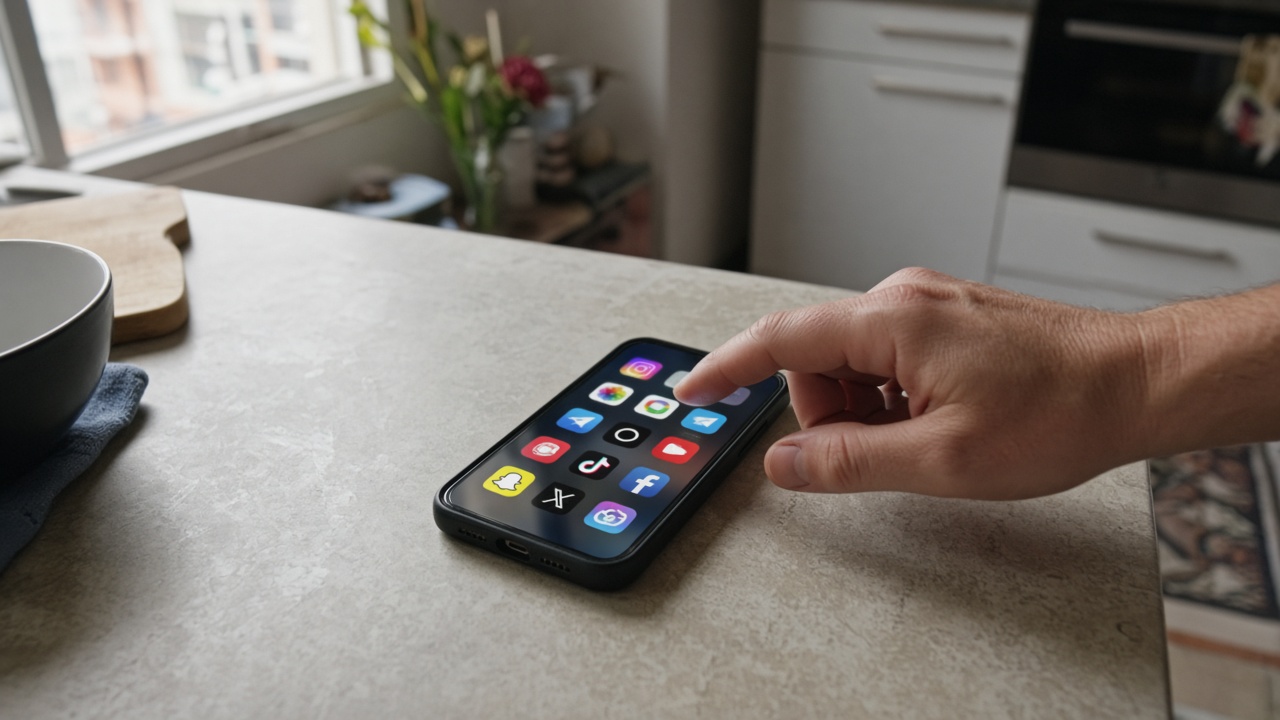
Australia’s government is preparing to sue Facebook, Instagram, TikTok, Snapchat and YouTube in federal court for allegedly failing to stop children under 16 from holding social media accounts, Communications Minister Anika Wells said in an interview published Tuesday, escalating enforcement of a world-first age restriction that took full effect in December.
Wells told Bloomberg in Sydney that she expects legal action, while stressing that charging decisions rest with the eSafety Commissioner, the independent regulator that has been investigating the platforms since March. “eSafety now has more powers to gather the evidence needed to take these five companies to the Federal Court, and they are using those powers to prepare this case,” she said.
What the law requires
Parliament’s Online Safety Amendment, which began operating in December 2025, requires age-restricted social media services to take reasonable steps to prevent Australians younger than 16 from creating or keeping accounts. The rules do not penalize children or parents who access platforms anyway; liability sits with providers that eSafety designates, including Meta’s Facebook and Instagram, ByteDance’s TikTok, Snap’s Snapchat and Google’s YouTube.
eSafety’s published guidance lists additional services such as X, Threads and Reddit as age-restricted, but Wells singled out the five companies Bloomberg named as the focus of the impending suits. A July report from the commissioner found that most minors in a sample could still retain existing accounts or open new ones, which the government argues shows age-assurance measures fell short of “reasonable steps.”
Investigation powers widened
Canberra strengthened eSafety’s toolkit this year, including authority to compel document production and examine current and former staff as it builds court files. Yonhap and other outlets carried Wells’s remarks after the Bloomberg interview, noting that South Korean policymakers have watched Australia’s experiment as they debate their own youth-online protections.
Platform spokespeople have previously said they invested in age-estimation tools and parental controls, and Meta has challenged other Australian regulatory orders in court. None of the five companies named by Wells issued fresh statements in the first hours after her comments circulated.
Stakes for families and industry
For Australian households, the fight is less about deleting every teen account overnight than about whether fines force redesigns of default sign-up flows. Child-safety advocates argue that self-declared birthdates and weak verification invite circumvention, while industry groups warn that blunt bans push young users toward less visible services.
Wells framed the court path as the next step after months of notices and data requests. If judges agree that reasonable steps were not taken, corporations could face civil penalties up to 300,000 penalty units, currently equivalent to A$109.2 million under eSafety’s public materials.
What happens next
eSafety must file and prove its case; timelines and remedies will depend on Federal Court scheduling and how each platform responds. Wells did not specify filing dates, but her remarks signal that Canberra is willing to test the age ban in open court rather than rely on voluntary undertakings alone.
Other democracies, including members of the European Union and several U.S. states, are weighing similar restrictions. Australia’s outcome will be watched as a measure of whether regulators can convert a high-profile political promise into enforceable product requirements on global apps used daily in Sydney classrooms and Perth bedrooms.