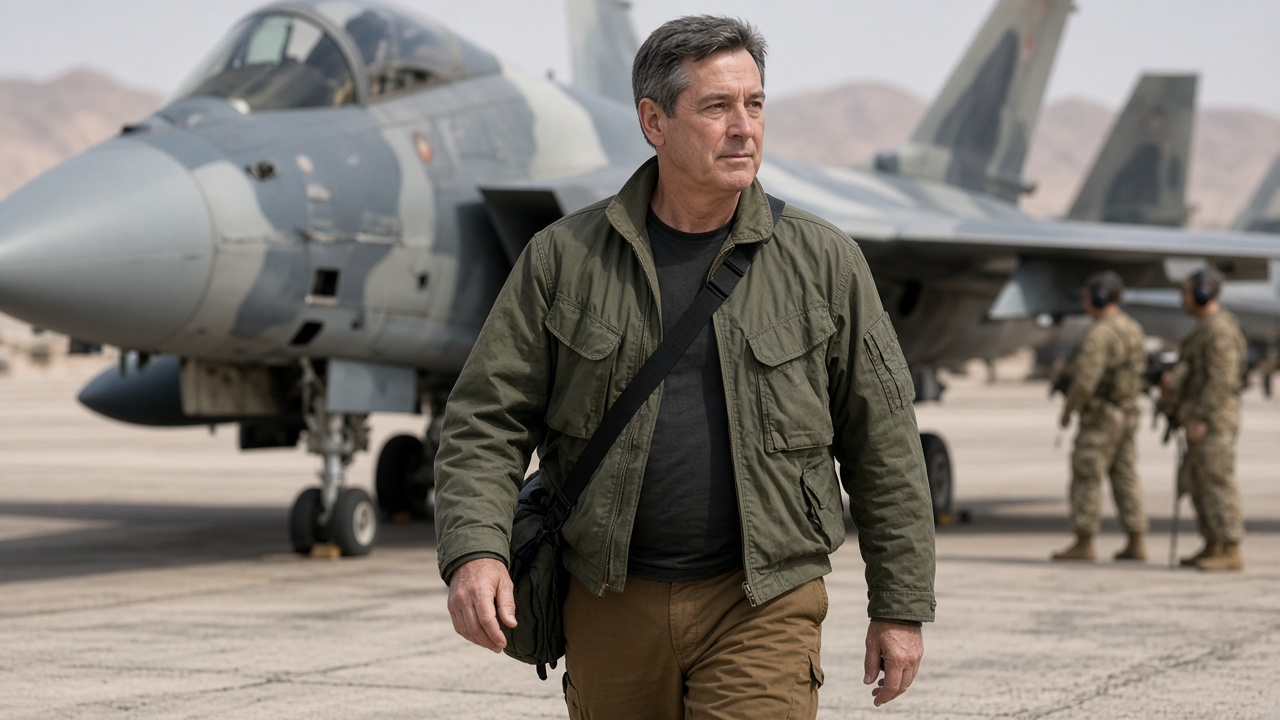
U.S. Defense Secretary Pete Hegseth confirmed on Tuesday that he met Prime Minister Benjamin Netanyahu during an unannounced swing through the Middle East, ending days of speculation after Israeli outlets reported a lengthy session at Uvda Air Base in the Negev desert.
Speaking to reporters, Hegseth said he visited American troops in Israel and spoke with Netanyahu, but he would not describe the substance of the conversation. “The nature of our conversation is not something I would talk about,” he said, while praising Israel as a partner hosting thousands of U.S. personnel.
Secret flight and a long session at Uvda
Israeli officials had already briefed domestic media that the two leaders met on Monday at Uvda, a military installation in southern Israel often used for joint exercises. Ynet reported that Netanyahu flew from Ben Gurion Airport on a private jet rather than by helicopter, and that the meeting ran longer than planned — enough that the prime minister skipped a scheduled public appearance.
Netanyahu’s office later confirmed the encounter through spokesperson Doron Spielman, who told Reuters the discussion covered regional threats and the U.S.-Israel partnership on both offensive and defensive operations. Spielman also cited what he described as a close personal relationship between Netanyahu and President Donald Trump, who endorsed the Israeli leader on Sunday ahead of parliamentary elections set for October 27.
Iran, Hormuz, and the election calendar
Three Israeli officials told Reuters the Iran file was part of the agenda, though neither government released details. The meeting came with tensions still high over the Strait of Hormuz, Houthi attacks on Gulf infrastructure, and periodic Israeli warnings about Tehran’s nuclear and missile programs.
Netanyahu told Israeli media this month that he was not seeking to open a new war with Iran before the election. Trump has likewise said he would not strike Iran before U.S. midterm elections in November. Hegseth’s trip nevertheless underscored how closely Washington and Jerusalem are coordinating force posture as Israel hosts additional U.S. aircraft and personnel that arrived during the wider Middle East conflict that followed joint U.S.-Israeli strikes on Iran in February.
What Hegseth said publicly
Before confirming the Netanyahu meeting, Hegseth posted on social media that he was visiting U.S. service members in U.S. Central Command’s area of responsibility, which spans the Middle East and parts of Africa and Asia, without naming specific countries. The Pentagon had not announced the Israel stop in advance.
On Tuesday, Hegseth framed the travel as troop-focused. “I was there visiting our troops, had a chance to talk to the prime minister,” he said. “They’ve been good partners, and I appreciate that.”
What comes next
Israeli voters head to the polls in six days in the first national ballot since the October 7, 2023, Hamas attack. Any visible U.S. military diplomacy before that vote carries domestic optics in both countries, even when officials keep the readout minimal.
For Washington, the unannounced stop also sits alongside a separate diplomatic track: White House envoy Steve Witkoff is due in St. Petersburg on Wednesday to meet Russian leadership after talks with Ukrainian President Volodymyr Zelenskyy in Oslo. Hegseth did not link his Israel visit to those negotiations, but the timing places U.S. security policy across three active crises — Ukraine, the Gulf, and the Iran-Israel axis — in the same news cycle.