In February 2020, a week of rain did what years of drought could not. Greater Sydney’s stored drinking water jumped from about 41% to above 75% capacity within days. The desalination plant at Kurnell, which had been brought back online only months earlier because storages had slipped below 60%, did not go back to sleep. On 27 March 2020, Sydney Water and the plant’s private operator agreed it would stay running to protect water quality after bushfires, floods and storms. Customers were still paying for desalination while dams were filling.
The bill that outlasted the drought
The turnaround in the reservoirs is documented in the operator’s 2024 infrastructure operating plan: available storages rose from approximately 41% to above 75% in a short period after heavy rainfall that February. Yet the same document records that Sydney Water and Sydney Desalination Plant Pty Ltd (SDP) kept the plant operational under a separate agreement that ran until 30 June 2023. The drought trigger had faded; the invoices had not.
When storages crossed 60% on 27 January 2019, Water NSW’s notice forced a restart that had been waiting since the plant was mothballed in June 2012. Media reports that weekend described Sydney’s dam storage dropping below 60% and restart procedures beginning for the first time in seven years. Drinkable water would take months to reach taps even after the switch was flicked. The 250 megalitre-per-day nameplate capacity is roughly one-sixth of Sydney’s daily demand at full output. The case is not about whether desalination can help in a drought; it is about why the cost structure keeps running when the emergency has passed.
What you thought you were paying for
Most households experience desalination as a line buried inside the quarterly water service charge, not a metered “ocean litre” fee. Sydney Water buys water and security services from SDP, then recovers those regulated costs across its entire customer base. IPART states plainly that SDP charges Sydney Water and Sydney Water passes those costs to end-use customers across Greater Sydney.
About 80% of the drinking water Sydney Water supplies on a typical day still comes from Warragamba Dam; the corporation’s annual reporting puts rainfall-dependent supply at about 85% for the city as a whole. Desalination is the main rainfall-independent source, capable of roughly 15% of daily demand at full output. When dams look healthy, it is easy to assume desal spending should shrink to a maintenance stipend. The accounts show something else: standby and availability priced into the monopoly contract, not just megawitres delivered.
The document that sets the floor
The mechanism lives in IPART’s June 2023 final determination on SDP’s maximum prices. For each day in the 2023–24 financial year, the water usage charge is normally $831.75 per megalitre supplied. But clause 5(b) overrides that arithmetic when Sydney Water is the purchaser and total usage revenue for the day would fall below the minimum water usage charge. IPART’s own note states the effect: a floor on total water usage charges of $2,079 per day, adjusted for inflation.
That floor is separate from the daily service charge, which recovers fixed plant and network costs. In 2024–25 the determination builds the service charge from a $448,563 base (before CPI and electricity pass-throughs) for days when Sydney Water is the buyer. IPART’s statement of reasons argues that when SDP supplies a low volume on a day, a floor is necessary so the operator can recover its efficient costs. The tribunal is explicit that it chose a methodology rather than a single flat price because it needed both a revenue floor and a rule that zeroes usage charges once output exceeds 110% of an annual production request.
where SDP supplies a low volume of water on a day, it is necessary for there to be a floor to the water usage charge so that SDP can recover its efficient costs
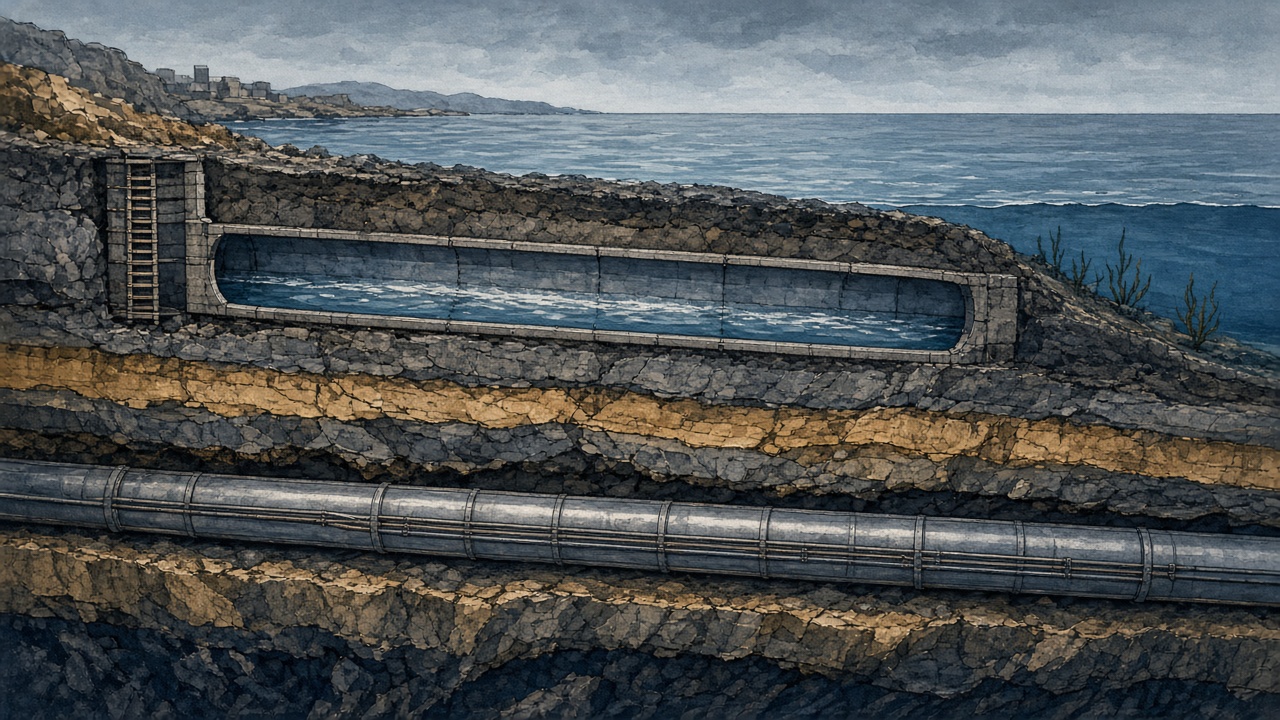
The same determination caps total daily revenue components: water usage (with the floor), a usage network charge tied to electricity consumption, the service charge, and a pipeline charge for the 18-kilometre link from Kurnell under Botany Bay to Erskineville. Sydney Water remains SDP’s sole customer in practice, but the rules are written for multiple purchasers so that fixed costs can be shared by formula if that ever changes. For now, every dollar in the determination flows to one buyer and then to every residential and business connection in the network.
NSW Treasury does not subsidise the gap when dams are full. The State Owned Corporations Act requires Sydney Water to operate on a commercial basis, recovering its costs through regulated tariffs reviewed by IPART on a separate track from SDP’s plant-specific prices. That separation matters politically: complaints about desal spending are often aimed at Sydney Water bill increases, but the desalination plant’s price path is its own statutory instrument, refreshed on a four-year cycle.
Who invoices whom
SDP is not a government department. NSW leased the Kurnell plant to a private consortium for 50 years from 2012; the operator’s infrastructure plan lists Ontario Teachers’ Pension Plan Board (60%) and Utilities Trust of Australia (40%) as owners. SDP supplies water under a 50-year water supply agreement ending in 2062, under IPART price reviews through 2027, with operations contracted to Veolia Water Australia per SDP’s 2024 operating plan. The Minister declared the plant a monopoly supplier under the Water Industry Competition Act in 2011, and IPART sets the maximum prices that monopoly can charge.
Those prices show up in Sydney Water’s audited accounts as “availability charges and operational costs” for the Sydney Desalination Plant. In 2022–23 the combined line reached $238,568,000. The year before it was $203,931,000; in 2020–21 it was $208,032,000. From 2023–24 the notes split availability ($191,804,000) and operational costs ($30,734,000), which sum to $222,538,000. Spread across 2,128,374 properties with drinking water service that year, the charge averages about $112 per property if allocated evenly—before Sydney Water’s other network, treatment and bulk-water costs.
When dams filled, output did not stop
Production volumes swing with orders, not with how full Warragamba looks on the news. Sydney Water reported 22,480 megalitres of desalinated drinking water in 2021–22, 67,996 ML in 2022–23 as flood-related raw-water quality problems pushed output up, and 35,216 ML in 2023–24 after IPART’s new flexible operating rules took effect on 1 July 2023. The corporation’s first annual production request under those rules asked for around 44 gigalitres in 2023–24. Output can fall while fixed charges remain.
Flexible operation after July 2023 did not repeal the floor. Sydney Water’s 2023–24 annual report notes that 35,216 ML of desalinated water was produced under the new Network Operator’s Licence, while availability charges of $191,804,000 still appeared in the accounts alongside $30,734,000 of operational costs. Production in 2024–25 fell further to 21,412 ML in the corporation’s latest principal statistics, illustrating how output can track water-quality needs and maintenance schedules rather than dam percentages alone.
During the long mothball from June 2012 to January 2019, an IPART-commissioned expenditure review recorded that the plant had not produced potable water since June 2012 even though Sydney Water still paid standby costs.
In line with our operating licence, we expect it will take up to eight months from restart for the plant to reach its maximum capacity of producing 250 million litres per
Restarting in 2019 took months; SDP’s chief executive told reporters in January 2019 that drinkable water would reach the city’s supply within three to four months. Once flexible full-time operation began in 2023, IPART’s media release framed the change as keeping the plant contributing to water security both inside and outside droughts—with SDP’s prices rising about 8% and a typical residential bill increasing by less than $10 a year because desal costs remain under 10% of Sydney Water’s total costs.
Critics of the lease sometimes argue the state should have kept the asset public to avoid profit margins on a drought insurer. IPART’s published counterweight is narrower: without a floor, a plant designed for intermittent operation could not cover efficient fixed costs on days when Sydney Water orders little or no water. Whether that justifies the scale of availability payments is a political question; the pricing formula itself is not a secret buried in Sydney Water’s customer contract.
How it lands on your connection
Because charges are embedded in regulated prices, you cannot opt out by using less water on a rainy week. Sydney Water’s 2024 business update tells customers the water service charge includes $21.67 for the year to recover additional costs from desalination operating between April 2023 and March 2024. That figure is explicit; much of the rest of the desal recovery is blended into network pricing that every connected property pays.

IPART stresses that the July 2023 price reset was modest at the household level: less than 1% on a typical bill, or about $10 a year, because SDP’s share of Sydney Water’s cost stack is still under one-tenth of the total. Modest per bill does not mean optional. The same determination that raised SDP’s prices also codified the daily floor that bites when output is low.
The floor under tomorrow's rain
Greater Sydney will keep debating how much desalination and purified recycled water to build as the city warms and grows. The Kurnell plant’s 250 megalitre-per-day capacity and 18-kilometre pipeline to Erskineville are already in the ground, contracted until 2062. What is locked in today is the pricing logic: a private monopoly with a regulator-written daily minimum and availability charges, paid by Sydney Water whether the plant is roaring at flood-response output or throttled back while reservoirs spill.
The February 2020 storage rebound is on the public record, along with the decision to keep the plant running afterward. So is the $2,079 daily usage floor in IPART’s determination. The next time dam levels make the evening news, the easier number to find may be the green percentage on a storage chart. The number that still governs the bill is the one printed in the price rules, not the weather.
That contract language is public; the floor is too.