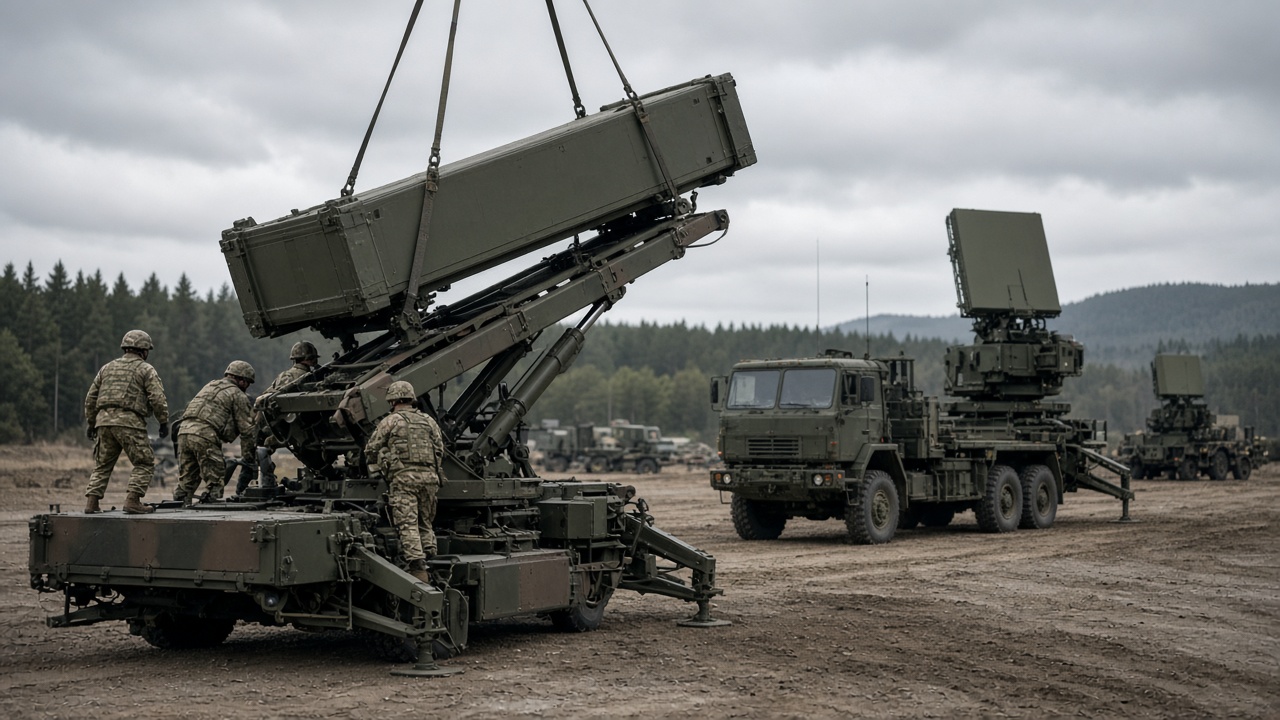
The Trump administration has not approved several transfers of Patriot interceptor missiles to Ukraine, including shipments that European allies have already funded, according to U.S. officials cited by The Washington Post on Monday. The delay lands as President Volodymyr Zelenskyy says Washington is slowing air-defense aid while Russian strikes batter Ukraine’s power grid, and as Secretary of State Marco Rubio insists there is no political order to harm Kyiv.
What is stuck at the Pentagon
Patriot interceptors are built in the United States and sold abroad under agreements that require Washington’s consent before a third country can pass them along. At least some of the missiles now waiting in the pipeline were purchased by Ukraine’s partners and are meant to refill launchers that fire the U.S.-made system, the Post reported, citing one U.S. official and three other people familiar with the matter.
Defense Secretary Pete Hegseth has not formally rejected those transfers, the sources said, but he also has not taken the administrative steps needed to clear them. Other categories of U.S. assistance to Ukraine are still moving, they added, suggesting the bottleneck is specific to Patriot hardware rather than a blanket freeze on security cooperation.
Zelenskyy presses Congress as Rubio pushes back
Zelenskyy told a bipartisan group of U.S. senators in a video call on Monday that interceptors paid for by European countries were being held up and that he believed “some political decision” had been made to slow support, according to accounts of the briefing. He paired that complaint with renewed frustration over limits on Starlink battlefield data and gaps in ballistic-missile warning intelligence.
Speaking in India on Tuesday, Rubio acknowledged that a batch of interceptors might be delayed as Washington weighs competing demands, but he told reporters there was “not been some deliberate political directive to go out and harm Ukraine.” He described Patriot missiles as the most sought-after item in global defense markets, noting that Saudi Arabia, Israel and the United States itself are also chasing fresh supplies after conflicts in Europe and the Middle East drained stockpiles.
Why interceptors are scarce everywhere
Ukraine has relied on Patriot batteries to knock down Russian ballistic missiles that cheaper systems cannot catch. Kyiv Independent and other outlets have reported near-empty magazines during major raids this autumn, forcing commanders to ration shots as Moscow targets generation plants and substations. NATO’s PURL financing mechanism and bilateral European purchases were designed to keep those magazines from running dry, but every shipment still needs a U.S. signature.
Global demand has tightened since the U.S. and allied air campaign against Iran earlier this year, which burned through large numbers of the same interceptors. Production lines can only add capacity gradually, so even allies willing to pay upfront can find themselves waiting behind the Pentagon’s own replenishment orders.
What happens next
Zelenskyy used an interview published Tuesday with Italy’s Corriere della Sera to offer a trade: if President Donald Trump cannot force Russia to stop striking Ukrainian cities, Washington should at least release interceptors so Kyiv can shield energy infrastructure. Trump, asked Monday whether intelligence sharing with Ukraine continued, told reporters the United States “share[s] a lot” and has “given a lot to Ukraine,” while repeating that Kyiv has “given nothing to us.”
European capitals that fronted money for Patriots are now caught between public pledges to Kyiv and a clearance process they do not control. Ukrainian officials said they would keep lobbying both Congress and the Pentagon for a written decision, warning that without fresh interceptors the next mass ballistic salvo could overwhelm the few batteries still operating at full capacity.