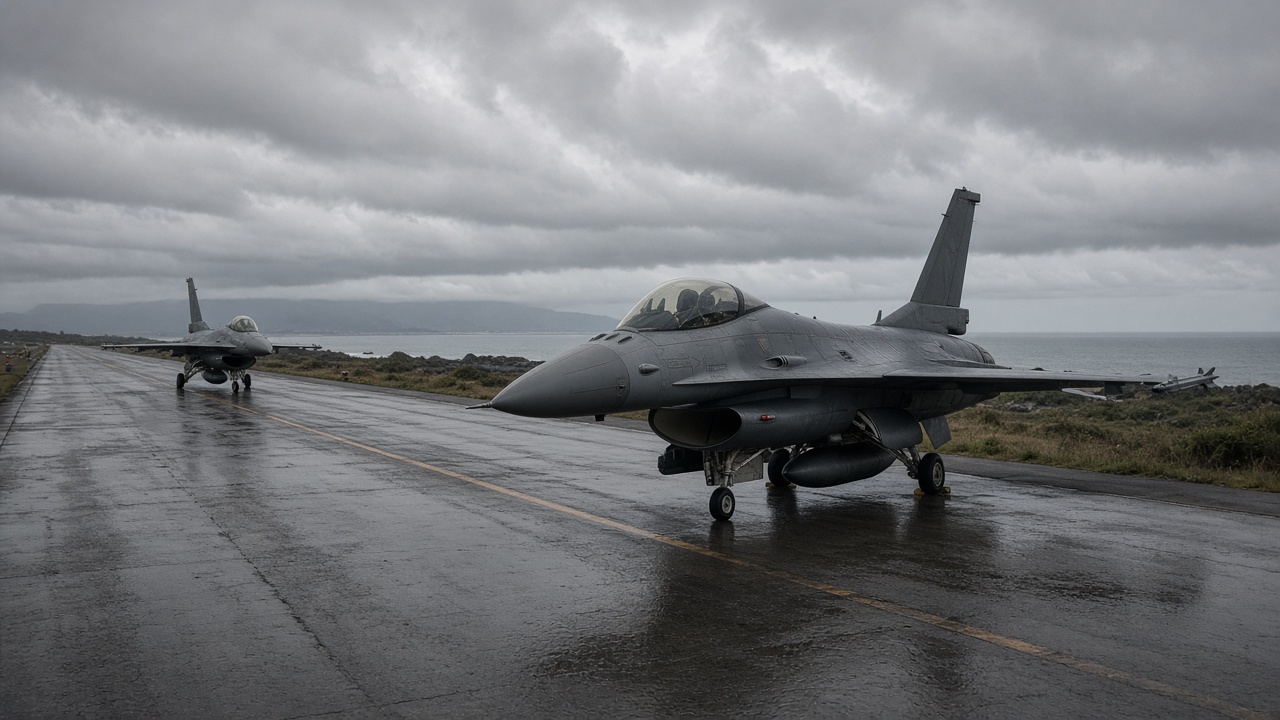
Taiwan’s Ministry of National Defense said the People’s Liberation Army launched a large air-and-sea patrol on Tuesday morning, sending 27 military aircraft toward the island and having 21 of them cross the Taiwan Strait median line and its extensions. The ministry said the activity was conducted under the banner of a “joint combat-readiness patrol” and “far-sea voyage,” language Taipei treats as a coordinated gray-zone pressure campaign rather than a routine training flight.
What Taipei tracked Tuesday
According to the defense ministry’s 2:30 p.m. statement, the first PLA aircraft were detected at 10:43 a.m. The package included J-10, J-11 and J-16 fighters, JH-7 fighter-bombers, H-6 bombers, KJ-500 airborne early-warning aircraft and drones, the ministry said. Of the 27 sorties, 21 entered Taiwan’s northern, central and southwestern air-defense identification zones and pushed into the western Pacific, crossing the informal median line that had long served as a buffer between the two militaries.
PLA warships operated in concert with the aircraft, the ministry added, though it did not publish a ship count in the initial release. Taiwan’s armed forces responded by scrambling fighters, dispatching naval assets and putting shore-based missile units on alert, using joint intelligence and surveillance feeds to track the movements.
How Taipei reads the pattern
Taiwanese officials have documented a steady increase in median-line crossings since Beijing dismantled tacit restraint in 2022. Tuesday’s package was larger than many daily tallies but followed a familiar script: bombers and escorts probe multiple quadrants while drones and early-warning aircraft stretch Taiwan’s sensor network. The “joint combat-readiness” label signals to domestic audiences in China that the exercises simulate wartime coordination, even when no weapons are fired.
The sortie came on a day when financial markets in Taipei were already under pressure from foreign selling in technology shares, adding to the sense of simultaneous economic and security stress. Presidential and defense leaders have urged calm, emphasizing that the island’s detection and interception procedures are practiced weekly.
Regional context
Chinese forces have paired air drills with coast-guard deployments near Taiwan-controlled outposts in recent weeks, including contested waters around Pratas and Dongsha. On Tuesday, Reuters reported that China’s military also monitored a U.S. warship near disputed features in the South China Sea, while Taiwan tracked the strait patrol separately. U.S. officials have not linked the two events publicly, but allied planners watch for days when Beijing synchronizes pressure across multiple flashpoints.
Japan and the Philippines, both U.S. treaty partners, have reported their own spikes in PLA activity near outlying islands this month. For Taiwan, the operational challenge is sustaining alert crews and fuel stocks when probes arrive with little warning and stretch across hundreds of kilometers of ocean airspace.
What comes next
Taiwan’s defense ministry said monitoring would continue through the night and that it would publish an updated aircraft map if additional sorties launch. Legislators from both major parties called for sustained funding for spare parts and pilot training, arguing that gray-zone flights impose wear on aging fighters even when they do not cross into territorial airspace.
Beijing has not issued a separate comment on Tuesday’s patrol at the time of the ministry release. Analysts in Taipei expect further combined drills if Typhoon Champi’s track shifts northward later this week, potentially giving cover for additional maritime movements under poor weather.